

This English question involves literary analysis, grammar, or writing skills. The detailed response below provides a well-structured answer with supporting evidence and clear explanations.
ScanSolve AI Answer
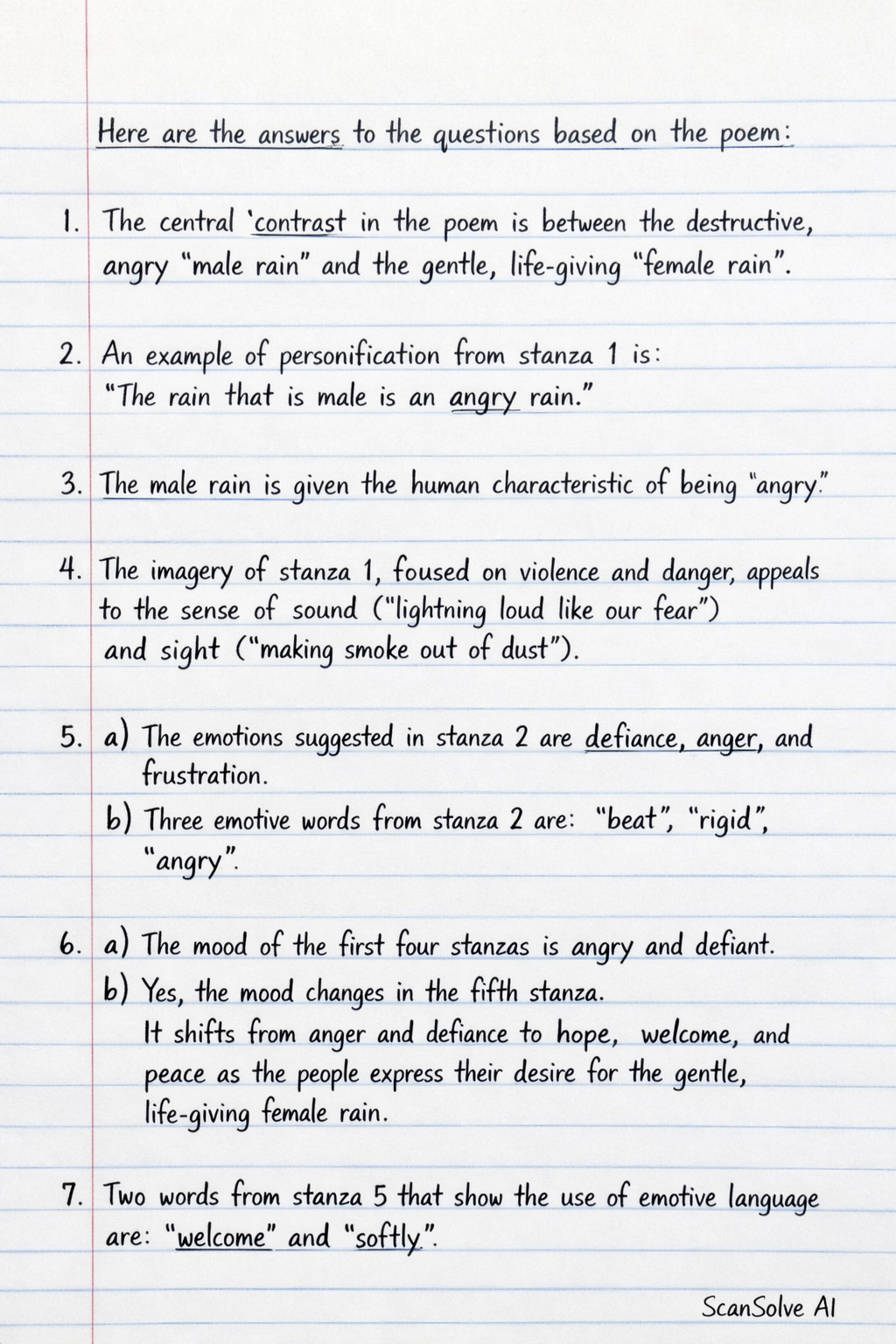
Here are the answers to the questions based on the poem: 1. The central contrast in the poem is between the destructive, angry "male rain" and the gentle, life-giving "female rain". 2. An example of personification from stanza 1 is: "The rain that is male is an angry rain". 3. The male rain is given the human characteristic of being angry. 4. The imagery of stanza 1, focused on violence and danger, appeals to the sense of sound ("lightning loud like our fear") and sight ("making smoke out of dust"). 5. a) The emotions suggested in stanza 2 are defiance, anger, and frustration. b) Three emotive words from stanza 2 are: "beat", "rigid", "angry". 6. a) The mood of the first four stanzas is angry and defiant. b) Yes, the mood changes in the fifth stanza. It shifts from anger and defiance to hope, welcome, and peace as the people express their desire for the gentle, life-giving female rain. 7. Two words from stanza 5 that show the use of emotive language are: "welcome" and "softly". 8. The green bushes and the galloping springbok in the last line symbolise: b) renewal 9. The people in the poem want the female rain rather than the male rain because the female rain is gentle, brings life and nourishment to the land ("falls softly, soaking into the ground," "feeding the plains"), and leads to new growth and prosperity ("bushes sprout green, springbok come galloping"). In contrast, the male rain is violent, destructive, and causes fear. 10. a) Two lines from the poem that show the use of repetition are: "Rain, be gone quickly! Fall but be gone! Rain, turn away! Turn back from this place!" b) The effect of repetition in this poem is: i) repetition gives the poem a musical rhythm, like a chant 3 done, 2 left today. You're making progress.