
We read your photo as:
25 Is this poem realistic or imaginative? Explain.
ScanSolve AI Answer
Here are the answers to your questions about the poem "Grandpa":
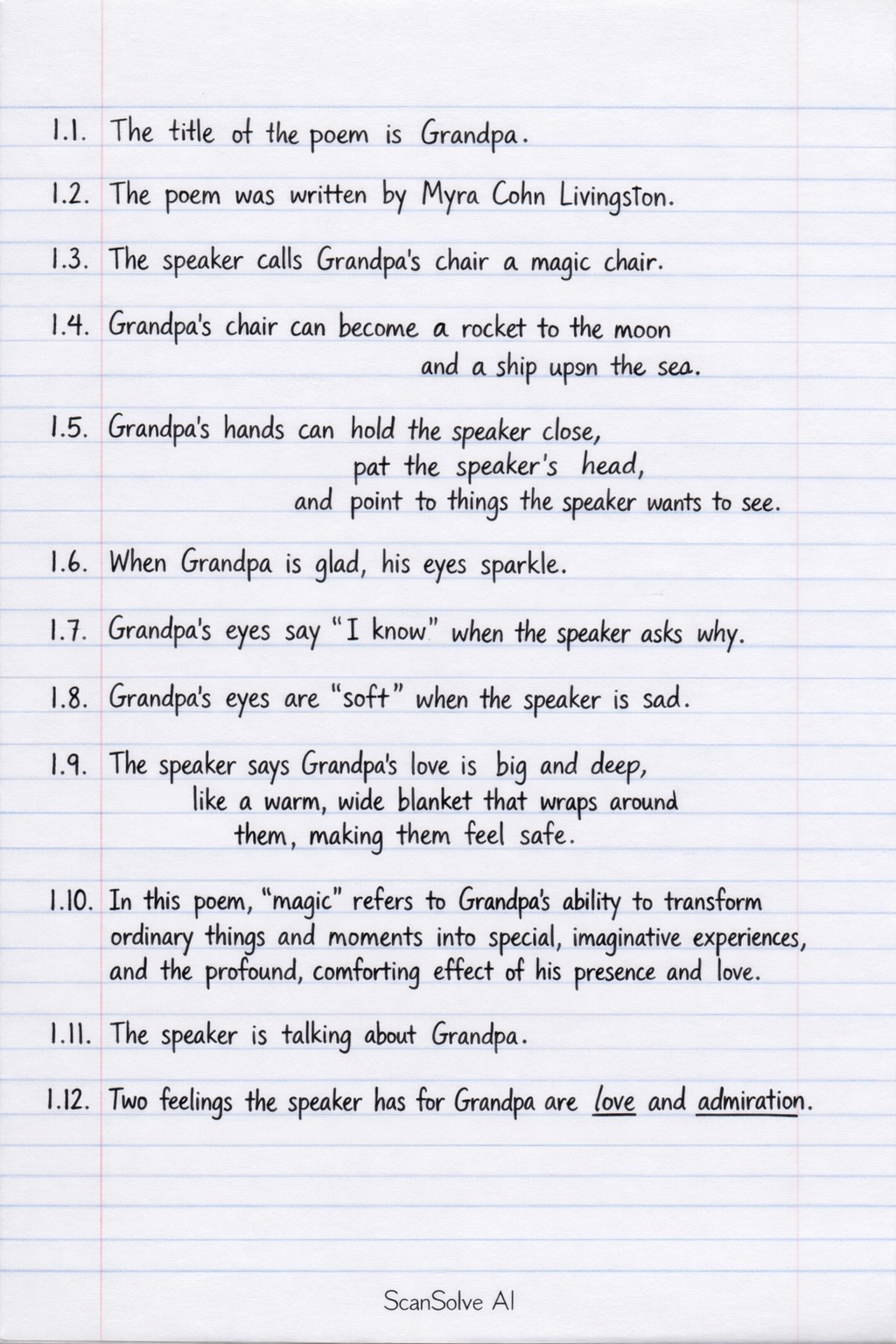
1.1. The title of the poem is Grandpa.
1.2. The poem was written by Myra Cohn Livingston.
1.3. The speaker calls Grandpa's chair a magic chair.
1.4. Grandpa's chair can become a rocket to the moon and a ship upon the sea.
1.5. Grandpa's hands can hold the speaker close, pat the speaker's head, and point to things the speaker wants to see.
1.6. When Grandpa is glad, his eyes sparkle.
1.7. Grandpa's eyes say "I know" when the speaker asks why.
1.8. Grandpa's eyes are "soft" when the speaker is sad.
1.9. The speaker says Grandpa's love is big and deep, like a warm, wide blanket that wraps around them, making them feel safe.
1.10. In this poem, "magic" refers to Grandpa's ability to transform ordinary things and moments into special, imaginative experiences, and the profound, comforting effect of his presence and love.
1.11. The speaker is talking about Grandpa.
1.12. Two feelings the speaker has for Grandpa are love and admiration.
1.13. The main message of the poem is about the special bond between a grandchild and their grandfather, highlighting the grandfather's loving, comforting, and imaginative nature, and the profound impact he has on the child's life.
1.14. The figure of speech in "Grandpa's chair is a magic chair" is a metaphor.
1.15. The figure of speech in "a rocket to the moon" is a metaphor.
1.16. The repetition of the word "magic" emphasizes the extraordinary and enchanting quality of Grandpa's presence and actions, highlighting how he transforms everyday experiences into something wonderful and special for the child.
1.17. "They're soft when I am sad" tells us that Grandpa is empathetic, comforting, and sensitive to the speaker's emotions, offering solace and understanding.
1.18. The tone used in the poem is loving and tender. This is shown through the warm, positive language used to describe Grandpa's actions, eyes, hands, and love, conveying deep affection.
1.19. Assuming "they're watching me they glow" refers to Grandpa's eyes, it suggests his attentive, loving gaze, filled with warmth and affection. The "glow" implies a gentle, comforting light or a strong, positive emotion emanating from his eyes.
1.20. This is a lyric poem.
1.21. The speaker is Grandpa's grandchild, and their relationship is one of deep affection, love, and comfort.
1.22. The poet calls everyday things "magic" because Grandpa's presence and imagination transform them into extraordinary experiences for the child, making ordinary objects and activities feel enchanting and full of wonder.
1.23. The poet shows Grandpa cares for the child through his actions and expressions: his hands hold the child close and pat their head; his eyes sparkle when he's glad, say "I know" (offering understanding), and are soft when the child is sad (offering comfort); and his love is described as a warm, wide blanket that makes the child feel safe.
1.24. Yes, I agree that grandparents are important. One reason from the poem is that grandparents like Grandpa provide love, comfort, safety, and imaginative experiences that enrich a child's life, as shown by his "magic chair," comforting hands, understanding eyes, and "big and deep" love.
1.25. The poem is primarily imaginative. While the core relationship is realistic, the poem uses imaginative language and metaphors (e.g., the chair becoming a rocket, Grandpa's love as a blanket) to convey the child's perception of Grandpa's extraordinary qualities and the magical feeling he brings to their world.
Still stuck on this one?
Ask a follow-up, and the answer starts from this question.
More English Questions
Handwritten Step-by-Step Solution
Get this as a handwritten image on WhatsApp — like a tutor wrote it for you.
Try on WhatsApp