

This English question involves literary analysis, grammar, or writing skills. The detailed response below provides a well-structured answer with supporting evidence and clear explanations.
ScanSolve AI Answer
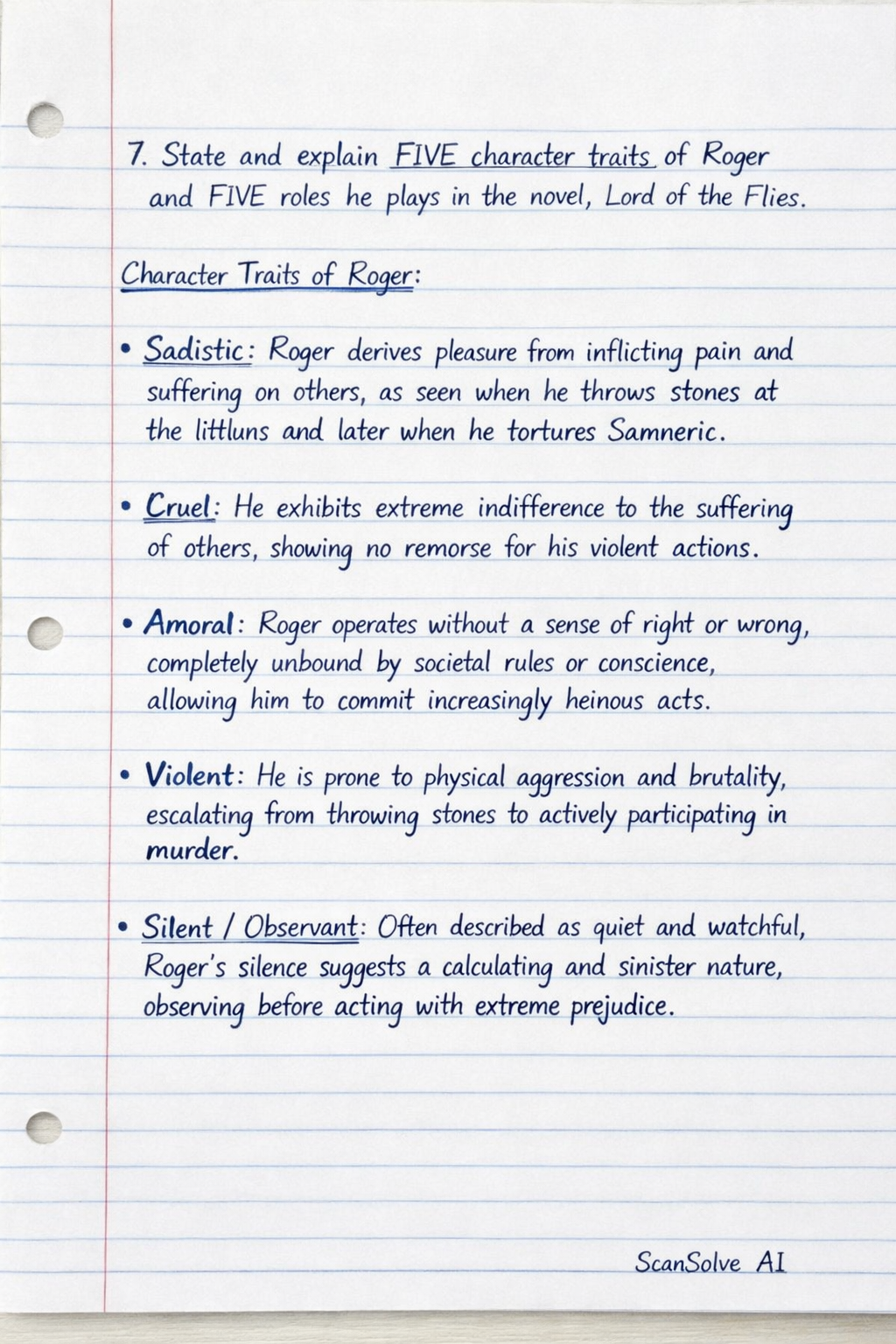
7. State and explain FIVE character traits of Roger and FIVE roles he plays in the novel, Lord of the Flies. Character Traits of Roger: • Sadistic: Roger derives pleasure from inflicting pain and suffering on others, as seen when he throws stones at the littluns and later when he tortures Samneric. • Cruel: He exhibits extreme indifference to the suffering of others, showing no remorse for his violent actions. • Amoral: Roger operates without a sense of right or wrong, completely unbound by societal rules or conscience, allowing him to commit increasingly heinous acts. • Violent: He is prone to physical aggression and brutality, escalating from throwing stones to actively participating in murder. • Silent/Observant: Often described as quiet and watchful, Roger's silence suggests a calculating and sinister nature, observing before acting with extreme prejudice. Roles Roger plays in the novel: • Jack's Enforcer/Lieutenant: He becomes Jack's most loyal and brutal follower, carrying out his commands and ensuring obedience through fear. • Torturer: Roger actively participates in the torture of Samneric, demonstrating his role in inflicting physical pain on those who oppose Jack. • Murderer: He is directly responsible for Piggy's death, pushing the boulder that sends Piggy to his demise. • Symbol of Savagery: Roger embodies the ultimate descent into primal, unchecked brutality and the complete loss of civilization among the boys. • Hunter: He joins Jack's hunting party, becoming increasingly bloodthirsty and contributing to the group's focus on killing. 8. Give an account of the disagreements between Ralph and Jack and show why Jack succeeds. Disagreements between Ralph and Jack: • Priorities: Ralph prioritizes rescue and maintaining civilization, focusing on the signal fire and building shelters. Jack prioritizes hunting, feasting, and immediate gratification, neglecting the signal fire. • Leadership Styles: Ralph leads democratically, using the conch to facilitate discussion and rules. Jack leads autocratically, using fear, manipulation, and brute force to command obedience. • Order vs. Chaos: Ralph strives to maintain order, rules, and a semblance of civilized society. Jack embraces savagery, chaos, and the abandonment of rules. • Responsibility: Ralph emphasizes collective responsibility for the group's welfare, such as keeping the fire going. Jack shirks responsibility, focusing only on his own desires and those of his hunters. • Treatment of Piggy: Ralph values Piggy's intelligence and defends him. Jack constantly demeans, abuses, and silences Piggy, representing the rejection of intellect and reason. Why Jack succeeds: • Appeals to Primal Instincts: Jack offers the boys immediate gratification through hunting, feasting, and freedom from rules, which appeals to their inherent desire for excitement and savagery. • Exploitation of Fear: He skillfully exploits the boys' fear of the "beast," promising protection and using it as a tool to manipulate them and consolidate his power. • Charisma and Manipulation: Jack possesses a charismatic personality and is adept at manipulating the boys' emotions, particularly their desire for belonging and their fear of being outsiders. • Promises of Power and Freedom: He promises the boys power through hunting and the freedom to act without consequence, which is more appealing than Ralph's emphasis on duty and hard work. • Ralph's Weaknesses: Ralph's reliance on reason, democracy, and long-term goals becomes less appealing as the boys descend into savagery, making him seem weak and ineffective in comparison to Jack's decisive, albeit brutal, leadership. • Physical Dominance: Jack and his hunters represent physical strength and aggression, which ultimately becomes the dominant force on the island, overpowering Ralph's attempts at maintaining order.