
We read your photo as:
Answer all In English please
ScanSolve AI Answer
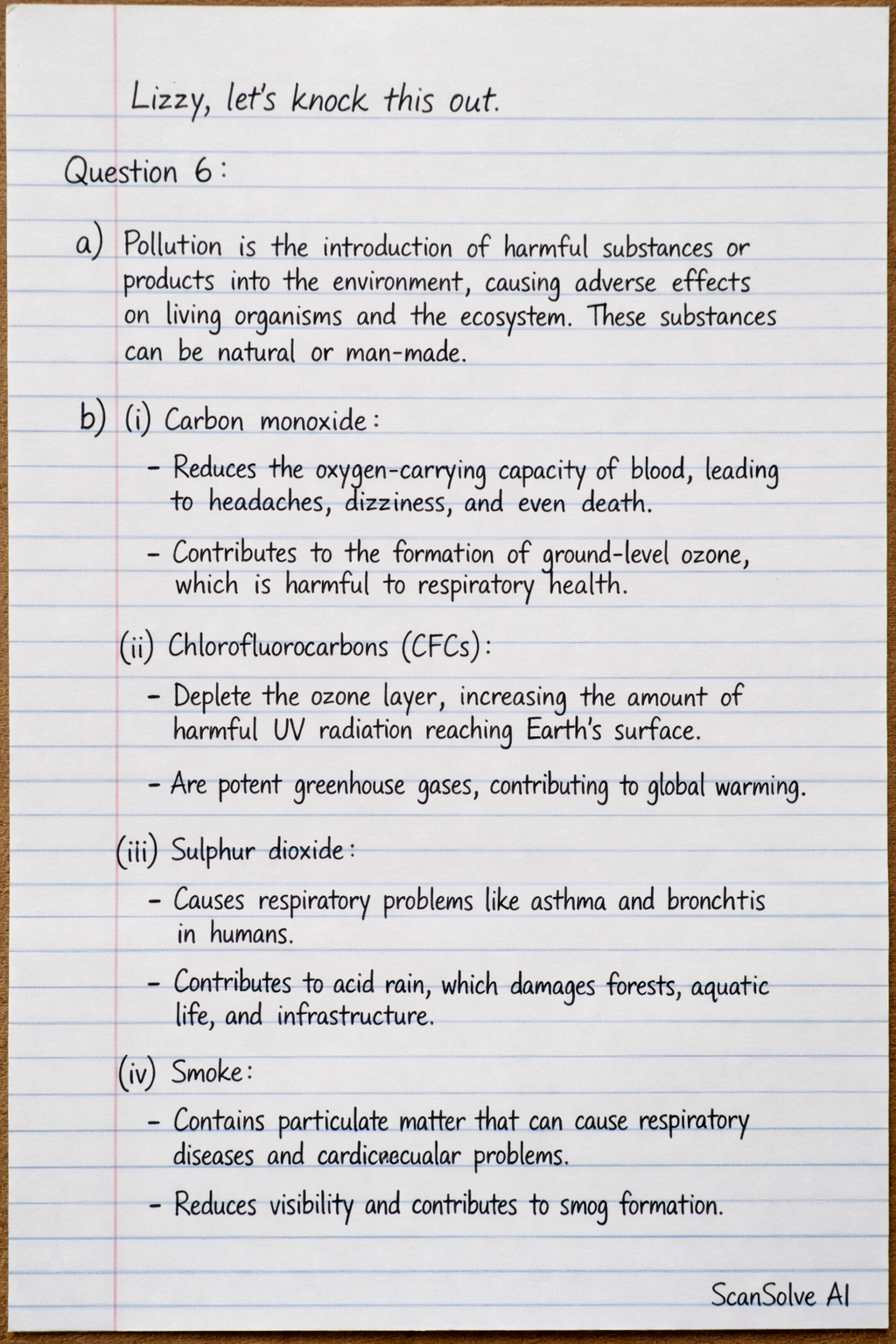
Question 6:
a) Pollution is the introduction of harmful substances or products into the environment, causing adverse effects on living organisms and the ecosystem. These substances can be natural or man-made.
b)
- (i) Carbon monoxide:
- Reduces the oxygen-carrying capacity of blood, leading to headaches, dizziness, and even death.
- Contributes to the formation of ground-level ozone, which is harmful to respiratory health.
- (ii) Chlorofluorocarbons (CFCs):
- Deplete the ozone layer, increasing the amount of harmful UV radiation reaching Earth's surface.
- Are potent greenhouse gases, contributing to global warming.
- (iii) Sulphur dioxide:
- Causes respiratory problems like asthma and bronchitis in humans.
- Contributes to acid rain, which damages forests, aquatic life, and infrastructure.
- (iv) Smoke:
- Contains particulate matter that can cause respiratory diseases and cardiovascular problems.
- Reduces visibility and contributes to smog formation.
- (v) Nitrogen dioxide:
- Irritates the respiratory tract, leading to breathing difficulties and increased susceptibility to infections.
- Contributes to the formation of acid rain and photochemical smog.
c) The carbon cycle describes the movement of carbon atoms between the Earth's atmosphere, oceans, land, and living organisms.
- Photosynthesis: Plants absorb carbon dioxide () from the atmosphere to produce organic compounds.
- Respiration: Living organisms release into the atmosphere through cellular respiration.
- Decomposition: Decomposers break down dead organic matter, releasing carbon into the soil and atmosphere.
- Combustion: Burning fossil fuels (coal, oil, natural gas) and biomass releases large amounts of into the atmosphere.
- Oceanic exchange: dissolves in ocean water and is exchanged between the atmosphere and the oceans. Marine organisms use dissolved carbon to form shells and skeletons.
Question 7:
a) Excessive consumption of alcohol affects society in several ways:
- Health problems: Increased burden on healthcare systems due to alcohol-related diseases (e.g., liver disease, heart disease, mental health issues).
- Economic impact: Decreased productivity at work, increased absenteeism, and higher healthcare costs.
- Social problems: Increased rates of domestic violence, child neglect, public disorder, and crime.
- Accidents: Higher incidence of road accidents and other injuries due to impaired judgment.
- Family breakdown: Strain on family relationships, leading to divorce and adverse effects on children.
b) Excessive consumption of alcohol can be combated through:
- Public awareness campaigns: Educating the public about the dangers of excessive alcohol use.
- Strict regulations: Implementing and enforcing laws on alcohol sales, advertising, and drinking age.
- Increased taxation: Raising taxes on alcoholic beverages to make them less affordable.
- Support programs: Providing accessible treatment and rehabilitation services for individuals with alcohol dependence.
- Responsible drinking initiatives: Promoting moderate consumption and discouraging binge drinking.
c)
- (i) Hands:
- Wash hands frequently with soap and water, especially before eating and after using the restroom.
- Use hand sanitizers when soap and water are not available.
- Keep nails trimmed and clean to prevent germ accumulation.
- (ii) The eye:
- Avoid rubbing eyes with dirty hands.
- Wear protective eyewear when engaging in activities that could cause eye injury (e.g., sports, working with chemicals).
- Limit screen time and take regular breaks to reduce eye strain.
- (iii) The ear:
- Avoid inserting cotton swabs or sharp objects into the ear canal, as this can damage the eardrum.
- Protect ears from loud noises by using earplugs or earmuffs.
- Seek medical attention for ear pain, hearing loss, or persistent ringing.
Question 8:
a) Sewage must be treated before disposal for the following reasons:
- Prevent disease transmission: Raw sewage contains pathogenic microorganisms (bacteria, viruses, parasites) that can cause waterborne diseases like cholera, typhoid, and dysentery. Treatment kills these pathogens.
- Protect aquatic ecosystems: Untreated sewage depletes oxygen in water bodies, harming fish and other aquatic life. It also introduces excess nutrients, leading to algal blooms.
- Prevent odor and aesthetic pollution: Raw sewage has an unpleasant odor and makes water bodies unsightly.
- Comply with environmental regulations: Most countries have laws requiring sewage treatment to protect public health and the environment.
- Conserve water resources: Treated wastewater can sometimes be reused for irrigation or industrial purposes, conserving fresh water.
b) Different methods of garbage treatment include:
- Landfilling: Waste is buried in designated areas, compacted, and covered with soil. This is a common method but requires large land areas and can lead to leachate and methane gas production.
- Incineration: Waste is burned at high temperatures to reduce its volume and generate energy. This method can produce air pollutants if not properly managed.
- Composting: Organic waste (food scraps, yard waste) is decomposed by microorganisms to create nutrient-rich compost, which can be used as a soil amendment.
- Recycling: Materials like paper, plastic, glass, and metal are collected, processed, and reused to produce new products, reducing the need for raw materials and energy.
- Anaerobic digestion: Organic waste is broken down by microorganisms in the absence of oxygen to produce biogas (methane) and digestate.
- Pyrolysis/Gasification: Waste is heated in the absence or limited presence of oxygen to produce fuel gases, oils, and char.
c) Processes involved in the purification of water at home (on a small scale):
- Boiling: Heating water to a rolling boil for at least one minute kills most bacteria, viruses, and parasites. This is a simple and effective method for microbiological purification.
- Filtration: Using a water filter (e.g., ceramic filter, activated carbon filter, cloth filter) removes suspended particles, sediment, and some larger microorganisms. Activated carbon can also remove chlorine and some organic contaminants, improving taste and odor.
- Chemical disinfection: Adding chemical disinfectants like chlorine tablets, iodine, or household bleach (sodium hypochlorite) to water kills most pathogens. The water needs to sit for a specific contact time (e.g., 30 minutes) before consumption.
- Solar Water Disinfection (SODIS): Filling clear plastic bottles with water and exposing them to direct sunlight for several hours (typically 6 hours on sunny days, 2 days on cloudy days) uses UV radiation and heat to kill pathogens.
Question 9:
a)
- (i) Gonorrhoea:
- Causative agent: Neisseria gonorrhoeae (bacterium).
- Mode of transmission: Sexual contact (vaginal, anal, oral).
- Two signs/symptoms: Painful urination, abnormal discharge from the penis or vagina.
- Two preventive measures: Consistent and correct use of condoms, abstinence or monogamy with an uninfected partner.
- (ii) Poliomyelitis:
- Causative agent: Poliovirus (virus).
- Mode of transmission: Fecal-oral route (contaminated food or water), direct contact with an infected person.
- Two signs/symptoms: Fever, fatigue, headache, muscle weakness, paralysis (in severe cases).
- Two preventive measures: Vaccination (oral polio vaccine or inactivated polio vaccine), good hygiene practices (handwashing).
- (iii) Typhoid fever:
- Causative agent: Salmonella Typhi (bacterium).
- Mode of transmission: Fecal-oral route (contaminated food or water), direct contact with an infected person.
- Two signs/symptoms: High fever, headache, abdominal pain, constipation or diarrhea, rose spots on the chest.
- Two preventive measures: Vaccination, ensuring safe drinking water and food preparation, proper sanitation and hygiene.
b) Pathogens cause diseases by invading the host's body and multiplying. They can damage host cells and tissues directly, produce toxins that interfere with normal physiological functions, or trigger an excessive or inappropriate immune response that harms the host.
Still stuck on this one?
Ask a follow-up, and the answer starts from this question.
More English Questions
Handwritten Step-by-Step Solution
Get this as a handwritten image on WhatsApp — like a tutor wrote it for you.
Try on WhatsApp