
We read your photo as:
Answer the following question in english india
ScanSolve AI Answer
Here are the answers to your questions:
-
How does an assembler work? An assembler translates assembly language code into machine code. It reads the assembly language program (source code) line by line, converting each mnemonic instruction and symbolic address into its corresponding binary machine code. The output is an object file containing machine-executable instructions.
-
Why is the fourth generation language easiest of all the languages? Fourth-generation languages (4GLs) are considered the easiest because they are designed to be closer to natural human language and focus on what needs to be done rather than how to do it. They often use graphical interfaces, simple commands, and non-procedural approaches, requiring less detailed programming knowledge from the user.
-
What is a language processor? A language processor (also known as a language translator) is a type of system software that converts a program written in one programming language (source code) into another programming language (target code), typically machine code, so that a computer can understand and execute it. Examples include compilers, interpreters, and assemblers.
Still stuck on this one?
Ask a follow-up, and the answer starts from this question.
More English Questions
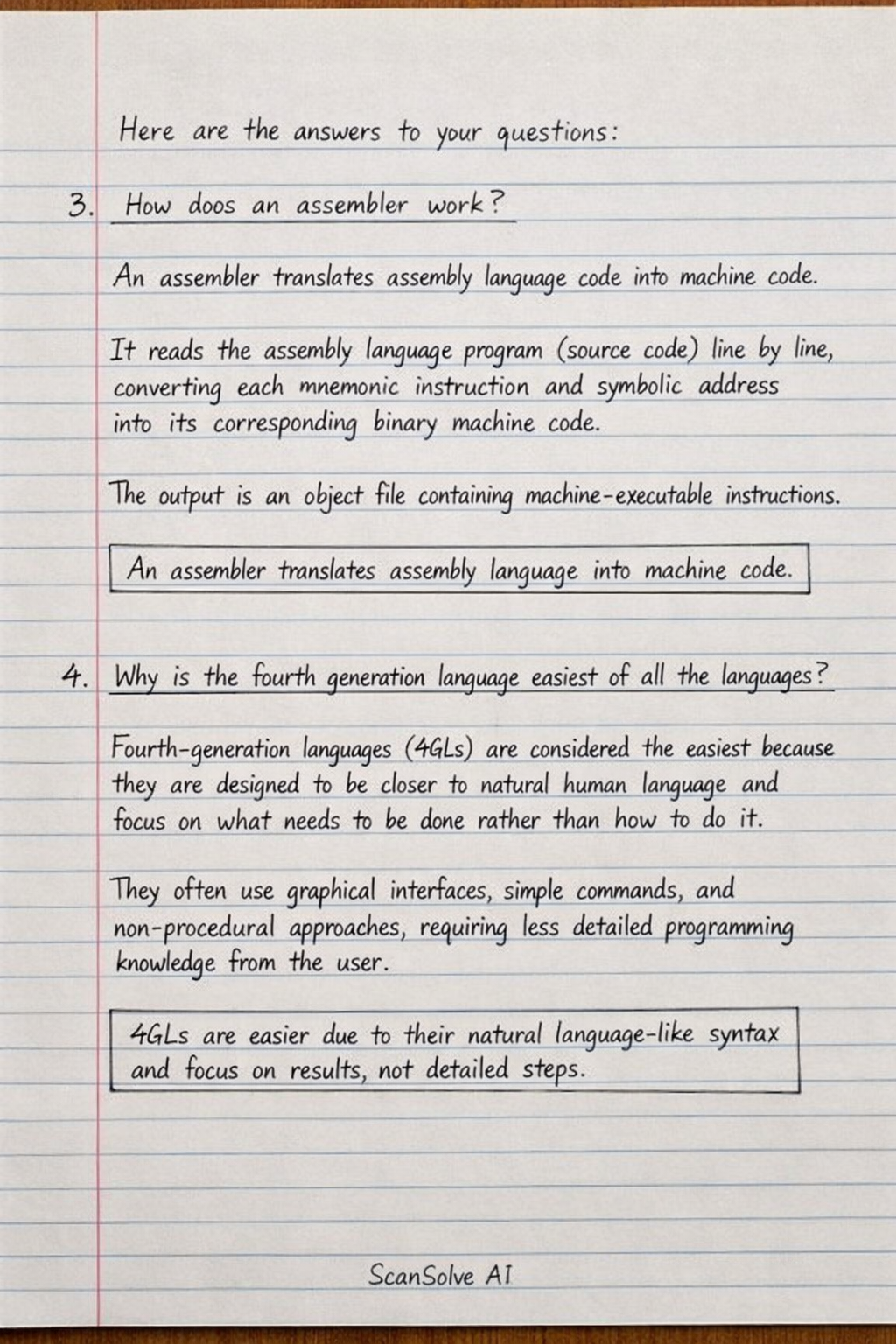
Handwritten Step-by-Step Solution
Get this as a handwritten image on WhatsApp — like a tutor wrote it for you.
Try on WhatsApp