
We read your photo as:
Answer these questions each questions must have its paragraph
ScanSolve AI Answer
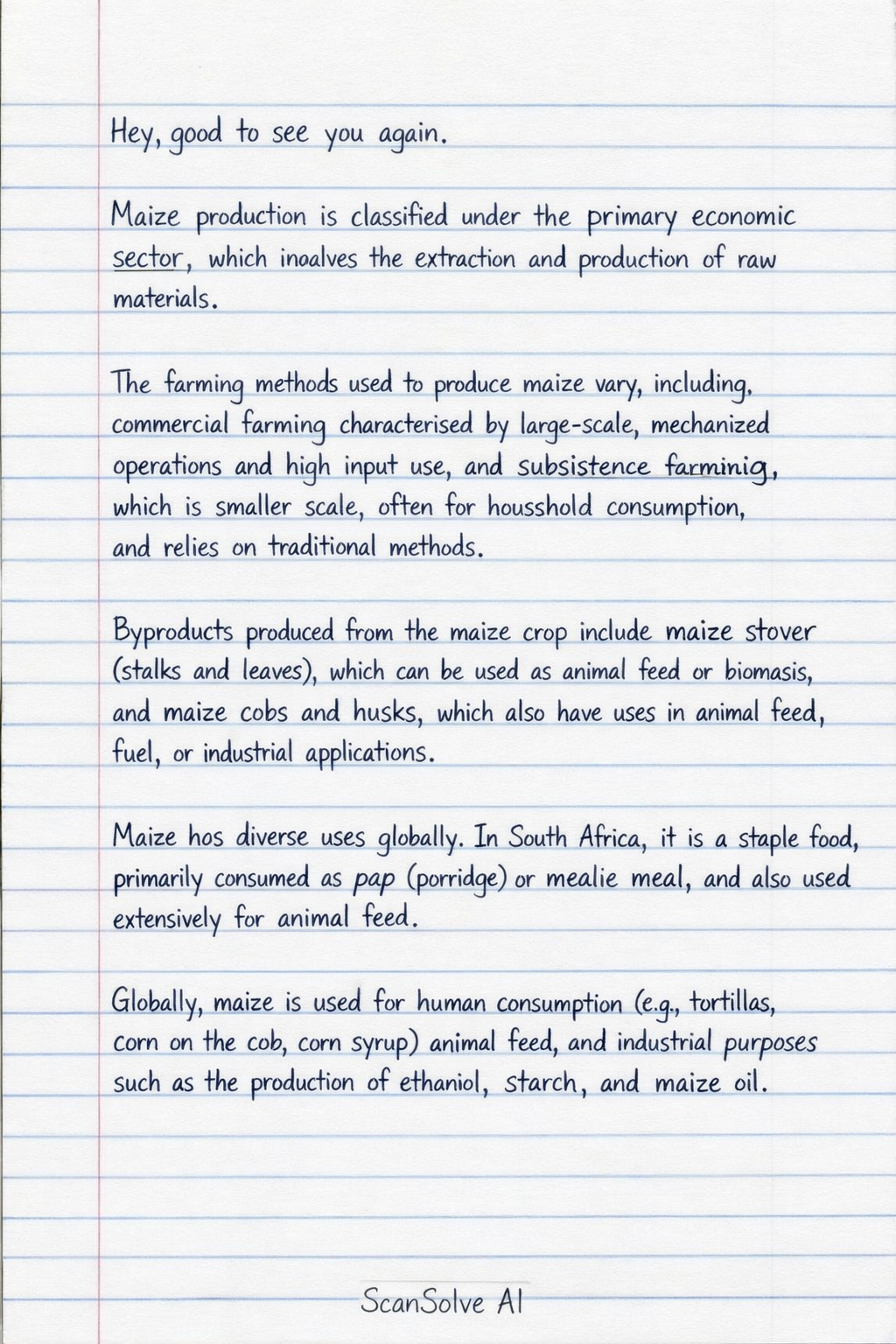
Maize production is classified under the primary economic sector, which involves the extraction and production of raw materials. The farming methods used to produce maize vary, including commercial farming characterized by large-scale, mechanized operations and high input use, and subsistence farming, which is smaller scale, often for household consumption, and relies on traditional methods.
Byproducts produced from the maize crop include maize stover (stalks and leaves), which can be used as animal feed or biomass, and maize cobs and husks, which also have uses in animal feed, fuel, or industrial applications.
Maize has diverse uses globally. In South Africa, it is a staple food, primarily consumed as pap (porridge) or mealie meal, and also used extensively for animal feed. Globally, maize is used for human consumption (e.g., tortillas, corn on the cob, corn syrup), animal feed, and industrial purposes such as the production of ethanol, starch, and maize oil.
The main maize-producing regions in South Africa are concentrated in the Maize Triangle, which encompasses parts of the Free State, Mpumalanga, and North West provinces. These areas are characterized by suitable climatic and soil conditions for maize cultivation.
Conditions that favor maize production include adequate rainfall (or reliable irrigation), warm temperatures, and fertile, well-drained soils. Conversely, factors that hinder production include droughts, excessive rainfall leading to flooding, pests and diseases, poor soil fertility, and lack of access to modern farming technologies or inputs.
Food security entails all people at all times having physical, social, and economic access to sufficient, safe, and nutritious food that meets their dietary needs and food preferences for an active and healthy life. Economic development refers to the sustained improvement in the economic well-being and quality of life for a nation's population, often involving structural changes in the economy, increased productivity, and improved living standards.
Indicators that can be used to measure the contribution of maize to economic development and food security include: for economic development, Gross Domestic Product (GDP) per capita, agricultural employment rates, and income levels of farmers; and for food security, caloric intake per capita, prevalence of undernourishment, food price stability, and dietary diversity.
Still stuck on this one?
Ask a follow-up, and the answer starts from this question.
More English Questions
Handwritten Step-by-Step Solution
Get this as a handwritten image on WhatsApp — like a tutor wrote it for you.
Try on WhatsApp