
We read your photo as:
How can communities be adequately prepared to deal with natural disasters? Write down an essay 300-350 words.
ScanSolve AI Answer
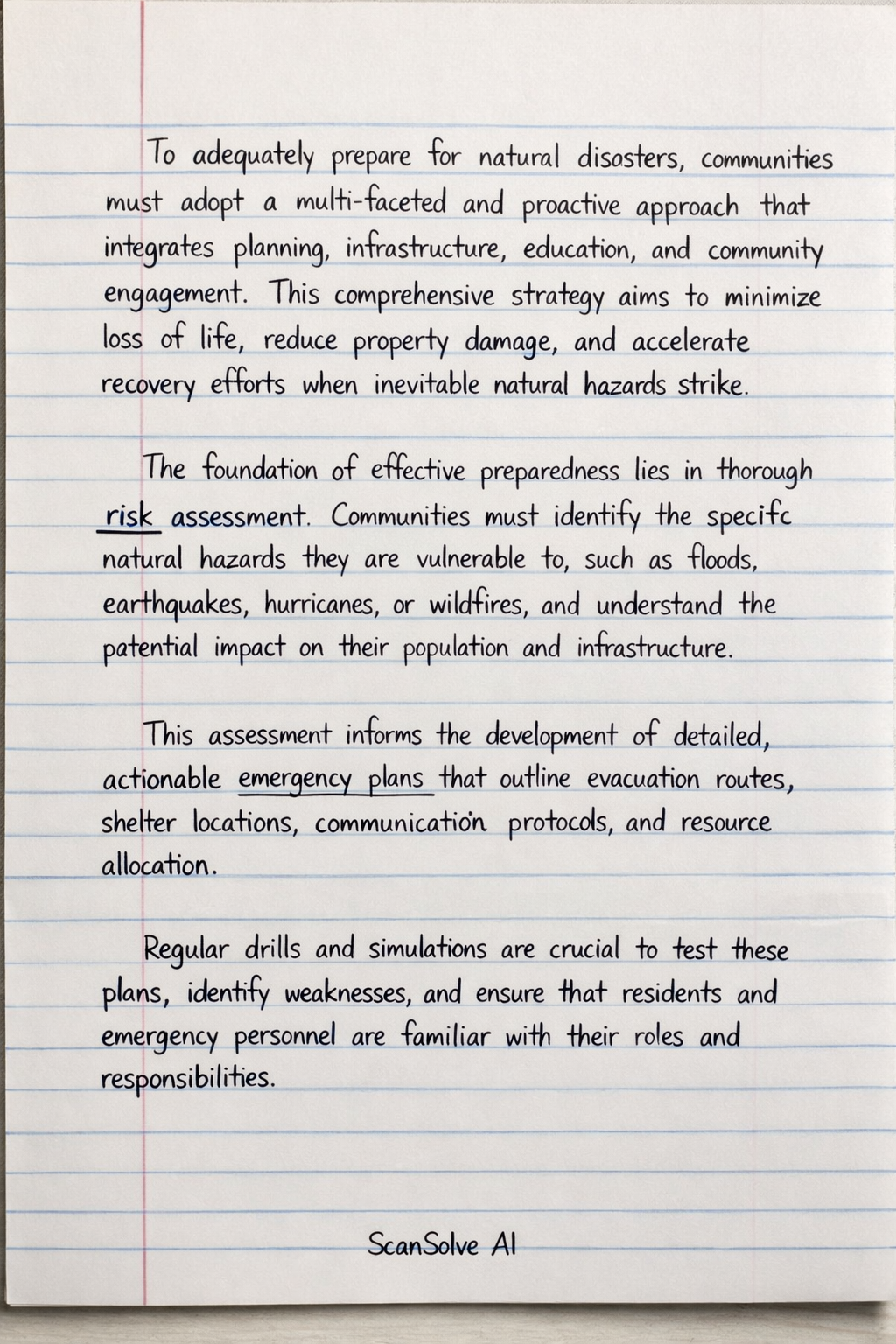
To adequately prepare for natural disasters, communities must adopt a multi-faceted and proactive approach that integrates planning, infrastructure, education, and community engagement. This comprehensive strategy aims to minimize loss of life, reduce property damage, and accelerate recovery efforts when inevitable natural hazards strike.
The foundation of effective preparedness lies in thorough risk assessment. Communities must identify the specific natural hazards they are vulnerable to, such as floods, earthquakes, hurricanes, or wildfires, and understand the potential impact on their population and infrastructure. This assessment informs the development of detailed, actionable emergency plans that outline evacuation routes, shelter locations, communication protocols, and resource allocation. Regular drills and simulations are crucial to test these plans, identify weaknesses, and ensure that residents and emergency personnel are familiar with their roles and responsibilities.
Investing in resilient infrastructure is another critical component. This involves constructing buildings and public utilities to withstand anticipated hazards, reinforcing critical facilities like hospitals and emergency operation centers, and developing robust early warning systems. Advanced technologies, such as weather radar, seismic sensors, and flood monitoring systems, provide vital lead time, enabling authorities to issue timely alerts and residents to take protective measures. Protecting essential services like power grids, water supply, and communication networks ensures continuity during and after a disaster.
Furthermore, public education and community engagement are paramount. Awareness campaigns should inform residents about local risks, personal safety measures, and how to assemble emergency kits. Clear and reliable communication channels are essential for disseminating information before, during, and after an event. Fostering strong community networks, volunteer programs, and neighborhood watch initiatives strengthens social cohesion, enabling neighbors to support each other and facilitating a more organized and effective local response.
Ultimately, adequate community preparedness for natural disasters is a continuous process requiring sustained commitment from local governments, emergency services, and citizens. By prioritizing comprehensive planning, investing in resilient infrastructure, and empowering an informed and engaged populace, communities can significantly enhance their capacity to withstand, respond to, and recover from the challenges posed by natural hazards, thereby safeguarding lives and livelihoods.
Still stuck on this one?
Ask a follow-up, and the answer starts from this question.
More English Questions
Handwritten Step-by-Step Solution
Get this as a handwritten image on WhatsApp — like a tutor wrote it for you.
Try on WhatsApp