
We read your photo as:
Discuss the perspective that literature is a mirror of society, using Mary Laurene Browne's "This is Africa's Women" as an example.
English
ScanSolve AI Answer
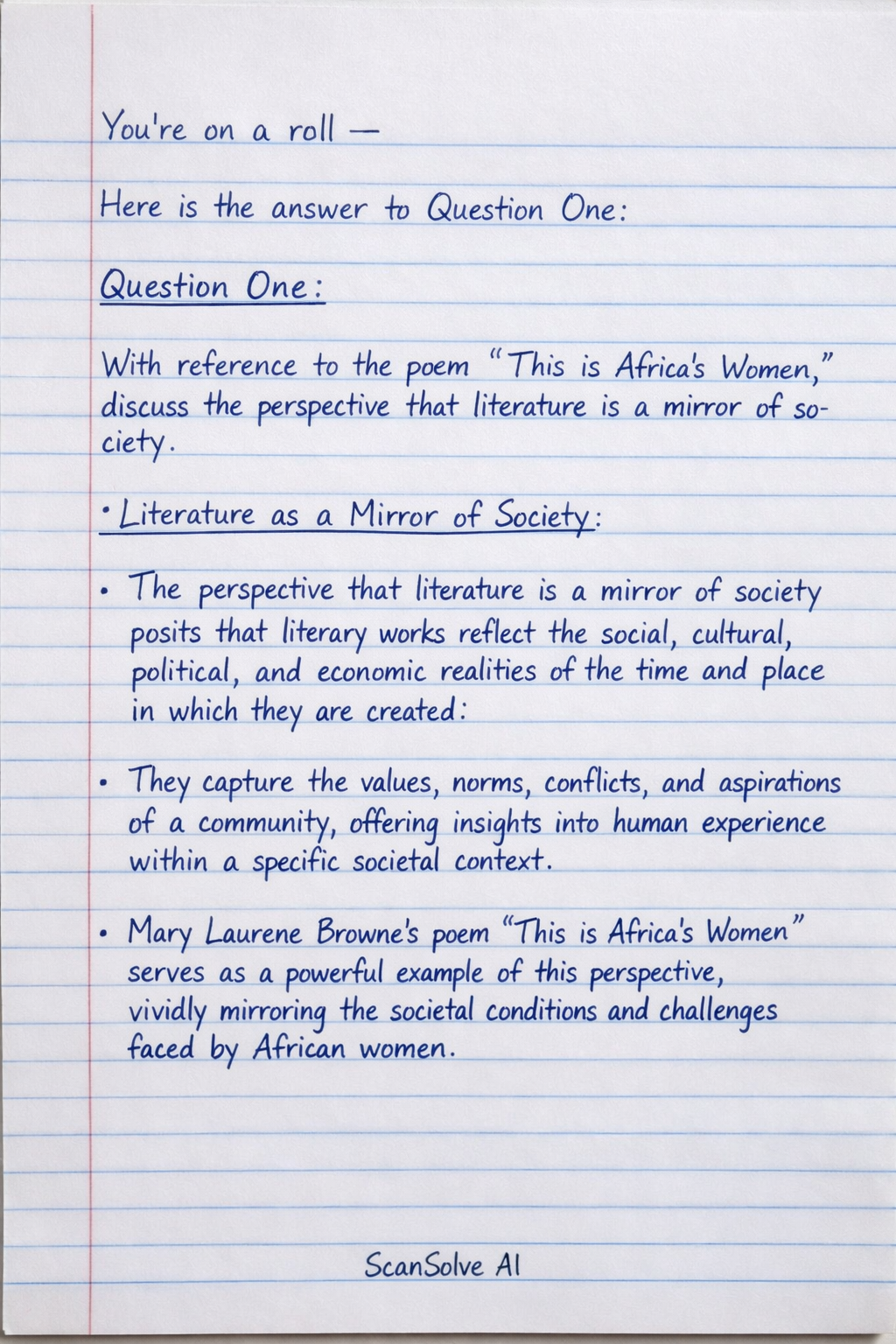
Here is the answer to Question One:
Question One:
With reference to the poem "This is Africa's Women" (find below), discuss the perspective that literature is a mirror of society.
-
Literature as a Mirror of Society:
- The perspective that literature is a mirror of society posits that literary works reflect the social, cultural, political, and economic realities of the time and place in which they are created. They capture the values, norms, conflicts, and aspirations of a community, offering insights into human experience within a specific societal context.
- Mary Laurene Browne's poem "This is Africa's Women" serves as a powerful example of this perspective, vividly mirroring the societal conditions and challenges faced by African women.
-
Reflection of Societal Constraints and Gender Roles:
- The lines "Her wings are spread but cultural norms delay the flight for yet another decade maybe two or perhaps a century more" directly reflect the societal constraints and traditional cultural norms that hinder the progress and freedom of African women. It mirrors a society where women's potential is recognized ("wings are spread") but their actualization is postponed due to deeply ingrained social expectations.
- The poem further illustrates societal expectations of female submission and silence: "She knows not to read the times or raise her voice to speak her mind." This mirrors a patriarchal society where women are discouraged from expressing their opinions or challenging the status quo, highlighting a lack of agency.
-
Portrayal of Toil and Burden:
- The poem mirrors the immense labor and self-sacrifice expected of African women: "The toil continues from dawn to dark in fields and homes for kith and kin." This reflects the reality of women often bearing the dual burden of agricultural work and extensive domestic responsibilities, caring for family members without respite.
- The image of the infant's "feverish whimpers by demanding only a mother's touch" even after a long day of toil further reflects the unending demands and emotional burdens placed on African mothers, showcasing a societal expectation of constant nurturing and care.
-
Expression of Collective Identity and Aspiration:
- The address "O woman African of many hues So many burdens your spirit bruise" mirrors the shared experience of hardship and resilience among diverse African women. It reflects a collective identity shaped by common struggles.
- Finally, the lines "This flight delayed will soar high rising higher, higher, higher a must for you a must for Africa" mirror the societal aspiration for women's empowerment and liberation. It suggests that the upliftment of African women is not just an individual desire but a societal necessity for the progress of the entire continent, reflecting a growing awareness of their crucial role.
-
Conclusion:
- Through its depiction of cultural norms, gender roles, daily struggles, and future aspirations, "This is Africa's Women" functions as a clear mirror, reflecting the complex social realities and experiences of African women. It demonstrates how literature can provide a nuanced and emotionally resonant portrayal of societal structures and human conditions.
Was this helpful?
Still stuck on this one?
Ask a follow-up, and the answer starts from this question.
Got a different question?Ask your own question
More English Questions
QDiscuss the complementary relationship between literature and sociology in understanding society.QSECTION B: AFRICAN LITERATUREQExplain why literature cannot be adequately understood without its cultural and social context…QAnalyze the role of education as a symbol of hope and resistance in Athol Fugard's My Children! My…QWith the aid of "The Concubine" by Elechi Amadi, here are five ideas communicated in the novel and…
Browse by topic:Literature
Handwritten Step-by-Step Solution
Get this as a handwritten image on WhatsApp — like a tutor wrote it for you.
Try on WhatsApp