Identify the type of argument as illustrated: i. Most students are lazy; ii. Kwame is a student; iii. Therefore, Kwame is lazy.

English
Identify the type of argument as illustrated: i. Most students are lazy; ii. Kwame is a student; iii. Therefore, Kwame is lazy.

ScanSolve AI Answer

Answer

Kwame is lazy

  1. Identify the type of argument as illustrated: i. Most students are lazy; ii. Kwame is a student; iii. Therefore, Kwame is lazy.

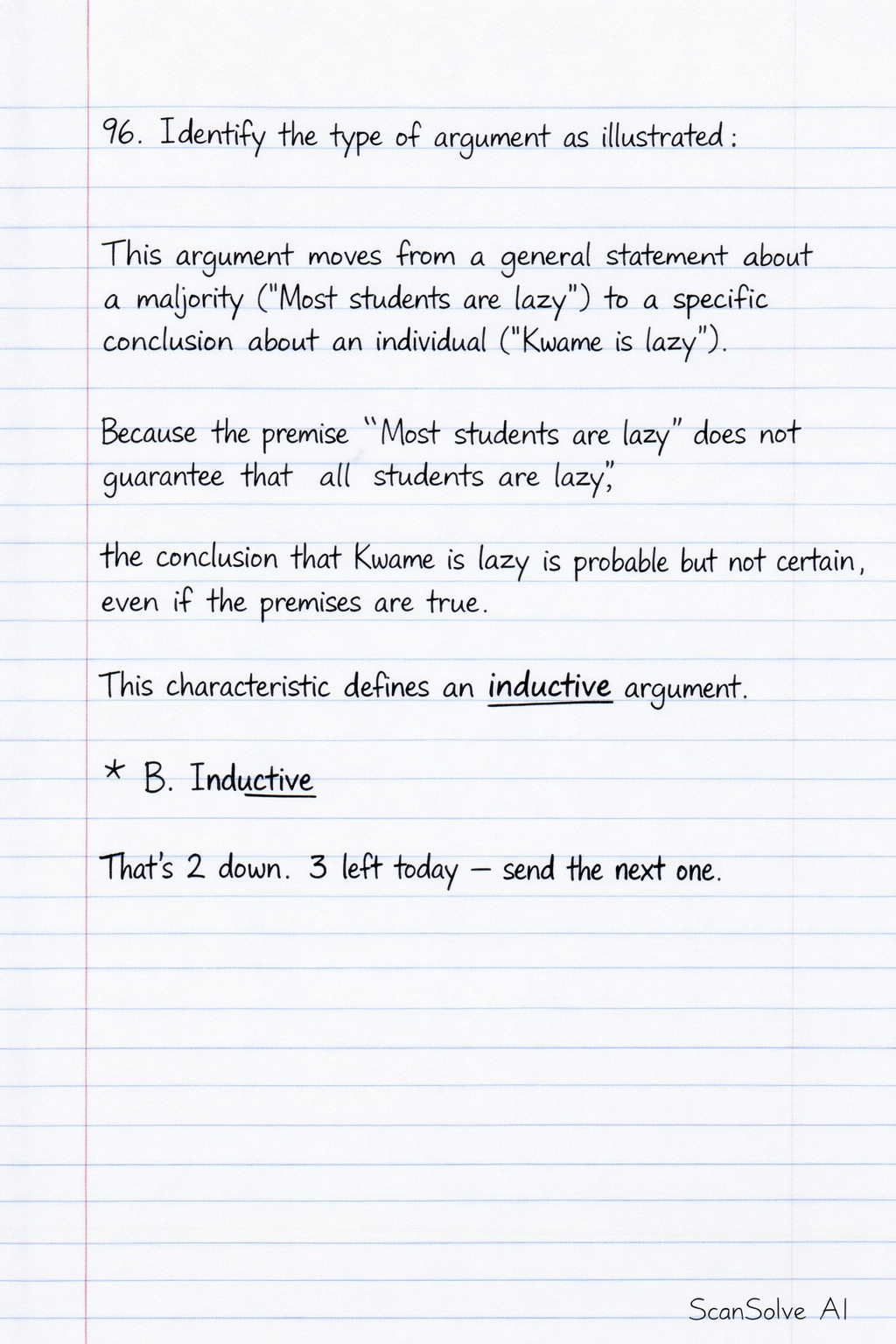
This argument moves from a general statement about a majority ("Most students are lazy") to a specific conclusion about an individual ("Kwame is lazy"). Because the premise "Most students are lazy" does not guarantee that all students are lazy, the conclusion that Kwame is lazy is probable but not certain, even if the premises are true. This characteristic defines an inductive argument.

  • B. Inductive

That's 2 down. 3 left today — send the next one.

Was this helpful?

Need help with your own homework?

Get instant step-by-step solutions to any question. Free to start.

Ask Your Question
Handwritten step-by-step solution preview

Handwritten Step-by-Step Solution

Get this as a handwritten image on WhatsApp — like a tutor wrote it for you.

Try on WhatsApp

Still have questions?

Quick Answer
  1. Identify the type of argument as illustrated: i.
  2. Most students are lazy; ii.
  3. Kwame is a student; iii.
  4. Therefore, Kwame is lazy.
Identify the type of argument as illustrated: i. Most students are lazy; ii. Kwame is a student; iii. Therefore, Kwame is lazy.
English

This English question involves literary analysis, grammar, or writing skills. The detailed response below provides a well-structured answer with supporting evidence and clear explanations.

ScanSolve AI Answer
96. Identify the type of argument as illustrated: i. Most students are lazy; ii. Kwame is a student; iii. Therefore, Kwame is lazy. This argument moves from a general statement about a majority ("Most students are lazy") to a specific conclusion about an individual ("Kwame is lazy"). Because the premise "Most students are lazy" does not guarantee that all students are lazy, the conclusion that Kwame is lazy is probable but not certain, even if the premises are true. This characteristic defines an inductive argument. B. Inductive That's 2 down. 3 left today — send the next one.