

This English question involves literary analysis, grammar, or writing skills. The detailed response below provides a well-structured answer with supporting evidence and clear explanations.
ScanSolve AI Answer
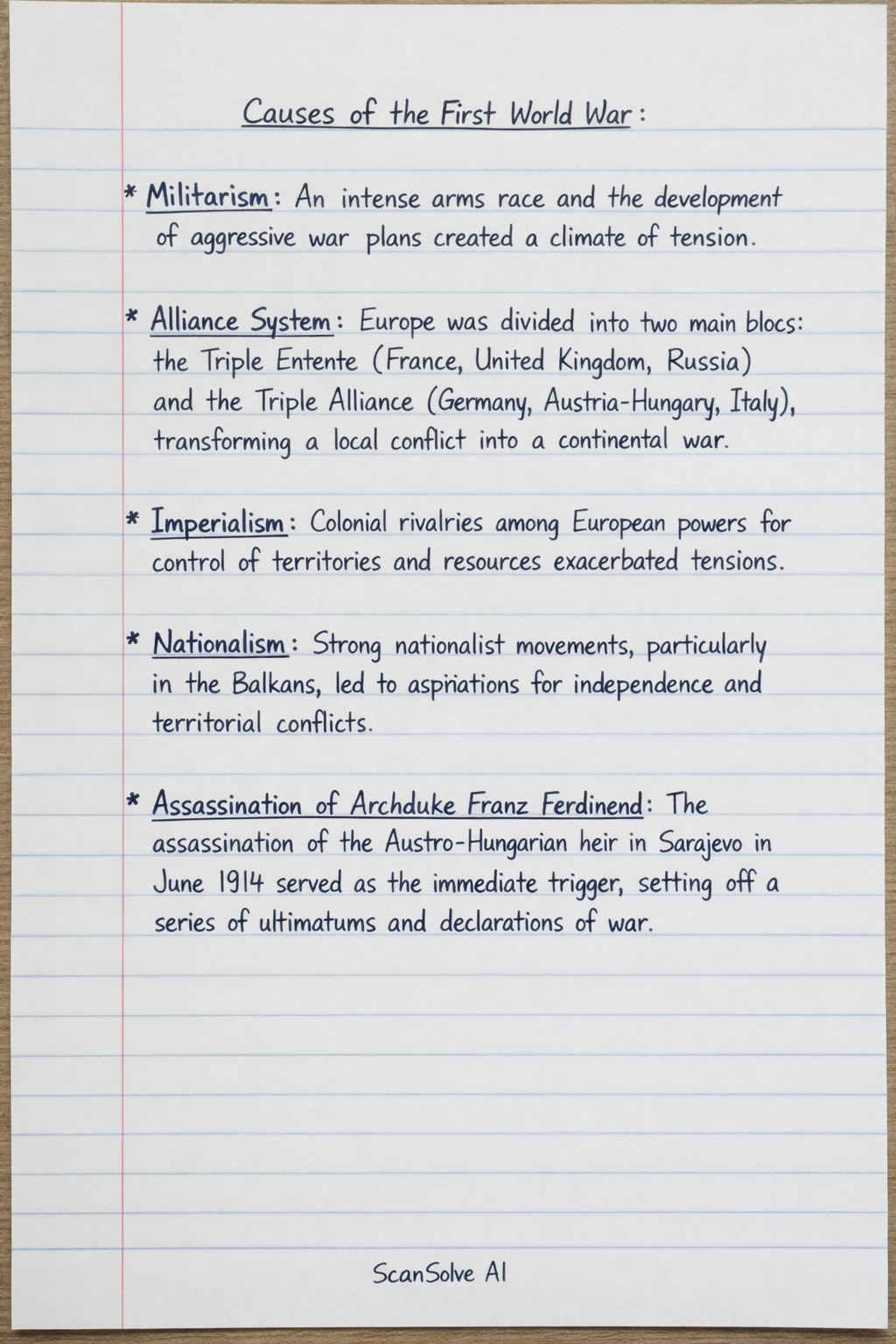
Here is the complete answer to the first question of Section C: Causes of the First World War: • Militarism: An intense arms race and the development of aggressive war plans created a climate of tension. • Alliance System: Europe was divided into two main blocs: the Triple Entente (France, United Kingdom, Russia) and the Triple Alliance (Germany, Austria-Hungary, Italy), transforming a local conflict into a continental war. • Imperialism: Colonial rivalries among European powers for control of territories and resources exacerbated tensions. • Nationalism: Strong nationalist movements, particularly in the Balkans, led to aspirations for independence and territorial conflicts. • Assassination of Archduke Franz Ferdinand: The assassination of the Austro-Hungarian heir in Sarajevo in June 1914 served as the immediate trigger, setting off a series of ultimatums and declarations of war. Germany's Responsibility for the Outbreak of War: • The "Blank Cheque": Germany offered unconditional support to Austria-Hungary after the Archduke's assassination, encouraging it to take a hard line against Serbia. • Invasion of Belgium: Germany's invasion of neutral Belgium to attack France prompted the United Kingdom's entry into the war. • Schlieffen Plan: The German military strategy involved a rapid and massive attack through Belgium and France, which contributed to the rapid escalation of the conflict. • War Guilt Clause: Article 231 of the Treaty of Versailles officially attributed moral and material responsibility for the outbreak of the war to Germany and its allies. Reasons for the Defeat of the Central Powers: • Entry of the United States into the War: The arrival of American troops and resources from 1917 significantly strengthened the Allies and exhausted the Central Powers. • Allied Naval Blockade: The blockade imposed by the Allies cut off the Central Powers from essential supplies, leading to severe food and material shortages. • Exhaustion of Resources: After years of war, Germany and Austria-Hungary suffered from economic and human exhaustion, with millions of casualties and declining industrial production. • Allied Numerical and Material Superiority: The Allies were ultimately able to mobilize more troops and equipment thanks to their colonial empires and the support of the United States. • Internal Collapse: Social unrest, mutinies, and revolutions (notably the German Revolution of 1918) weakened the Central Powers' governments, leading to their collapse and the signing of armistices. Send me the next one 📸