Explain any two functions of a noun clause in a sentence and give 2 example each.

English
Explain any two functions of a noun clause in a sentence and give 2 example each.

ScanSolve AI Answer

2 steps

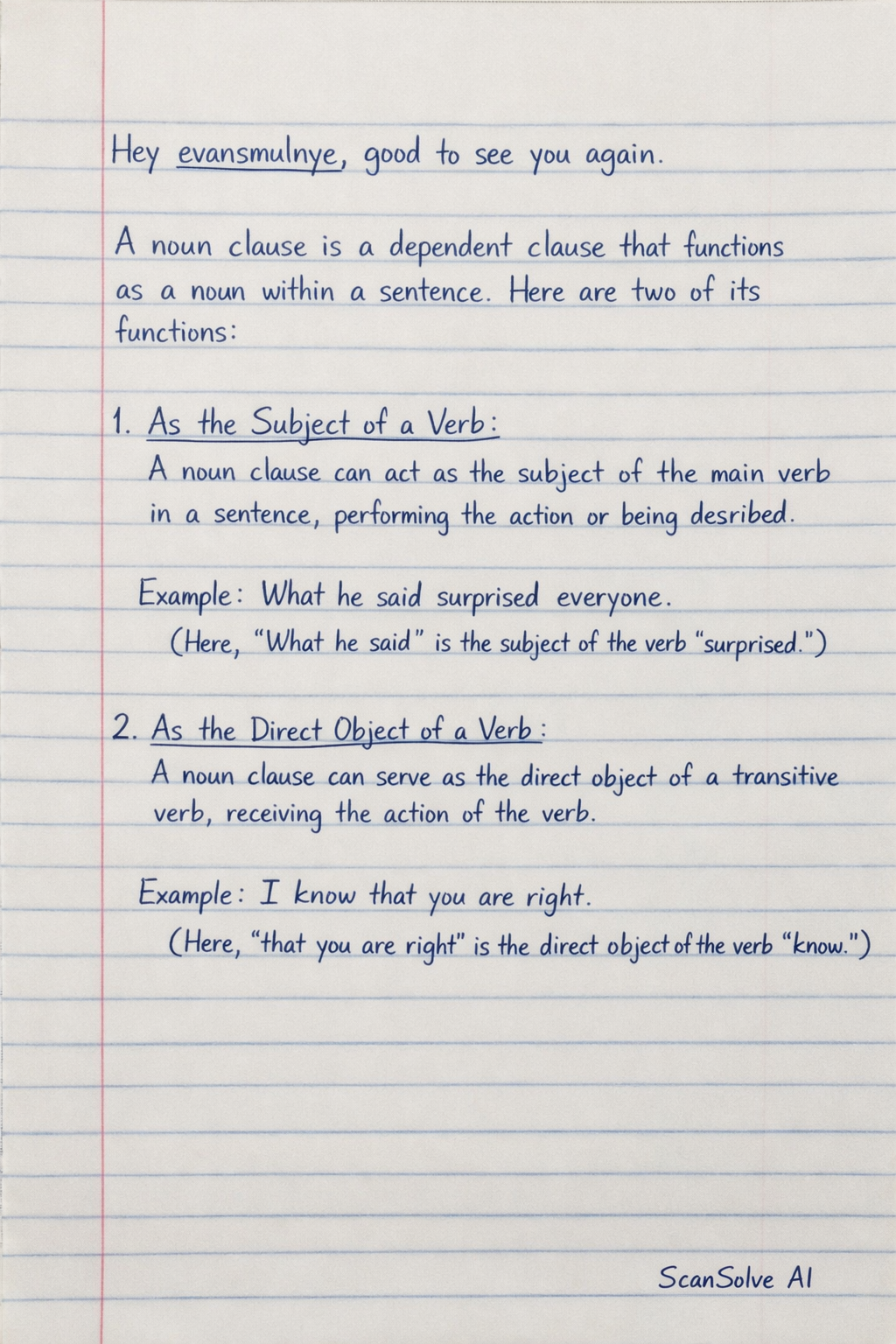
A noun clause is a dependent clause that functions as a noun within a sentence. Here are two of its functions:

  1. As the Subject of a Verb: A noun clause can act as the subject of the main verb in a sentence, performing the action or being described.

    • Example: What he said surprised everyone. (Here, "What he said" is the subject of the verb "surprised.")
  2. As the Direct Object of a Verb: A noun clause can serve as the direct object of a transitive verb, receiving the action of the verb.

    • Example: I know that you are right. (Here, "that you are right" is the direct object of the verb "know.")

Send me the next one 📸

Was this helpful?

Need help with your own homework?

Get instant step-by-step solutions to any question. Free to start.

Ask Your Question
Handwritten step-by-step solution preview

Handwritten Step-by-Step Solution

Get this as a handwritten image on WhatsApp — like a tutor wrote it for you.

Try on WhatsApp

Still have questions?

Quick Answer

A noun clause is a dependent clause that functions as a noun within a sentence. Here are two of its functions: 1.

Explain any two functions of a noun clause in a sentence and give 2 example each.
English

This English question involves literary analysis, grammar, or writing skills. The detailed response below provides a well-structured answer with supporting evidence and clear explanations.

ScanSolve AI Answer
A noun clause is a dependent clause that functions as a noun within a sentence. Here are two of its functions: 1. As the Subject of a Verb: A noun clause can act as the subject of the main verb in a sentence, performing the action or being described. Example: What he said* surprised everyone. (Here, "What he said" is the subject of the verb "surprised.") 2. As the Direct Object of a Verb: A noun clause can serve as the direct object of a transitive verb, receiving the action of the verb. Example: I know that you are right*. (Here, "that you are right" is the direct object of the verb "know.") Send me the next one 📸