
Sources •Fruits: •Momordica charantia ( bitter melon ) – charantin, momordicine- antidiabetic, abortifacient, anthelmintic, contraceptive, antimalarial and laxative. •Vanilla planifolia (Vanilla) - vanillin, vanillic acid – flavoring agent, antiseptic •Piper nigrum ( black pepper) – piperine, limonene- stimulant ,antipyretic, anti-inflammatory, treats epilepsy and snakebite •Coriandrum sativum ( coriander) – linalool,limonene, geraniol- antioxidant, diuretic, flavouring Plant sources •Bark :expectorant •Panax ginseng (Korean ginseng) , P. japonica (Japanese ginseng),P. notoginseng (Chinese ginseng), P. quinquefolium (American ginseng) – ginsenosides- immunomodulatory , stimulant Plant sources •Seeds •Helianthus annuus (sunflower) – α-pinene – anti-inflammatory, Antibacterial •Sesamum indicum (sesame) – lignans (sesamin, sesamolin) – anti oxidant , cholesterol lowering •Salvia hispanica (Chia) – alpha-linolenic acid)- anti diabetic, antihypertensive. Plant sources •Stems : •Ephedra gerardiana ( ephedra) – ephedrine from the liquid extract of the stem - for asthma control . Decoction of stems and roots used in treatment of rheumatism and syphilis in Russia. •Senegalia catechu (previously Acasia catechu) – (catechu, khair)-catechin, epicatechin. -Stem extracts for treatment of Urinary Tract Infections.
English
ScanSolve AI Answer
This is a comprehensive list of plant sources categorized by their specific parts, detailing their active compounds and therapeutic applications.
-
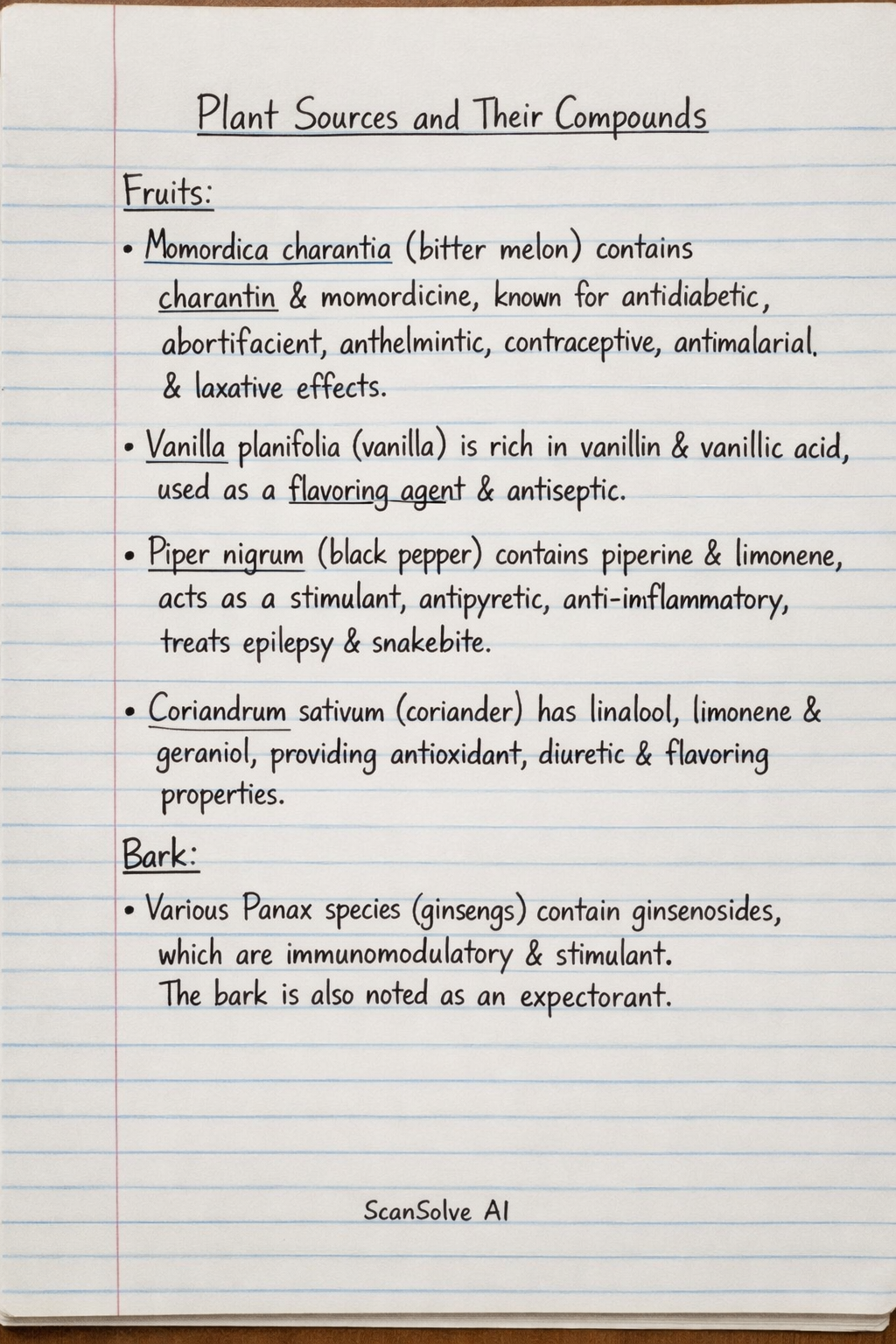
Fruits:
- Momordica charantia (bitter melon) contains charantin and momordicine, known for antidiabetic, abortifacient, anthelmintic, contraceptive, antimalarial, and laxative effects.
- Vanilla planifolia (vanilla) is rich in vanillin and vanillic acid, used as a flavoring agent and antiseptic.
- Piper nigrum (black pepper) contains piperine and limonene, acting as a stimulant, antipyretic, anti-inflammatory, and used to treat epilepsy and snakebite.
- Coriandrum sativum (coriander) has linalool, limonene, and geraniol, providing antioxidant, diuretic, and flavoring properties.
-
Bark:
- Various Panax species (ginsengs) contain ginsenosides, which are immunomodulatory and stimulant. The bark is also noted as an expectorant.
-
Seeds:
- Helianthus annuus (sunflower) contains -pinene, offering anti-inflammatory and antibacterial effects.
- Sesamum indicum (sesame) is rich in lignans (sesamin, sesamolin), known for antioxidant and cholesterol-lowering properties.
- Salvia hispanica (chia) contains alpha-linolenic acid, which is antidiabetic and antihypertensive.
-
Stems:
- Ephedra gerardiana (ephedra) yields ephedrine from its stem extract, used for asthma control. Decoctions of stems and roots are used for rheumatism and syphilis.
- Senegalia catechu (catechu) contains catechin and epicatechin in its stem extracts, used for treating Urinary Tract Infections.
This detailed breakdown effectively illustrates the diverse medicinal and functional uses of different plant parts.
Was this helpful?
Still stuck on this one?
Ask a follow-up, and the answer starts from this question.
Got a different question?Ask your own question
More English Questions
QPlant sources •Flowers: •Rosa damascena(rose) – Citronellol and geraniol- analgesic,antimicrobial…QPlant sources •Bark : •Cinchona officinalis ( brown cinchona ) •Cinchona pubescens/succirubra (red…QPlants sources •Flowers: •Matricaria chamomilla ( German chamomile) – quecretin, chamazulene…QThe herbal treatment for asthmaQQuestions 18-20 refer to the following passage: A passage describing various methods of preparing…
Handwritten Step-by-Step Solution
Get this as a handwritten image on WhatsApp — like a tutor wrote it for you.
Try on WhatsApp