The blank requires a phrase that indicates cause or reason for the subsequent clause. "Due to" means "because of" and correctly introduces the reason.

English
The blank requires a phrase that indicates cause or reason for the subsequent clause. "Due to" means "because of" and correctly introduces the reason.

ScanSolve AI Answer

5 steps

Answer

the first point should be introduced with "First of all"

Here are the solutions to the questions:

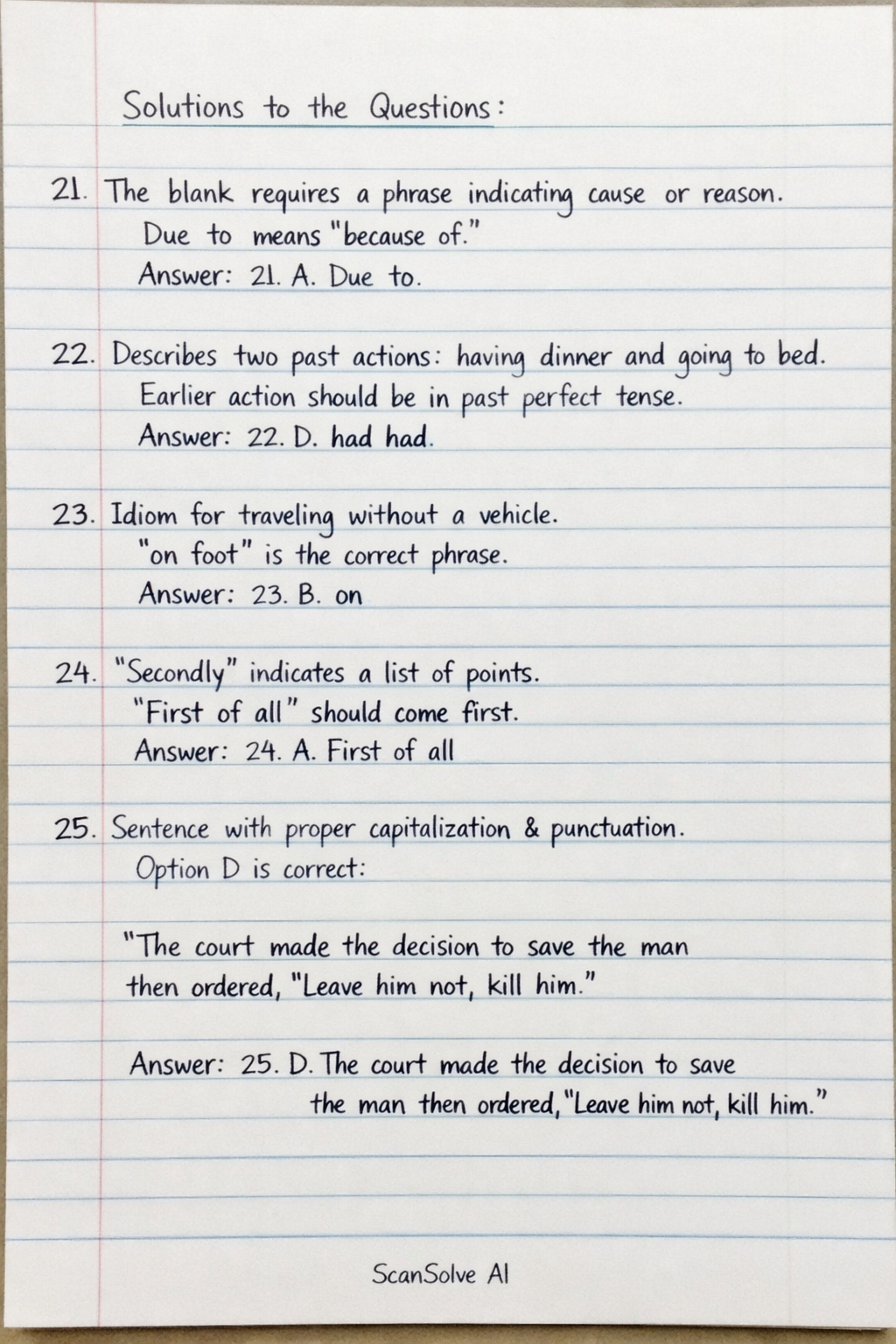
  1. The blank requires a phrase that indicates cause or reason for the subsequent clause. "Due to" means "because of" and correctly introduces the reason. * 21. A. Due to

  2. The sentence describes two past actions: having dinner and going to bed. The action that happened earlier (having dinner) should be in the past perfect tense. * 22. D. had had

  3. The correct idiom for traveling without a vehicle is "on foot". * 23. B. on

  4. The word "Secondly" indicates that a list of points is being made. Therefore, the first point should be introduced with "First of all". * 24. A. First of all

  5. This question asks for the sentence with correct capitalization and punctuation. * Option D correctly uses "made the decision" and places the period inside the quotation marks for the direct speech, and capitalizes the first word of the quote. * 25. D. The court made the decision to save the man then ordered, "Leave him not, kill him."

**Direction III: For questions 26-35, read the following passage

Was this helpful?

Need help with your own homework?

Get instant step-by-step solutions to any question. Free to start.

Ask Your Question
Handwritten step-by-step solution preview

Handwritten Step-by-Step Solution

Get this as a handwritten image on WhatsApp — like a tutor wrote it for you.

Try on WhatsApp

Still have questions?

Quick Answer
  1. Here are the solutions to the questions: 21.
  2. The blank requires a phrase that indicates cause or reason for the subsequent clause.
  3. "Due to" means "because of" and correctly introduces the reason.
  4. The sentence describes two past actions: having dinner and going to bed.
The blank requires a phrase that indicates cause or reason for the subsequent clause. "Due to" means "because of" and correctly introduces the reason.
English

This English question involves literary analysis, grammar, or writing skills. The detailed response below provides a well-structured answer with supporting evidence and clear explanations.

ScanSolve AI Answer
Here are the solutions to the questions: 21. The blank requires a phrase that indicates cause or reason for the subsequent clause. "Due to" means "because of" and correctly introduces the reason. 21. A. Due to 22. The sentence describes two past actions: having dinner and going to bed. The action that happened earlier (having dinner) should be in the past perfect tense. 22. D. had had 23. The correct idiom for traveling without a vehicle is "on foot". 23. B. on 24. The word "Secondly" indicates that a list of points is being made. Therefore, the first point should be introduced with "First of all". 24. A. First of all 25. This question asks for the sentence with correct capitalization and punctuation. Option D correctly uses "made the decision" and places the period inside the quotation marks for the direct speech, and capitalizes the first word of the quote. 25. D. The court made the decision to save the man then ordered, "Leave him not, kill him." **Direction III: For questions 26-35, read the following passage