

This English question involves literary analysis, grammar, or writing skills. The detailed response below provides a well-structured answer with supporting evidence and clear explanations.
ScanSolve AI Answer
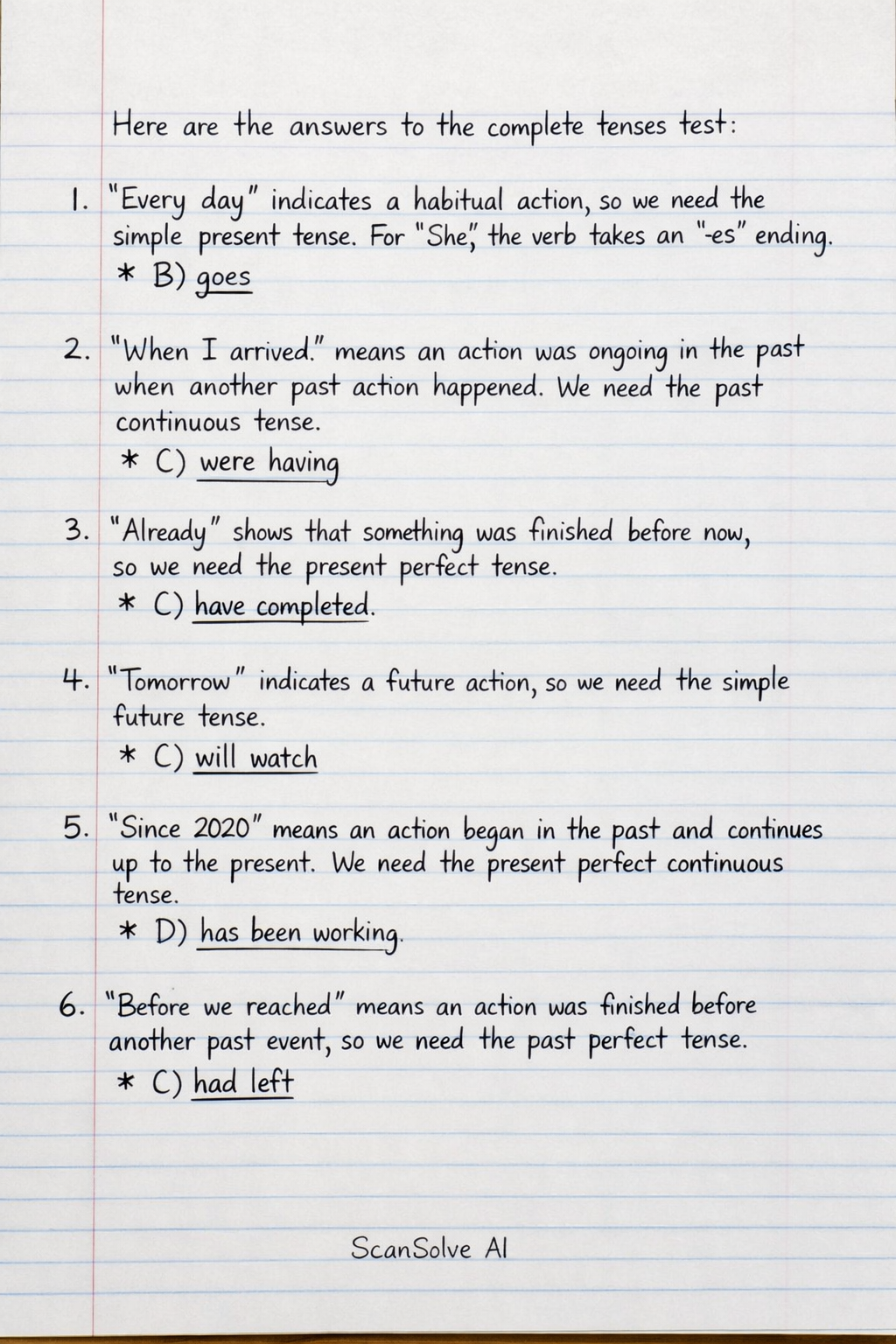
Here are the answers to the complete tenses test: 1. The phrase "every day" indicates a habitual action, requiring the simple present tense. For "She," the verb takes an "-es" ending. B) goes 2. "When I arrived" indicates that an action was ongoing in the past when another past action occurred. This requires the past continuous tense. C) were having 3. The word "already" signifies an action completed before the present moment, requiring the present perfect tense. C) have completed 4. "Tomorrow" indicates a future action, requiring the simple future tense. C) will watch 5. "Since 2020" indicates an action that started in the past and continues up to the present, requiring the present perfect continuous tense. D) has been working 6. "Before we reached" indicates an action that was completed before another past action, requiring the past perfect tense. C) had left 7. "When the phone rang" indicates an action that was ongoing in the past when another past action interrupted it. This requires the past continuous tense. C) was sleeping 8. "By next year" indicates an action that will be completed by a specific point in the future, requiring the future perfect tense. D) will have completed 9. "Right now" indicates an action happening at the moment of speaking, requiring the present continuous tense. C) are playing 10. "Last year" indicates a completed action at a specific time in the past, requiring the simple past tense. C) went 3 done, 2 left today. You're making progress.