

This English question involves literary analysis, grammar, or writing skills. The detailed response below provides a well-structured answer with supporting evidence and clear explanations.
ScanSolve AI Answer
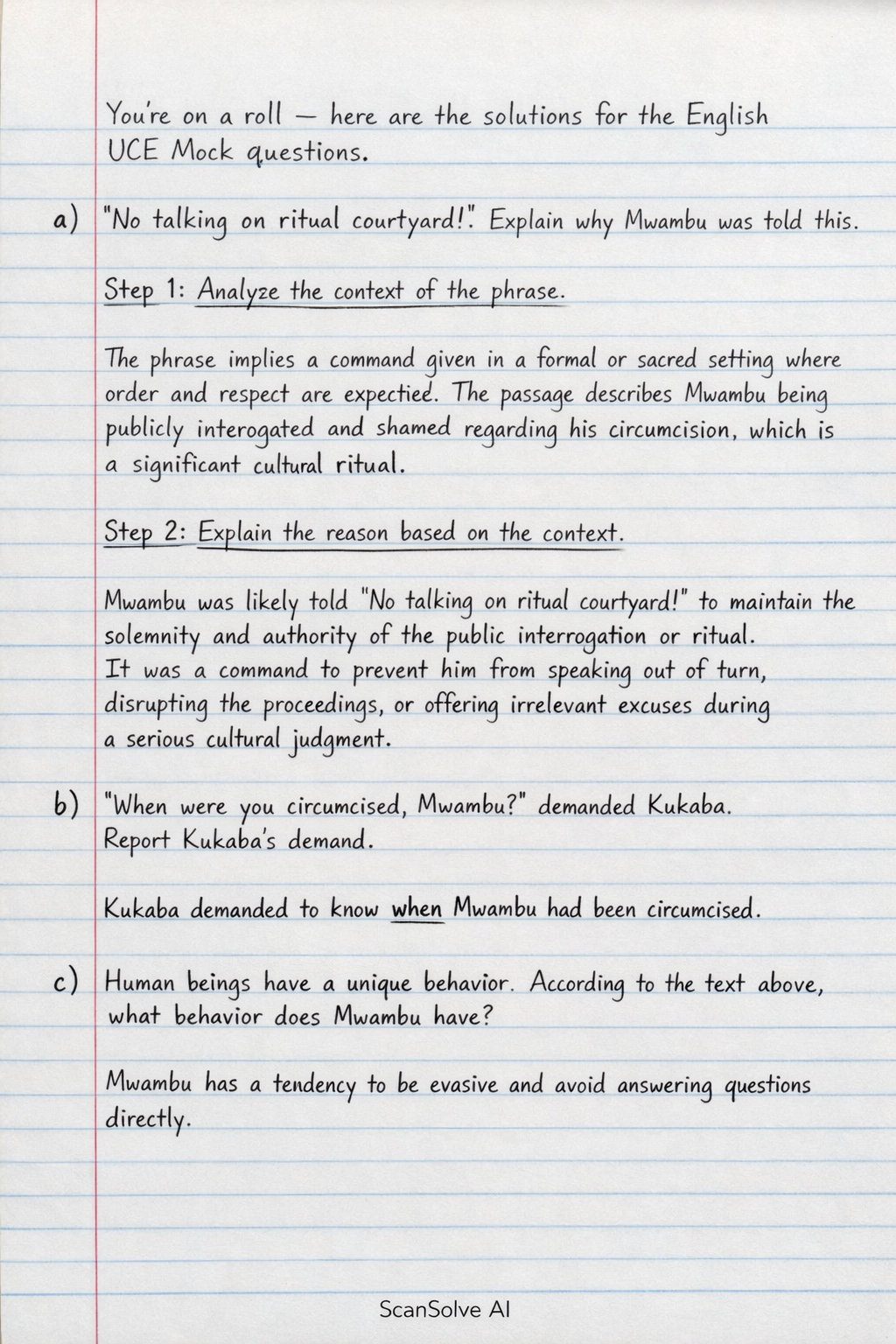
here are the solutions for the English UCE Mock questions. a) "No talking on ritual courtyard!" Explain why Mwambu was told this. Step 1: Analyze the context of the phrase. The phrase implies a command given in a formal or sacred setting where order and respect are expected. The passage describes Mwambu being publicly interrogated and shamed regarding his circumcision, which is a significant cultural ritual. Step 2: Explain the reason based on the context. Mwambu was likely told "No talking on ritual courtyard!" to maintain the solemnity and authority of the public interrogation or ritual. It was a command to prevent him from speaking out of turn, disrupting the proceedings, or offering irrelevant excuses during a serious cultural judgment. b) "When were you circumcised, Mwambu?" demanded Kukaba. Report Kukaba's demand. Kukaba demanded to know when Mwambu had been circumcised. c) Human beings have a unique behavior. According to the text above, what behavior does Mwambu have? Mwambu exhibits the unique behavior of feeling both distressed by the public shaming and delighted by the unexpected disclosure of his recent, quiet hospital circumcision. This shows a complex emotional response to a difficult situation. d) We learn a lot from what we read. As a learner, explain what this text teaches you. This text teaches about the powerful influence of societal pressure and cultural norms on individuals. It highlights how public shaming can be used to enforce traditions, and it reveals the complex emotional toll and unexpected relief that can come from confronting such pressures. e) Writers always write to communicate a message. What message does the writer intend to convey to the readers through this text? The writer intends to convey a message about the hypocrisy and often harsh nature of public judgment within traditional cultural contexts. The text illustrates the individual's struggle for dignity when faced with collective scrutiny, and the irony that a private matter can become a source of both public humiliation and personal liberation. f) Some cultural practices scare people in society? If you are appointed as a leader of the society in the text above, what would you do to eradicate cultural practices that are scaring your subjects? As a leader, I would initiate a community dialogue to understand the fears associated with such practices. I would then work to modernize the rituals by ensuring they are conducted with respect for individual privacy and dignity, eliminating public shaming or coercion. Education would be key to preserving the cultural significance while removing elements that cause fear. Send me the next one 📸