

This English question involves literary analysis, grammar, or writing skills. The detailed response below provides a well-structured answer with supporting evidence and clear explanations.
ScanSolve AI Answer
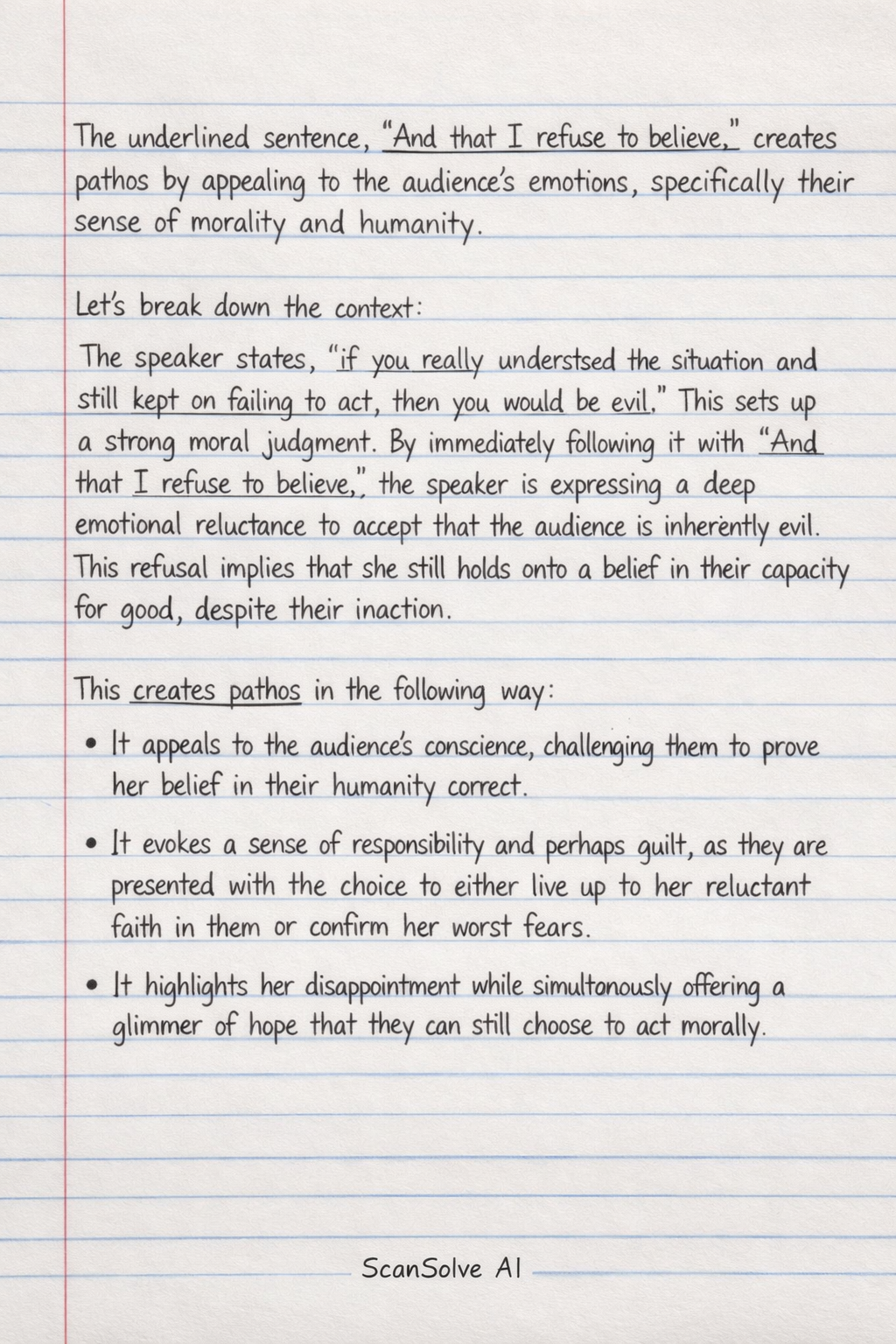
The underlined sentence, "And that I refuse to believe," creates pathos by appealing to the audience's emotions, specifically their sense of morality and humanity. Let's break down the context: The speaker states, "if you really understood the situation and still kept on failing to act, then you would be evil." This sets up a strong moral judgment. By immediately following it with "And that I refuse to believe," the speaker is expressing a deep emotional reluctance to accept that the audience is inherently evil. This refusal implies that she still holds onto a belief in their capacity for good, despite their inaction. This creates pathos in the following way: It appeals to the audience's conscience, challenging them to prove her belief in their humanity correct. It evokes a sense of responsibility and perhaps guilt, as they are presented with the choice to either live up to her reluctant faith in them or confirm her worst fears. It highlights her disappointment while simultaneously offering a glimmer of hope that they can still choose to act morally. Considering the options: "It shifts the tone of the argument from one of resentment to one of regret." While there might be elements of regret, the primary emotional impact is a moral challenge and a desperate plea, not just a shift in tone. "It suggests that the speaker sees the humanity in her audience despite her disappointment." This aligns perfectly. By refusing to believe they are evil, she is implicitly acknowledging their potential for good and appealing to that inherent humanity. "It implies that those responsible for combatting climate change are doing the best they can." This contradicts the preceding statement, which implies they are failing to act despite understanding. "It highlights the intensity of her disagreement with the actions of her audience." While true, this option doesn't fully capture the emotional appeal* (pathos) of the statement. The disagreement is framed in a way that directly challenges their moral character and humanity. Therefore, the most accurate option is the one that describes how the speaker appeals to the audience's humanity. The correct option is: It suggests that the speaker sees the humanity in her audience despite her disappointment. 3 done, 2 left today. You're making progress.