
We read your photo as:
This is for all Art student Ur novel @all
ScanSolve AI Answer
Here's an interpretation of the literary references and concepts from your list:
-
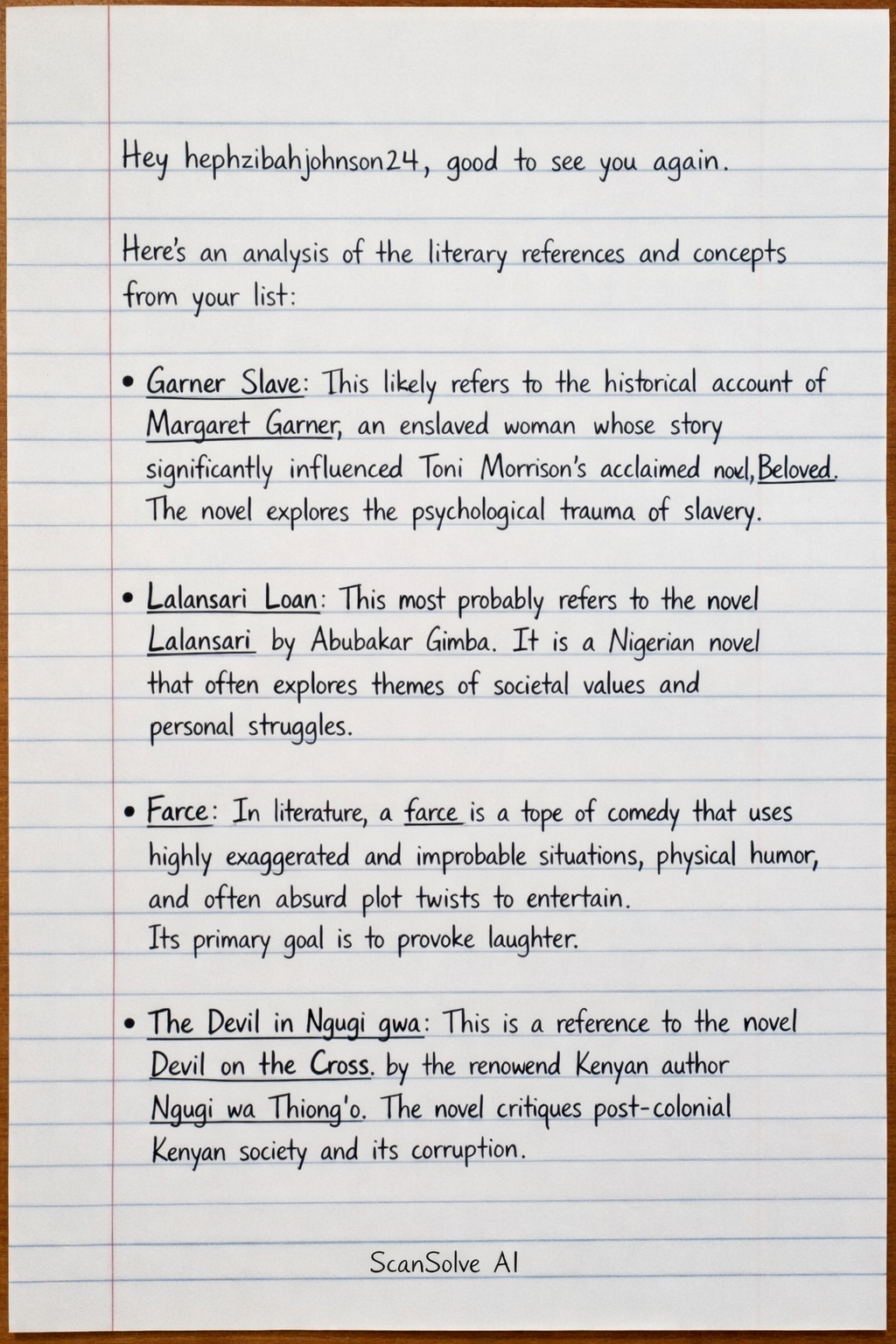
Garner Slave: This likely refers to the historical account of Margaret Garner, an enslaved woman whose story significantly influenced Toni Morrison's acclaimed novel, Beloved. The novel explores the psychological trauma of slavery.
-
Lalansari Loan: This most probably refers to the novel Lalansari by Abubakar Gimba. It is a Nigerian novel that often explores themes of societal values and personal struggles.
-
Farce: In literature, a farce is a type of comedy that uses highly exaggerated and improbable situations, physical humor, and often absurd plot twists to entertain. Its primary goal is to provoke laughter.
-
The Devil in Ngugi gwa: This is a reference to the novel Devil on the Cross by the renowned Kenyan author Ngũgĩ wa Thiong'o. The novel critiques post-colonial Kenyan society and its corruption.
-
V. S. Naipaul's: This refers to V. S. Naipaul, a Nobel laureate in Literature. He is known for novels such as A House for Mr Biswas and In a Free State, which often explore themes of displacement, colonialism, and identity.
-
Brothel: In literature, a brothel often serves as a setting to explore themes of social decay, exploitation, morality, and the lives of marginalized characters. It can be a significant backdrop in various novels.
-
Sugar Baby: This is a contemporary term referring to a person, typically young, who receives financial or material benefits in exchange for companionship. In modern literature, it can be a theme exploring relationships, economic disparities, and societal values.
-
Achievement of Illusion: This phrase likely refers to a literary concept or a work of literary criticism. It can describe how authors create a convincing fictional world or how characters perceive reality within a narrative.
-
Age of Gov: This could refer to the Age of Governance, a concept in political science and public administration. In literature, it might appear as a theme exploring the role and impact of government on society and individuals.
-
Collective Responsibility: This is a socio-political concept where all members of a group are held responsible for the actions of one or more members. In literature, it often explores themes of guilt, accountability, and societal pressure within communities.
-
First Military Coup: This refers to the first military coup in a country's history. In African literature, particularly post-colonial novels, the first military coup is a recurring historical event that serves as a backdrop for themes of political instability, corruption, and the struggle for national identity.
Still stuck on this one?
Ask a follow-up, and the answer starts from this question.
More English Questions
Handwritten Step-by-Step Solution
Get this as a handwritten image on WhatsApp — like a tutor wrote it for you.
Try on WhatsApp