

This English question involves literary analysis, grammar, or writing skills. The detailed response below provides a well-structured answer with supporting evidence and clear explanations.
ScanSolve AI Answer
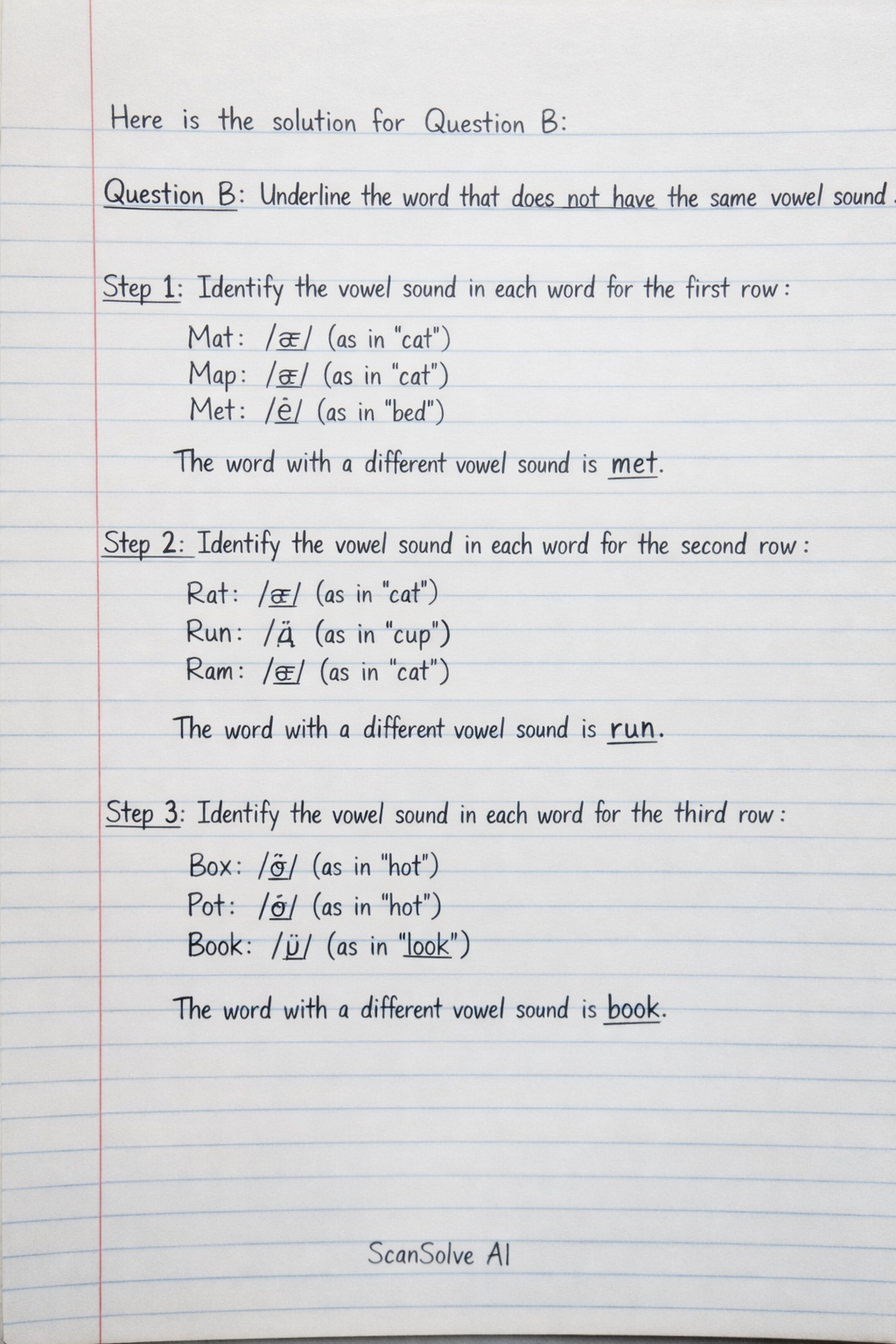
The first set of questions (Whom did he live with?, Was his mother rich?, Who came to their cottage one day?) cannot be answered without the story or passage they refer to. Please provide the context if you'd like me to answer them. Here is the solution for Question B: Question B: Underline the word that does not have the same vowel sound Step 1: Identify the vowel sound in each word for the first row. • Mat: /æ/ (as in 'cat') • Map: /æ/ (as in 'cat') • Met: /ɛ/ (as in 'bed') The word with a different vowel sound is met. Step 2: Identify the vowel sound in each word for the second row. • Rat: /æ/ (as in 'cat') • Run: /ʌ/ (as in 'cup') • Ram: /æ/ (as in 'cat') The word with a different vowel sound is run. Step 3: Identify the vowel sound in each word for the third row. • Box: /ɒ/ (as in 'hot') • Pot: /ɒ/ (as in 'hot') • Book: /ʊ/ (as in 'look') The word with a different vowel sound is book. Step 4: Identify the vowel sound in each word for the fourth row. • Meat: /iː/ (as in 'see') • Sit: /ɪ/ (as in 'pig') • Hit: /ɪ/ (as in 'pig') The word with a different vowel sound is meat. Step 5: Identify the vowel sound in each word for the fifth row. • Nose: /oʊ/ (as in 'boat') • Noise: /ɔɪ/ (as in 'boy') • Close: /oʊ/ (as in 'boat') The word with a different vowel sound is noise. Here are the words that do not have the same vowel sound in each row: • Mat, map, met • Rat, run, ram • Box, pot, book • Meat, sit, hit • Nose, noise, close Send me the next one 📸