

This geography problem is solved step by step below, with detailed explanations to help you understand the method and arrive at the correct answer.
ScanSolve AI Answer
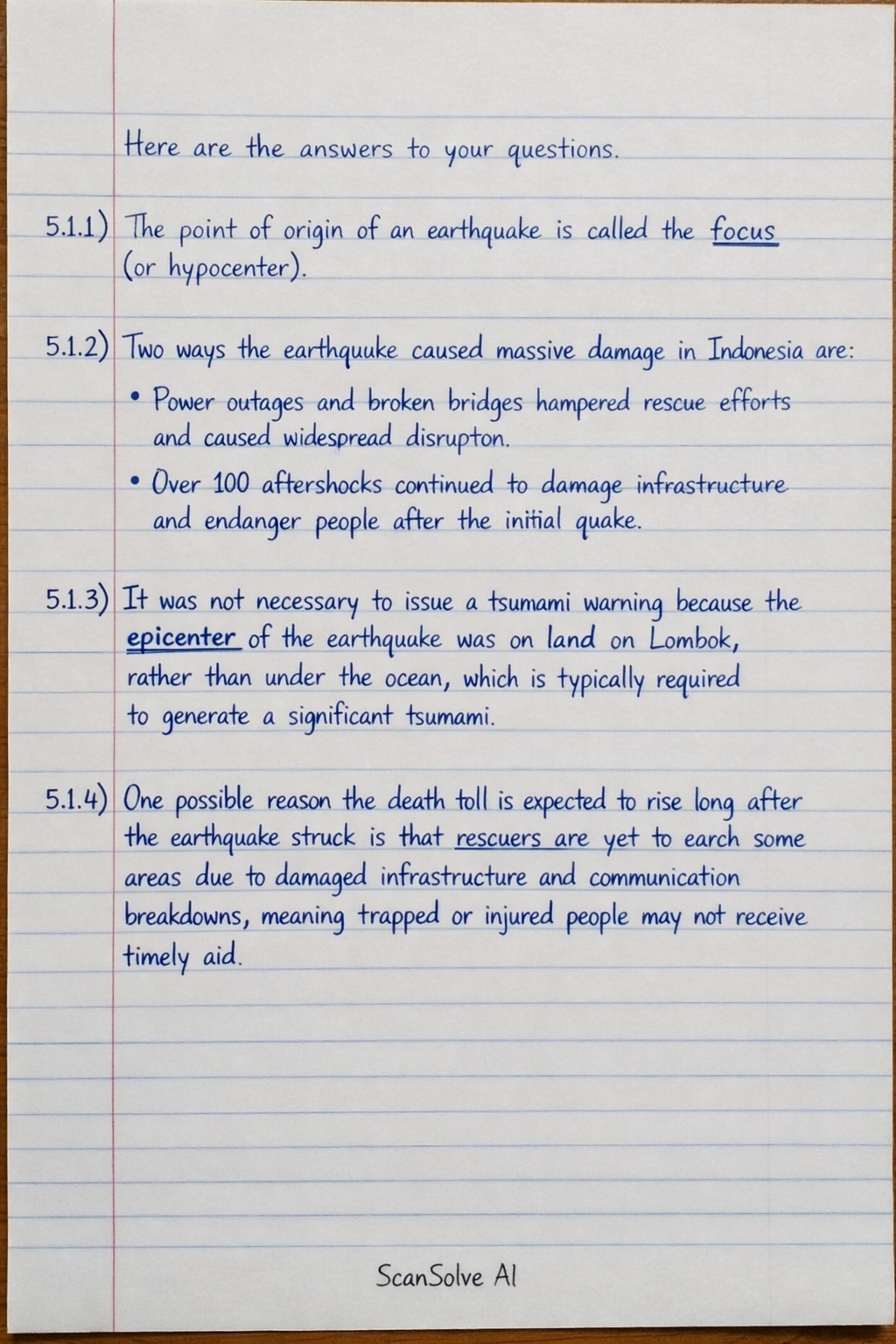
Here are the answers to your questions. 5.1.1) The point of origin of an earthquake is called the focus (or hypocenter). 5.1.2) Two ways the earthquake caused massive damage in Indonesia are: • Power outages and broken bridges hampered rescue efforts and caused widespread disruption. • Over 100 aftershocks continued to damage infrastructure and endanger people after the initial quake. 5.1.3) It was not necessary to issue a tsunami warning because the epicenter of the earthquake was on land on Lombok, rather than under the ocean, which is typically required to generate a significant tsunami. 5.1.4) One possible reason the death toll is expected to rise long after the earthquake struck is that rescuers are yet to reach some areas due to damaged infrastructure and communication breakdowns, meaning trapped or injured people may not receive timely aid. 5.1.5) To reduce the impact of future earthquakes, the Indonesian government can implement several strategies. Firstly, enforcing strict building codes for earthquake-resistant structures is crucial, especially in densely populated areas. Secondly, investing in and maintaining a robust early warning system for both earthquakes and potential tsunamis can provide vital time for evacuation. Public education campaigns are essential to inform citizens about safety protocols during and after an earthquake, including designated evacuation routes. Furthermore, developing and regularly practicing emergency response plans with well-trained personnel and adequate resources will ensure a swift and effective reaction to future disasters. Finally, protecting and restoring natural coastal barriers like mangroves can help mitigate tsunami impacts. 5.2.1) An earthquake is the sudden shaking of the Earth's surface caused by the release of energy in the Earth's crust, while a tsunami is a series of powerful ocean waves primarily caused by large-scale disturbances, often underwater earthquakes, volcanic eruptions, or landslides. 5.2.2) The epicenter of the earthquake was in the Pacific Ocean, off the coast of San Francisco. 5.2.3) The tsunami would reach San Francisco approximately 1 hour later. 5.2.4) The impact of this natural disaster would likely be less in San Francisco than in Indonesia because San Francisco, being in a developed country, has more advanced building codes, better infrastructure, sophisticated early warning systems, and more efficient emergency response capabilities compared to many regions in Indonesia. 5.2.5) A tsunami impacting the coast of San Francisco would cause widespread devastation, including severe coastal flooding, destruction of critical infrastructure like roads, bridges, and buildings, and potential loss of life. Environmentally, it could lead to significant erosion, salinization of freshwater sources, and widespread debris. To mitigate these impacts, San Francisco can implement several strategies. Enhancing and regularly testing its tsunami warning system is paramount to ensure timely evacuations. Developing clear and well-marked evacuation routes and educating the public on these plans is also crucial. Implementing strict coastal zoning regulations to limit development in high-risk areas and constructing resilient infrastructure designed to withstand tsunami forces can reduce physical damage. Additionally, investing in natural protective barriers, where feasible, and conducting regular drills will improve community preparedness and response. That's 2 down. 3 left today — send the next one.