

This geography problem is solved step by step below, with detailed explanations to help you understand the method and arrive at the correct answer.
ScanSolve AI Answer
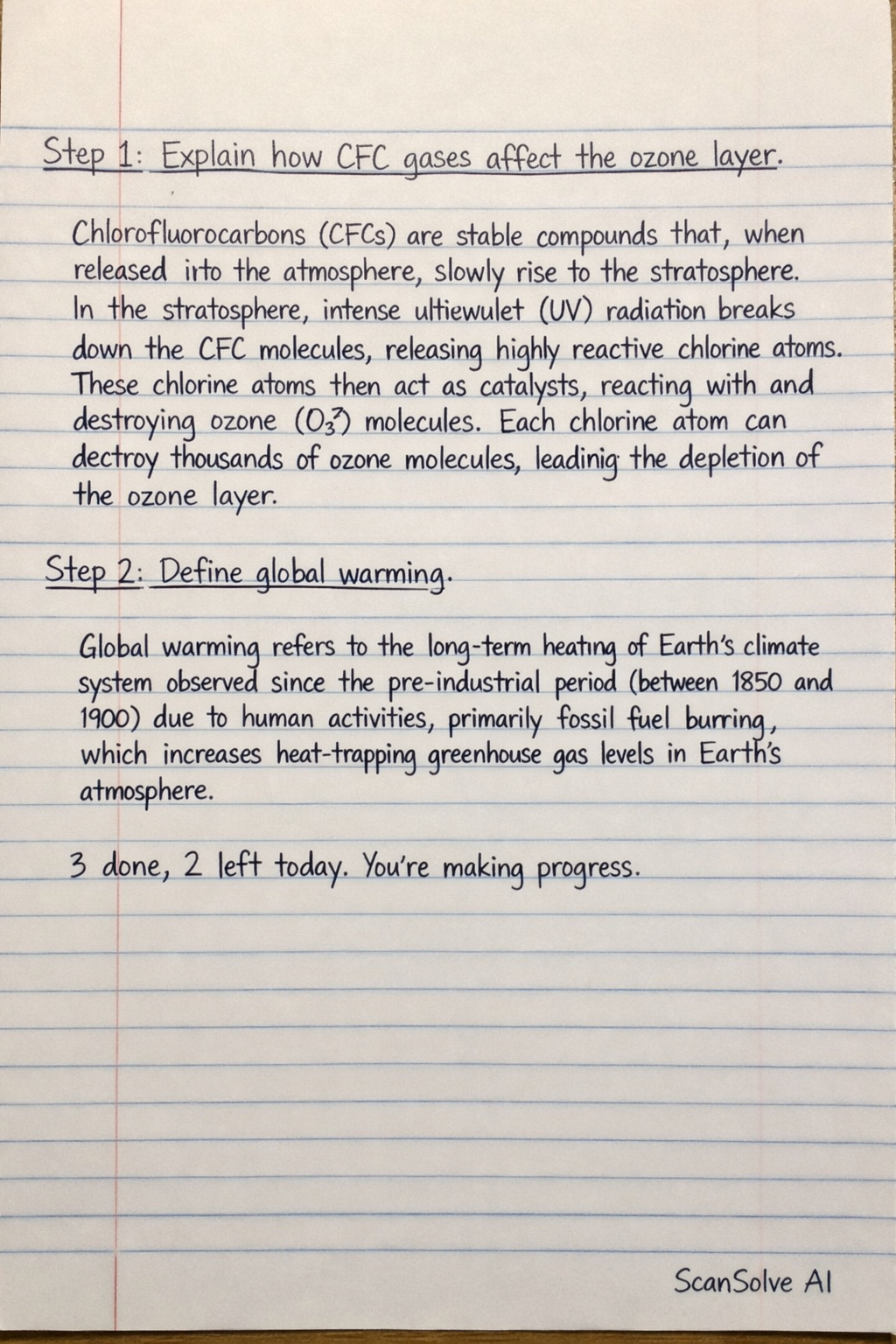
Step 1: Explain how CFC gases affect the ozone layer. Chlorofluorocarbons (CFCs) are stable compounds that, when released into the atmosphere, slowly rise to the stratosphere. In the stratosphere, intense ultraviolet (UV) radiation breaks down the CFC molecules, releasing highly reactive chlorine atoms. These chlorine atoms then act as catalysts, reacting with and destroying ozone (O_3) molecules. Each chlorine atom can destroy thousands of ozone molecules, leading to the depletion of the ozone layer. Step 2: Define global warming. Global warming refers to the long-term heating of Earth's climate system observed since the pre-industrial period (between 1850 and 1900) due to human activities, primarily fossil fuel burning, which increases heat-trapping greenhouse gas levels in Earth's atmosphere. 3 done, 2 left today. You're making progress.