
We read your photo as:
Is climate change to be blamed for mudslides and flash floods in KwaZulu-Natal? Outline some of the causes/reasons for the mudslide and flash floods, propose possible solutions to the problems of floo
ScanSolve AI Answer
here's a detailed outline for your research topic on mudslides and flash floods in KwaZulu-Natal.
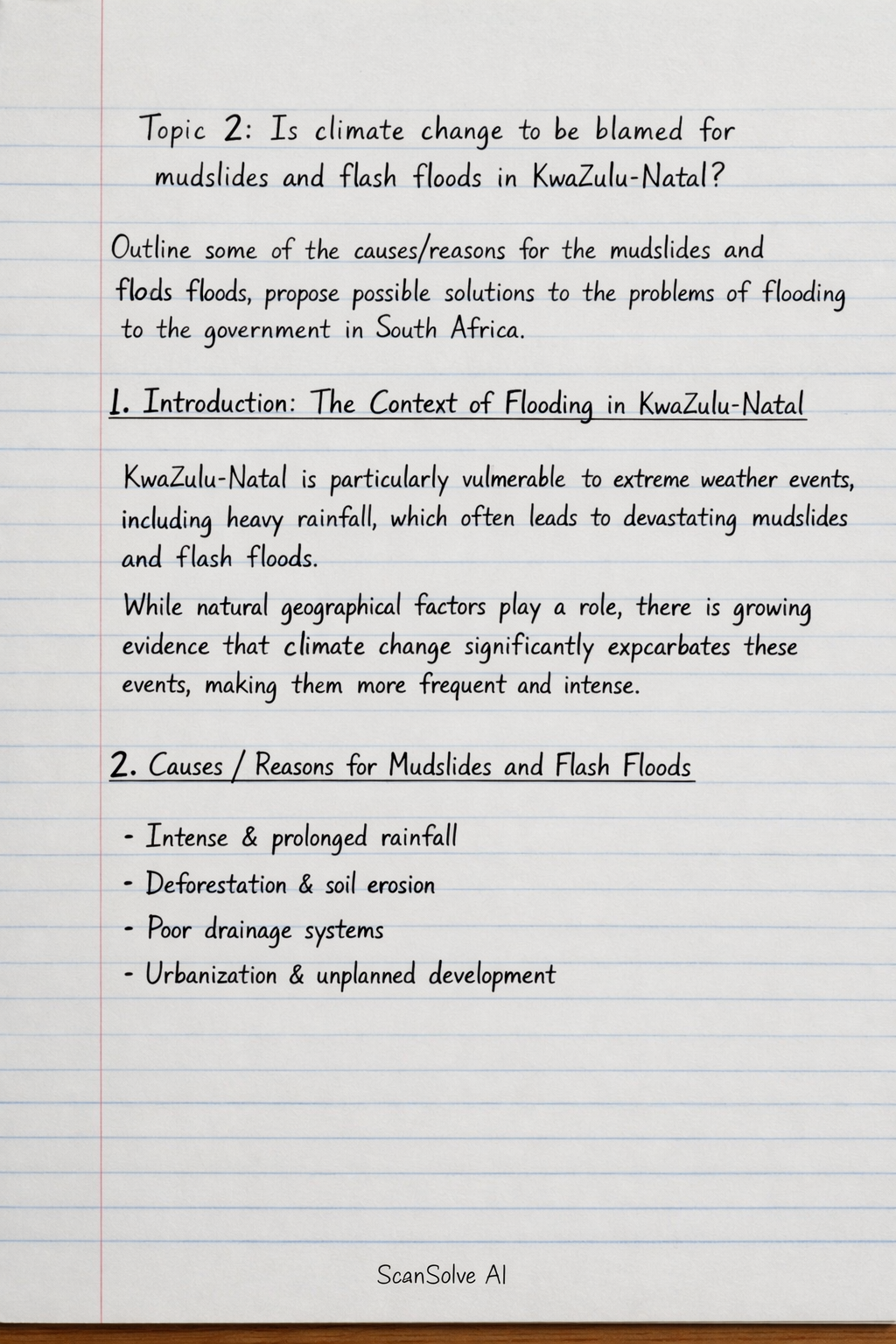
Topic 2: Is climate change to be blamed for mudslides and flash floods in KwaZulu-Natal? Outline some of the causes/reasons for the mudslide and flash floods, propose possible solutions to the problems of flooding to the government in South Africa as a whole or in your preferred area of study.
This topic requires an in-depth analysis of the causes, impacts, and solutions related to mudslides and flash floods in KwaZulu-Natal (KZN), with a focus on the role of climate change.
1. Introduction: The Context of Flooding in KwaZulu-Natal
KwaZulu-Natal is particularly vulnerable to extreme weather events, including heavy rainfall, which often leads to devastating mudslides and flash floods. While natural geographical factors play a role, there is growing evidence that climate change significantly exacerbates these events, making them more frequent and intense.
2. Causes/Reasons for Mudslides and Flash Floods
-
Climate Change:
- Increased Rainfall Intensity: Climate change leads to warmer atmospheric temperatures, allowing the atmosphere to hold more moisture. This results in more intense and prolonged rainfall events, overwhelming drainage systems and saturating soil.
- Frequency of Extreme Weather: There is an observed increase in the frequency of extreme rainfall events, rather than just a general increase in total annual rainfall, which directly contributes to flash floods and mudslides.
- Sea-Level Rise (indirect impact): While not a direct cause of mudslides, rising sea levels can exacerbate coastal flooding, which can interact with riverine flooding in low-lying coastal areas of KZN.
-
Geographical and Geological Factors:
- Steep Topography: KZN's landscape includes numerous steep slopes and valleys, particularly along the coast and inland, which are highly susceptible to mudslides when saturated with water.
- Soil Composition: Certain soil types, especially those with high clay content or loose, sandy layers, become unstable when waterlogged, increasing the risk of landslides.
- River Systems: The province has numerous rivers and tributaries that can quickly overflow their banks during heavy rainfall, leading to widespread flooding.
-
Anthropogenic (Human-Induced) Factors:
- Rapid Urbanization and Informal Settlements:
- Construction on unstable land, such as steep slopes, floodplains, and riverbanks, often without proper engineering or environmental assessments.
- Lack of adequate infrastructure in informal settlements, including poor or non-existent stormwater drainage systems.
- Deforestation for settlement expansion removes natural vegetation that helps stabilize soil and absorb rainwater.
- Inadequate Infrastructure and Maintenance:
- Poorly maintained or insufficient stormwater drainage systems in both formal and informal areas, leading to blockages and overflow.
- Blocked drains and culverts due to solid waste and debris, preventing water from flowing away efficiently.
- Aging infrastructure that cannot cope with increased volumes of water from extreme rainfall.
- Land Degradation and Deforestation:
- Removal of natural vegetation (forests, grasslands) for agriculture, development, or informal settlements reduces the soil's ability to absorb water and increases surface runoff and erosion.
- Poor agricultural practices can also contribute to soil erosion.
- Waste Management:
- Illegal dumping of refuse in rivers, streams, and drainage channels significantly contributes to blockages, exacerbating flooding.
- Rapid Urbanization and Informal Settlements:
3. Effects/Impacts of Mudslides and Flash Floods
- Loss of Life and Injury: The most tragic impact is the direct loss of human lives and severe injuries to residents caught in the floods and mudslides.
- Displacement and Homelessness: Thousands of people are displaced, losing their homes and possessions, often requiring emergency shelter and long-term housing solutions.
- Damage to Infrastructure:
- Roads and bridges are washed away or severely damaged, disrupting transport, emergency services, and economic activity.
- Homes and buildings are destroyed or rendered uninhabitable.
- Essential services like electricity, water supply, and communication networks are disrupted due to damaged infrastructure.
- Economic Impacts:
- Loss of livelihoods for individuals and communities, particularly in agriculture and small businesses.
- Significant costs for disaster response, recovery, and reconstruction.
- Impact on tourism and other key economic sectors in the region.
- Environmental Degradation:
- Severe soil erosion and land degradation.
- Contamination of water sources with sewage, debris, and pollutants, posing health risks.
- Damage to ecosystems and biodiversity.
- Psychological and Social Trauma:
- Long-term psychological distress and trauma for survivors and affected communities.
- Disruption of social structures and community cohesion.
4. Proposed Solutions/Recommendations to the Government
-
Strengthen Early Warning Systems and Disaster Preparedness:
- Invest in advanced meteorological forecasting technology to predict extreme rainfall events with greater accuracy.
- Develop and implement robust early warning systems that effectively communicate risks to vulnerable communities through multiple channels (SMS, radio, community leaders).
- Establish clear evacuation plans and designated safe zones.
- Conduct regular disaster preparedness drills and community education programs.
-
Invest in Resilient Infrastructure Development and Maintenance:
- Upgrade and expand stormwater drainage systems in urban and peri-urban areas, ensuring they can cope with increased rainfall volumes.
- Implement nature-based solutions such as permeable pavements, green roofs, and constructed wetlands to manage runoff.
- Regular maintenance and clearing of drainage systems, rivers, and culverts to prevent blockages.
- Build flood barriers and levees in high-risk areas where appropriate.
- Ensure new infrastructure is designed to be climate-resilient.
-
Implement Strict Land-Use Planning and Enforcement:
- Enforce strict zoning regulations to prevent construction in high-risk areas like floodplains, steep slopes, and unstable geological zones.
- Develop and implement relocation strategies for informal settlements situated in dangerous areas, providing safe and dignified alternative housing.
- Conduct thorough environmental impact assessments for all new developments.
-
Promote Environmental Management and Rehabilitation:
- Initiate large-scale reforestation and afforestation programs, especially on degraded slopes and riverbanks, to stabilize soil and enhance water absorption.
- Protect and restore wetlands and natural floodplains, which act as natural sponges, absorbing excess water.
- Implement effective waste management programs to prevent illegal dumping and reduce blockages in drainage systems.
-
Community Engagement and Education:
- Empower local communities through participatory planning in disaster risk reduction initiatives.
- Educate residents on the risks of living in flood-prone areas, safe building practices, and the importance of proper waste disposal.
- Support community-based disaster management committees.
-
Climate Change Adaptation and Mitigation:
- Develop a comprehensive provincial climate change adaptation strategy that integrates flood and mudslide risk management.
- Invest in research to better understand local climate change impacts and develop tailored solutions.
- Contribute to national and international efforts to mitigate climate change by reducing greenhouse gas emissions.
-
Strengthen Governance and Policy Frameworks:
- Ensure effective coordination between different spheres of government (national, provincial, local) and relevant departments.
- Review and update legislation and policies related to disaster management, land use, and environmental protection to address current and future climate risks.
- Allocate sufficient financial resources for disaster risk reduction, response, and recovery.
By addressing these multifaceted causes with comprehensive and integrated solutions, the government can significantly reduce the vulnerability of KwaZulu-Natal to the devastating impacts of mudslides and flash floods.
Still stuck on this one?
Ask a follow-up, and the answer starts from this question.
More Geography Questions
Handwritten Step-by-Step Solution
Get this as a handwritten image on WhatsApp — like a tutor wrote it for you.
Try on WhatsApp