
We read your photo as:
List three natural disasters experienced in Limpopo since 2024, two state institutions dealing with natural disasters in SA, and one cause of floods in Limpopo. Also, name one law protecting SA citize
ScanSolve AI Answer
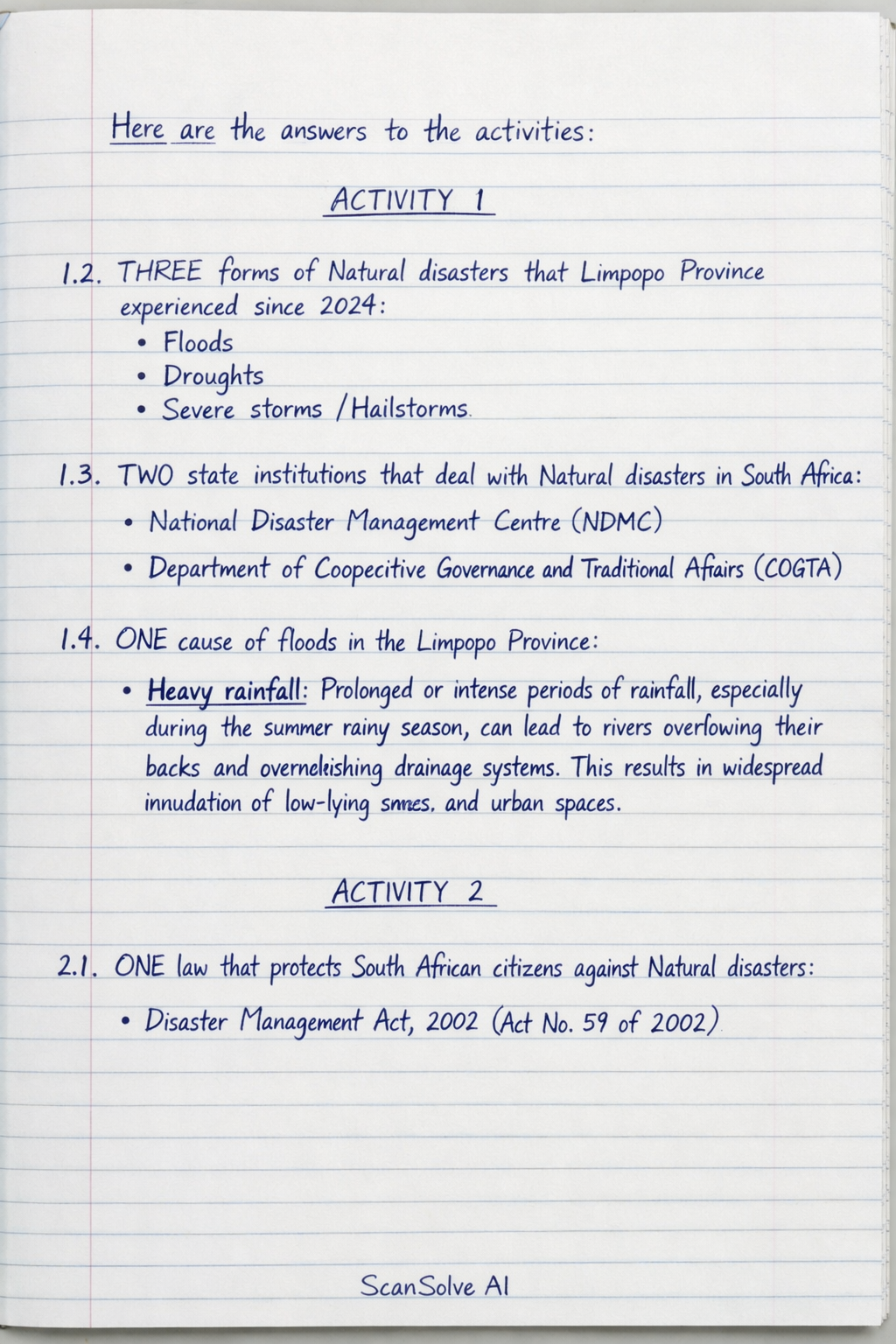
Here are the answers to the activities:
ACTIVITY 1
1.2. THREE forms of Natural disasters that Limpopo Province experienced since 2024:
- Floods
- Droughts
- Severe storms/Hailstorms
1.3. TWO state institutions that deal with Natural disasters in South Africa:
- National Disaster Management Centre (NDMC)
- Department of Cooperative Governance and Traditional Affairs (COGTA)
1.4. ONE cause of floods in the Limpopo Province:
- Heavy rainfall: Prolonged or intense periods of rainfall, especially during the summer rainy season, can lead to rivers overflowing their banks and overwhelming drainage systems. This results in widespread inundation of low-lying areas and urban spaces.
ACTIVITY 2
2.1. ONE law that protects South African citizens against Natural disasters:
- Disaster Management Act, 2002 (Act No. 57 of 2002)
2.2. TWO ways in which the above law protects citizens against Natural disasters:
- It mandates the development of disaster management plans at national, provincial, and municipal levels, ensuring a coordinated and proactive approach to risk assessment, prevention, mitigation, preparedness, response, and recovery.
- It provides for the declaration of a state of disaster, which enables the rapid release of emergency funds, resources, and special powers to coordinate relief efforts and provide humanitarian assistance to affected communities.
2.3. The negative effect of flood on food production:
- Floods can lead to the destruction of crops and livestock. Submerged agricultural land results in immediate crop loss, while waterlogging damages root systems and promotes plant diseases. Livestock can drown, be displaced, or lose access to pastures. This directly reduces food availability and can cause significant economic losses for farmers.
- Floods also cause soil degradation and erosion. Fertile topsoil, essential for crop growth, can be washed away, reducing the land's productivity for future planting. Floodwaters can also deposit unwanted sediments or pollutants, further compromising soil quality.
2.4. ONE strategy that communities can implement to protect themselves against natural disasters such as flood:
- Establishment of community-based early warning systems and evacuation plans. Communities can set up local monitoring systems (e.g., river level monitoring) and communication networks to alert residents of impending floods. This should be coupled with clearly defined evacuation routes and designated safe zones, and regular drills to ensure residents know how to respond quickly and safely.
Still stuck on this one?
Ask a follow-up, and the answer starts from this question.
More Geography Questions
Handwritten Step-by-Step Solution
Get this as a handwritten image on WhatsApp — like a tutor wrote it for you.
Try on WhatsApp