
We read your photo as:
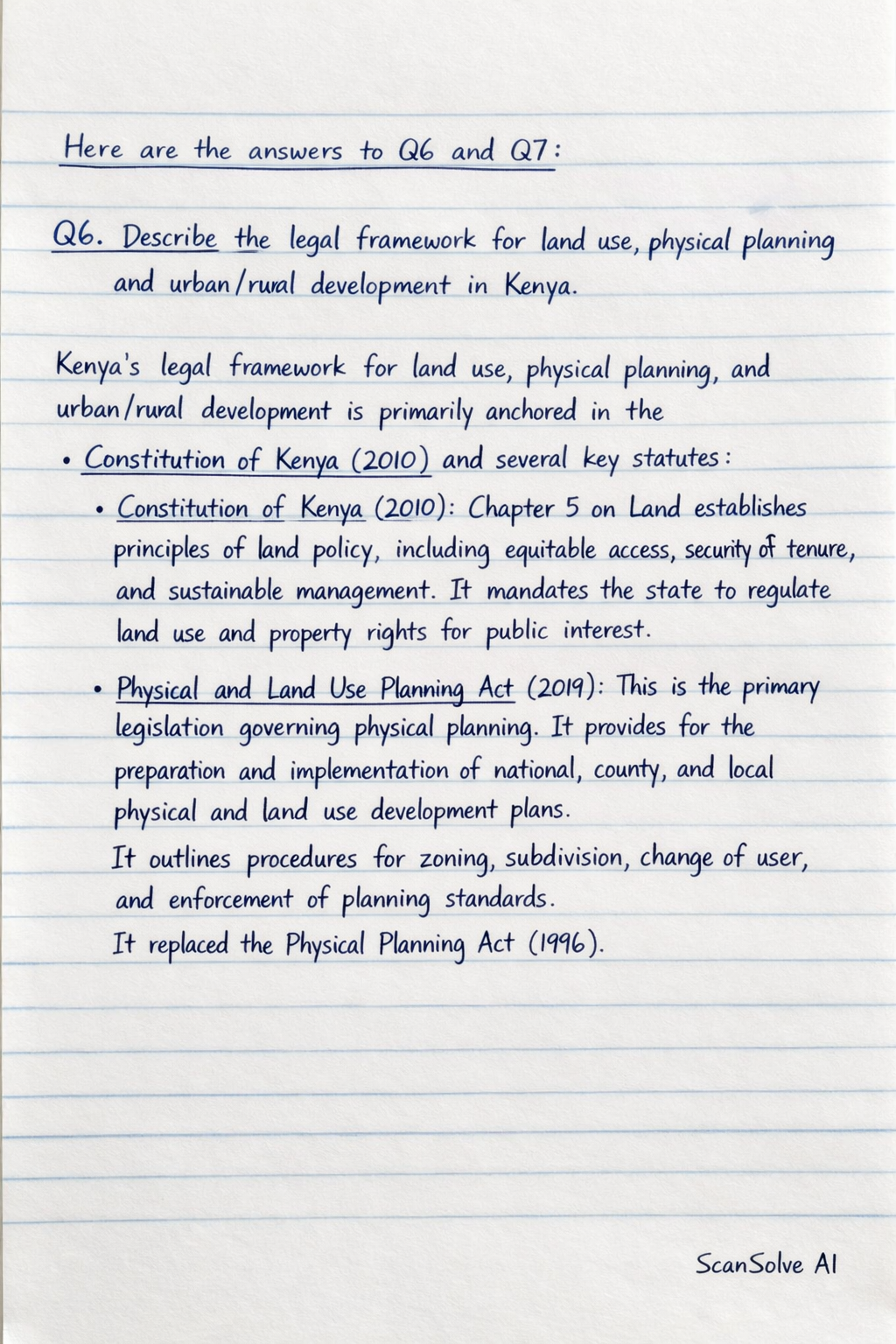
Q6. Describe the legal framework for land use, physical planning and urban/rural development in Kenya.
Geography
ScanSolve AI Answer
Here are the answers to Q6 and Q7:
Q6. Describe the legal framework for land use, physical planning and urban/rural development in Kenya.
Kenya's legal framework for land use, physical planning, and urban/rural development is primarily anchored in the Constitution of Kenya (2010) and several key statutes:
- Constitution of Kenya (2010): Chapter 5 on Land establishes principles of land policy, including equitable access, security of tenure, and sustainable management. It mandates the state to regulate land use and property rights for public interest.
- Physical and Land Use Planning Act (2019): This is the primary legislation governing physical planning. It provides for the preparation and implementation of national, county, and local physical and land use development plans. It outlines procedures for zoning, subdivision, change of user, and enforcement of planning standards. It replaced the Physical Planning Act (1996).
- Land Act (2012): This Act consolidates laws on land, providing for the management and administration of land, land tenure, and land transactions. It addresses issues like land registration, leases, and compulsory acquisition, which are fundamental to development.
- Land Registration Act (2012): This Act provides for the registration of titles to land, ensuring security of tenure and facilitating land transactions. Clear land titles are crucial for investment and development.
- National Land Commission Act (2012): This Act establishes the National Land Commission, an independent body responsible for managing public land on behalf of national and county governments, advising on land policy, and investigating historical land injustices.
- County Governments Act (2012): This Act devolves planning functions to county governments, empowering them to prepare county integrated development plans (CIDPs) that guide local land use and development.
- Environmental Management and Co-ordination Act (EMCA, 1999, revised 2015): This Act provides for the establishment of an appropriate legal and institutional framework for the management of the environment. It mandates Environmental Impact Assessments (EIAs) for development projects, ensuring environmental sustainability in land use and planning.
Q7. Explain any five opportunities of the rapid population increase in Kenya.
Rapid population increase in Kenya, while posing challenges, also presents several opportunities:
- Large Labor Force: A growing population means a larger pool of young, potentially productive labor. This can drive economic growth if properly educated, skilled, and employed, providing a demographic dividend.
- Expanded Domestic Market: A larger population translates to an increased demand for goods and services, creating a bigger domestic market. This can stimulate local industries, encourage investment, and foster economic diversification.
- Innovation and Entrepreneurship: A youthful and growing population often brings new ideas, creativity, and a strong entrepreneurial spirit. This can lead to the development of new businesses, technologies, and solutions to societal challenges.
- Increased Tax Base: A larger working-age population, if employed, contributes to a broader tax base, which can increase government revenue. This revenue can then be invested in public services, infrastructure, and development projects.
- Cultural Diversity and Richness: Population growth, especially through internal migration, can lead to greater cultural exchange and diversity within urban centers. This can enrich social life, foster new perspectives, and contribute to a vibrant national identity.
Was this helpful?
Still stuck on this one?
Ask a follow-up, and the answer starts from this question.
Got a different question?Ask your own question
More Geography Questions
QDiscuss the strategies for improving urban development in Kenya.QWhat are four ethical ways to acquire agricultural land in Kenya?QDiscuss the population structure of Kenya and give its implications on economic development.QTHE FORMATION STRUCTURE AND FUNCTIONS OF THE GOVERNMENT OF KENYAQExplain any six rights and freedom granted to Kenyan citizens
Handwritten Step-by-Step Solution
Get this as a handwritten image on WhatsApp — like a tutor wrote it for you.
Try on WhatsApp