
We read your photo as:
Explain the structure and components of a geographical hypothesis, including the 'what', 'where', and 'impact'.
ScanSolve AI Answer
Step-by-step solution
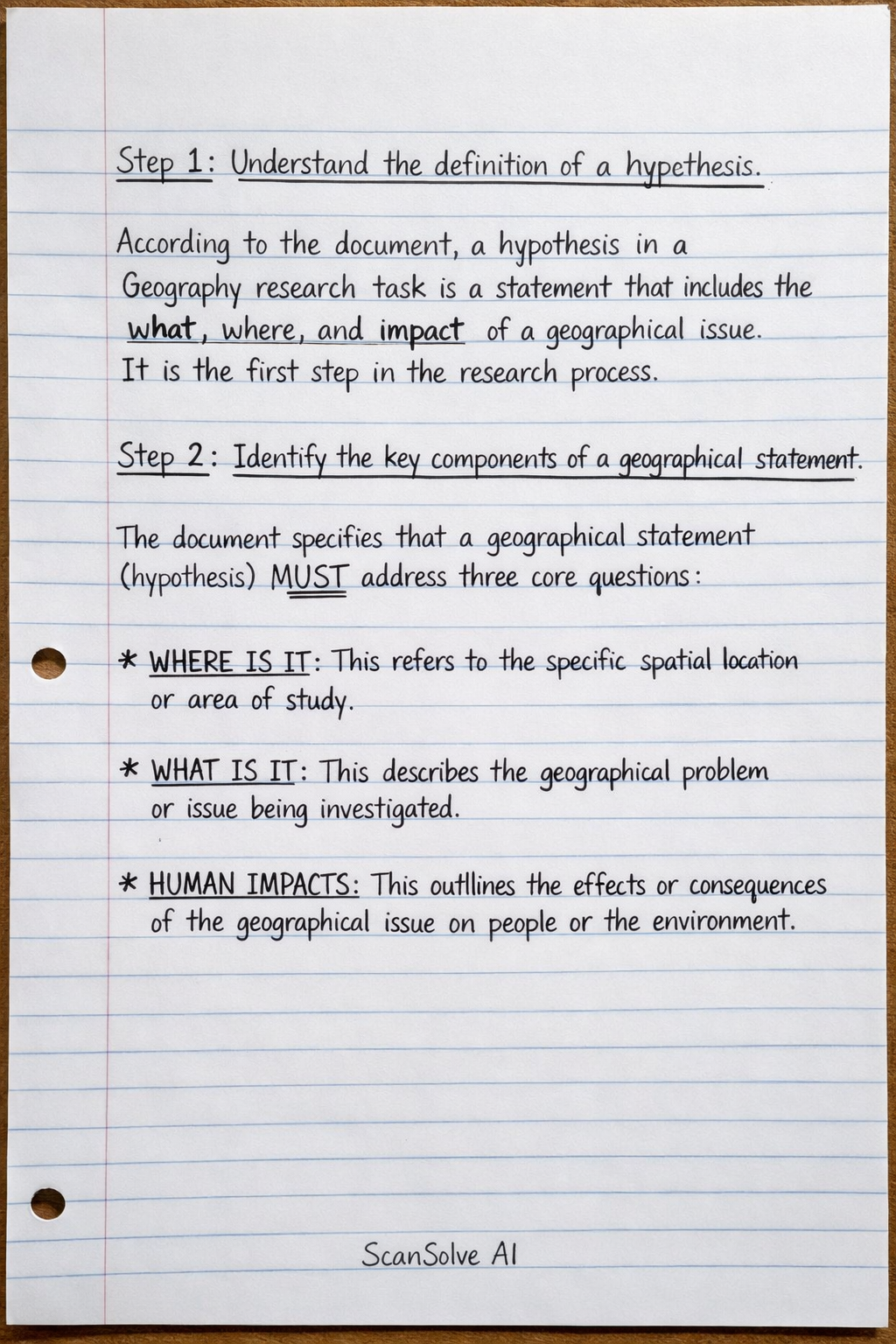
3 stepsUnderstand the definition of a hypothesis.
According to the document, a hypothesis in a Geography research task is a statement that includes the what, where, and impact of a geographical issue. It is the first step in the research process.
Identify the key components of a geographical statement.
The document specifies that a geographical statement (hypothesis) MUST address three core questions:
- WHERE IS IT: This refers to the specific spatial location or area of study.
- WHAT IS IT: This describes the geographical problem or issue being investigated.
- HUMAN IMPACTS: This outlines the effects or consequences of the geographical issue on people or the environment.
Formulate a hypothesis using these components.
To formulate a hypothesis, combine these three elements into a clear, concise statement. For example, if you choose Topic 1: "The negative impact of human activities on rivers in your local area," a hypothesis could be:
"The dumping of waste (WHAT IS IT) into the Jukskei River in Alexandra (WHERE IS IT) leads to water pollution, negatively affecting the health and livelihoods of the local community (HUMAN IMPACTS)."This statement clearly identifies the geographical issue, its location, and its impact, fulfilling the requirements for a geographical hypothesis.
Still stuck on this one?
Ask a follow-up, and the answer starts from this question.
More Geography Questions
Handwritten Step-by-Step Solution
Get this as a handwritten image on WhatsApp — like a tutor wrote it for you.
Try on WhatsApp