
We read your photo as:
What are the challenges and solutions related to living near water bodies and in mountainous regions?
Geography
ScanSolve AI Answer
Step-by-step solution
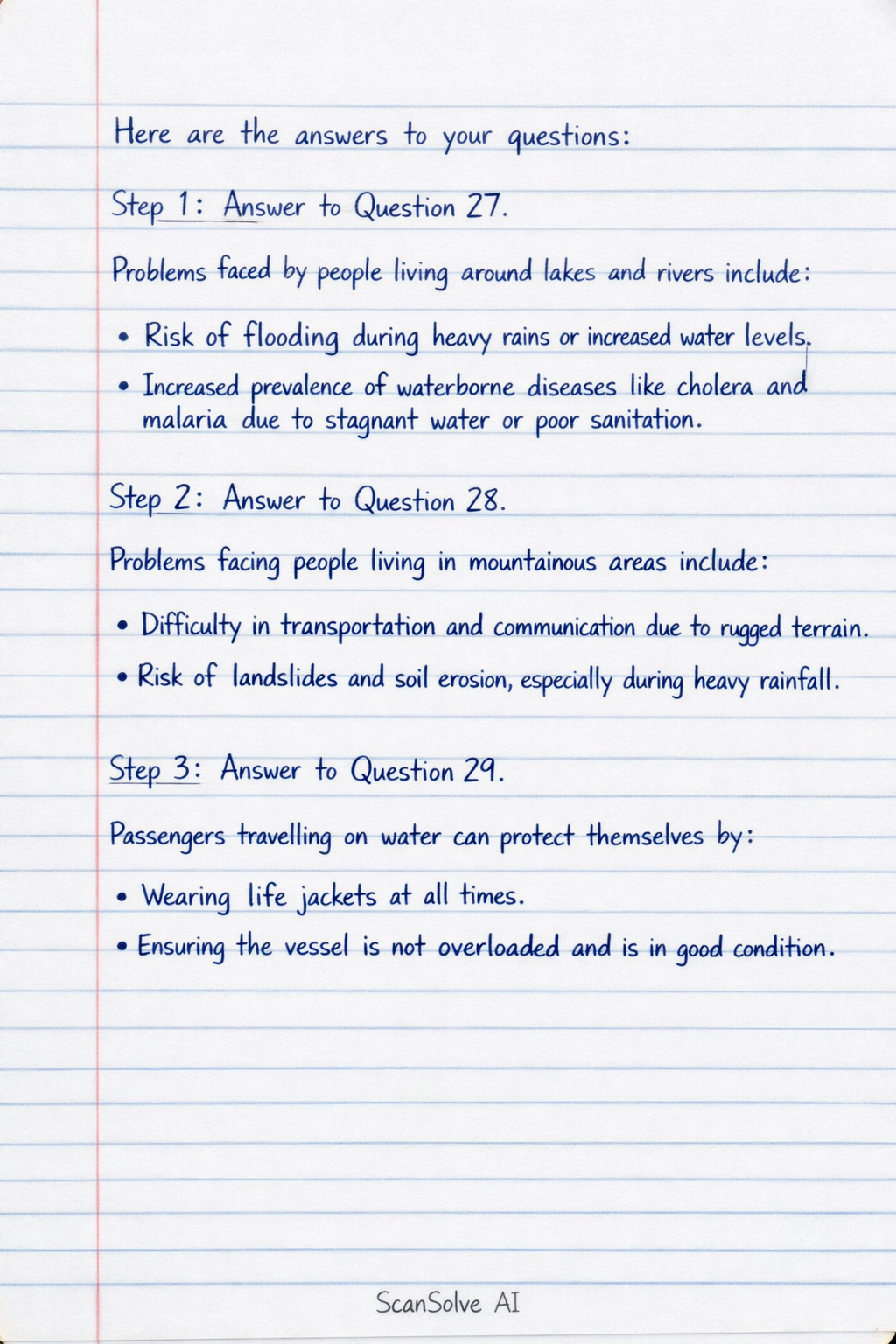
4 stepsHere are the answers to your questions:
Answer to Question 27.
Problems faced by people living around lakes and rivers include:
- Risk of flooding during heavy rains or increased water levels.
- Increased prevalence of waterborne diseases like cholera and malaria due to stagnant water or poor sanitation.
Answer to Question 28.
Problems facing people living in mountainous areas include:
- Difficulty in transportation and communication due to rugged terrain.
- Risk of landslides and soil erosion, especially during heavy rainfall.
Answer to Question 29.
Passengers travelling on water can protect themselves by:
- Wearing life jackets at all times.
- Ensuring the vessel is not overloaded and is in good condition.
Answer to Question 30.
People in mountainous areas construct winding roads because:
- Winding roads (also known as switchbacks or hairpins) help to reduce the gradient of the road, making it less steep and safer for vehicles to ascend and descend.
- They allow roads to navigate around obstacles and follow the natural contours of the terrain, minimizing the need for extensive cutting and filling of the landscape.
Was this helpful?
Still stuck on this one?
Ask a follow-up, and the answer starts from this question.
Got a different question?Ask your own question
More Geography Questions
QWhat are the key challenges for waste management in rural areas, and how can these be improved?QBased on the provided text, describe the landscape features of the photograph and suggest solutions…QGive two challenges faced by cities with very high population density and briefly explain eachQWhat are the key geographical aspects of studying the socio-economic impacts of flooding in Tswinga…QWhat are the primary environmental challenges facing KwaZulu-Natal (KZN), South Africa, and what are…
Handwritten Step-by-Step Solution
Get this as a handwritten image on WhatsApp — like a tutor wrote it for you.
Try on WhatsApp