
We read your photo as:
What are the consequences of rural-urban migration in West African countries?
History
ScanSolve AI Answer
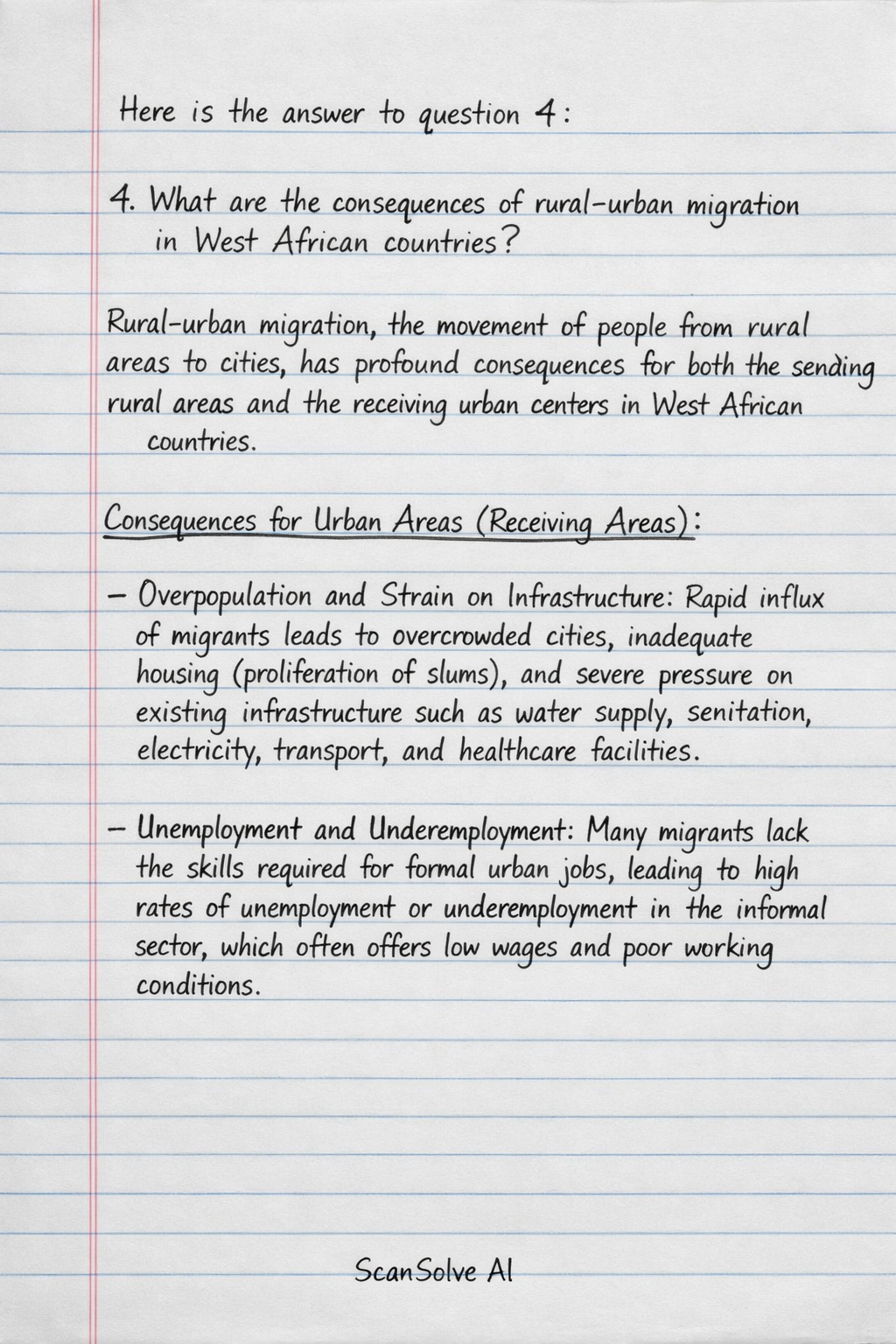
Here is the answer to question 4:
4. What are the consequences of rural-urban migration in West African countries?
Rural-urban migration, the movement of people from rural areas to cities, has profound consequences for both the sending rural areas and the receiving urban centers in West African countries.
-
Consequences for Urban Areas (Receiving Areas):
- Overpopulation and Strain on Infrastructure: Rapid influx of migrants leads to overcrowded cities, inadequate housing (proliferation of slums), and severe pressure on existing infrastructure such as water supply, sanitation, electricity, transport, and healthcare facilities.
- Unemployment and Underemployment: Many migrants lack the skills required for formal urban jobs, leading to high rates of unemployment or underemployment in the informal sector, which often offers low wages and poor working conditions.
- Increased Crime and Social Problems: Poverty, lack of opportunities, and social dislocation can contribute to increased crime rates, social unrest, and the breakdown of traditional social structures.
- Environmental Degradation: Increased population density and industrial activity lead to higher levels of pollution (air, water, noise) and waste generation, straining urban environmental management.
-
Consequences for Rural Areas (Sending Areas):
- Labor Shortages: The departure of young, able-bodied individuals, particularly men, leads to a shortage of labor in agriculture and other rural economic activities, potentially reducing agricultural output and productivity.
- Aging Population and Dependency Ratio: Rural areas are left with a higher proportion of elderly people and children, increasing the dependency ratio and placing a burden on the remaining productive population.
- Remittances: Migrants often send money back to their families in rural areas. These remittances can significantly improve the living standards of recipient households, fund education, healthcare, and small businesses, and stimulate local economies.
- Decline in Social Services: With a shrinking and aging population, demand for and provision of social services like schools and health clinics may decline, further exacerbating rural disadvantage.
- Loss of Traditional Knowledge and Skills: The migration of younger generations can lead to the loss of traditional farming methods, cultural practices, and indigenous knowledge.
Was this helpful?
Still stuck on this one?
Ask a follow-up, and the answer starts from this question.
Got a different question?Ask your own question
More History Questions
QBased on the two documents and your knowledge, what are the factors contributing to urbanization in…QUrbanisation involves rural - urban movement. DiscussQDistinguish between migration and rural-urban migration and discuss four pull factors for…QIdentify the primary reasons for African migration to urban centers during colonial Kenya.QGrade eight learners were given an assignment to research in the library on types of migration in…
Handwritten Step-by-Step Solution
Get this as a handwritten image on WhatsApp — like a tutor wrote it for you.
Try on WhatsApp