

This history question requires analysis of historical events, causes, and consequences. The detailed answer below provides context, evidence, and a well-structured explanation.
ScanSolve AI Answer
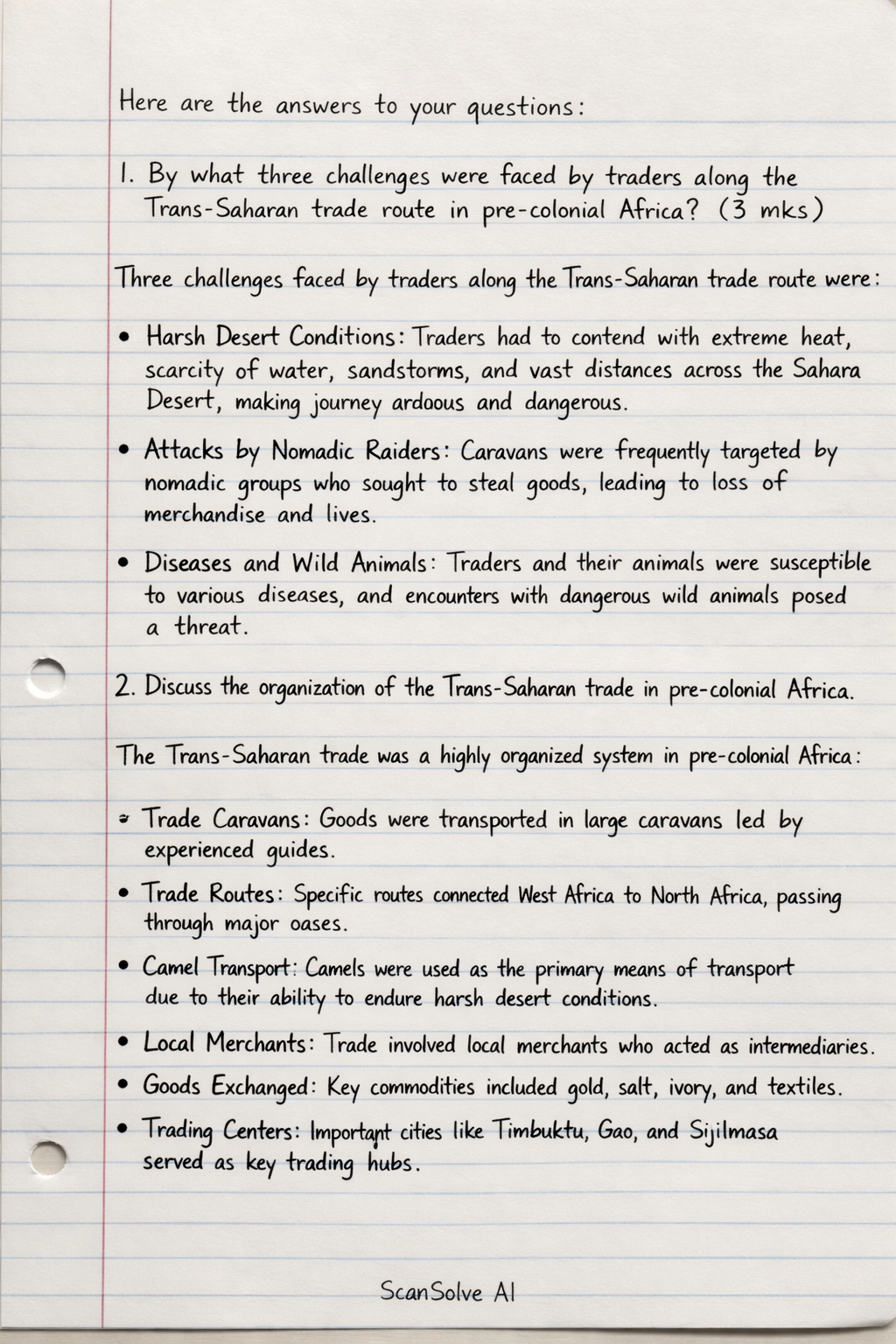
Here are the answers to your questions: 1. By What three challenges were faced by traders along the Trans-Saharan trade route in pre-colonial Africa? (3 mks) Three challenges faced by traders along the Trans-Saharan trade route were: Harsh Desert Conditions: Traders had to contend with extreme heat, scarcity of water, sandstorms, and vast distances across the Sahara Desert, making journeys arduous and dangerous. Attacks by Nomadic Raiders: Caravans were frequently targeted by nomadic groups who sought to steal goods, leading to loss of merchandise and lives. Diseases and Wild Animals: Traders and their animals were susceptible to various diseases, and encounters with dangerous wild animals posed a threat. 2. Discuss the organization of the Trans-Saharan trade in pre-colonial Africa. (12 mks) The Trans-Saharan trade was a highly organized system in pre-colonial Africa: Caravan System: Trade was conducted through large caravans, often consisting of thousands of camels, which provided security and efficiency for transporting goods across the desert. These caravans were led by experienced guides who knew the routes, water sources, and potential dangers. Specialized Traders: There were distinct groups of traders involved. North African Berbers and Arabs controlled the northern routes, bringing goods like salt, textiles, and manufactured items. West African merchants, such as the Wangara, controlled the southern routes, supplying gold, kola nuts, and slaves. Trade Routes and Oases: Established trade routes linked major trading centers in North Africa (e.g., Sijilmasa, Tunis, Cairo) with those in West Africa (e.g., Timbuktu, Gao, Djenne). Oases served as crucial resting points, water sources, and smaller trading hubs along these routes. Commodities: The primary commodities exchanged were gold from West Africa for salt from the Sahara and North Africa. Other goods included slaves, kola nuts, ivory, and animal hides from the south, exchanged for textiles, beads, dates, horses, and manufactured goods from the north. Use of Currency and Barter: While barter was common, some forms of currency, such as cowrie shells or specific weights of gold dust, were also used in transactions, especially in larger trading centers. Role of States and Empires: Powerful West African empires like Ghana, Mali, and Songhai played a significant role in organizing and protecting the trade. They controlled gold mines, provided security for caravans, and levied taxes on goods, which contributed to their wealth and power. 3. Give three characteristics of Regional trade during 19th century (3 mks) Three characteristics of regional trade during the 19th century were: Localized Exchange: Trade primarily occurred within specific geographical regions, connecting neighboring communities and ethnic groups. Barter System: Goods were often exchanged directly for other goods without the extensive use of currency. Focus on Local Needs: Trade involved commodities that met the immediate needs of the communities, such as foodstuffs, tools, pottery, and livestock. 4. By What are the factors that led to the decline of the Trans-Saharan trade? (12 mks) Several factors contributed to the decline of the Trans-Saharan trade: Rise of Trans-Atlantic Trade: The establishment of direct trade routes between West Africa and Europe across the Atlantic Ocean offered a more efficient and often cheaper alternative for acquiring goods and slaves, diverting trade away from the Sahara. Abolition of Slave Trade: The gradual abolition of the slave trade by European powers in the 19th century significantly reduced the demand for slaves, which had been a major commodity in the Trans-Saharan trade. European Colonization: As European powers colonized West Africa, they imposed new administrative structures, economic policies, and transportation networks (like railways and roads) that favored coastal trade and direct links to Europe, bypassing the traditional desert routes. Decline of North African Trading Cities: Many of the powerful North African trading cities that had facilitated the Trans-Saharan trade experienced economic decline due to shifting trade patterns and political instability, reducing their capacity to organize and finance large caravans. Increased Insecurity: The desert routes became increasingly insecure due to political fragmentation and conflicts, making journeys riskier and more expensive for traders. Technological Advancements: The development of steamships and railways by Europeans offered faster and more reliable transportation for goods, making the slow and arduous camel caravans less competitive. 3 done, 2 left today. You're making progress.