

This history question requires analysis of historical events, causes, and consequences. The detailed answer below provides context, evidence, and a well-structured explanation.
ScanSolve AI Answer
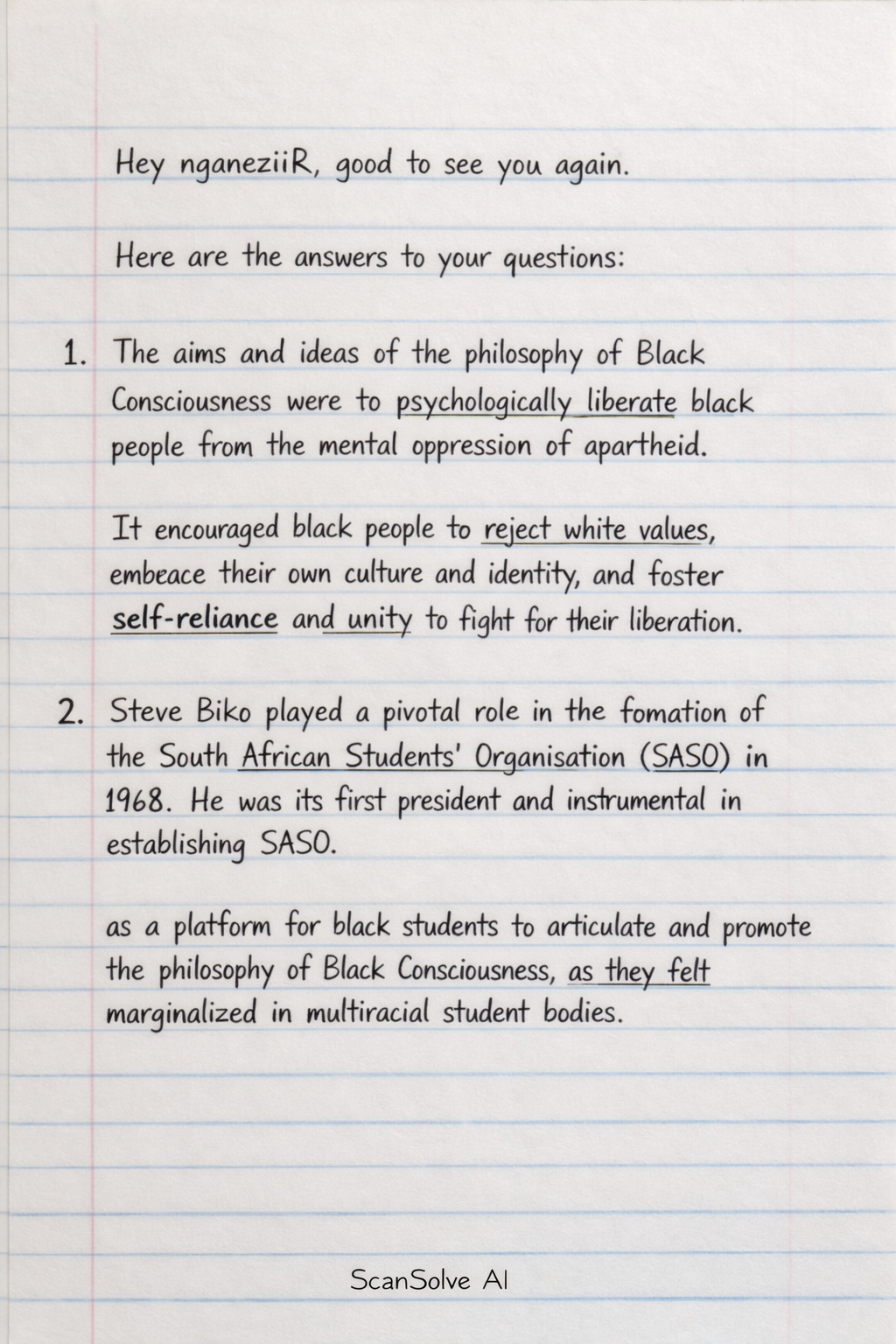
Here are the answers to your questions: 1. The aims and ideas of the philosophy of Black Consciousness were to psychologically liberate black people from the mental oppression of apartheid. It encouraged black people to reject white values, embrace their own culture and identity, and foster self-reliance and unity to fight for their liberation. 2. Steve Biko played a pivotal role in the formation of the South African Students' Organisation (SASO) in 1968. He was its first president and instrumental in establishing SASO as a platform for black students to articulate and promote the philosophy of Black Consciousness, as they felt marginalized in multiracial student bodies. 3. Steve Biko and the philosophy of Black Consciousness influenced black South Africans to challenge apartheid by empowering them to overcome feelings of inferiority and embrace their identity. It fostered a sense of self-worth and unity, encouraging them to organize and fight for their own liberation without relying on white liberals, thereby inspiring widespread activism and defiance against the regime. 4. The philosophy of Black Consciousness significantly influenced the Soweto Uprisings by instilling a sense of pride, defiance, and self-assertion in young black students. It provided the ideological framework for students to reject the imposition of Afrikaans as a medium of instruction, viewing it as a symbol of their oppression, and mobilized them to protest against the apartheid education system in 1976. 5. South Africans remember Steve Biko's legacy by recognizing him as a martyr and a national hero in the anti-apartheid struggle. His death in detention became a powerful symbol of the regime's brutality, galvanizing both local and international opposition. His ideas continue to inspire discussions on identity and liberation, and he is commemorated through various memorials, institutions, and public observances.