
We read your photo as:
Discuss the reasons for Peter's denial. List the accusations made against Jesus by the priests and the teachers of the law.
History
ScanSolve AI Answer
Here are the answers to your questions:
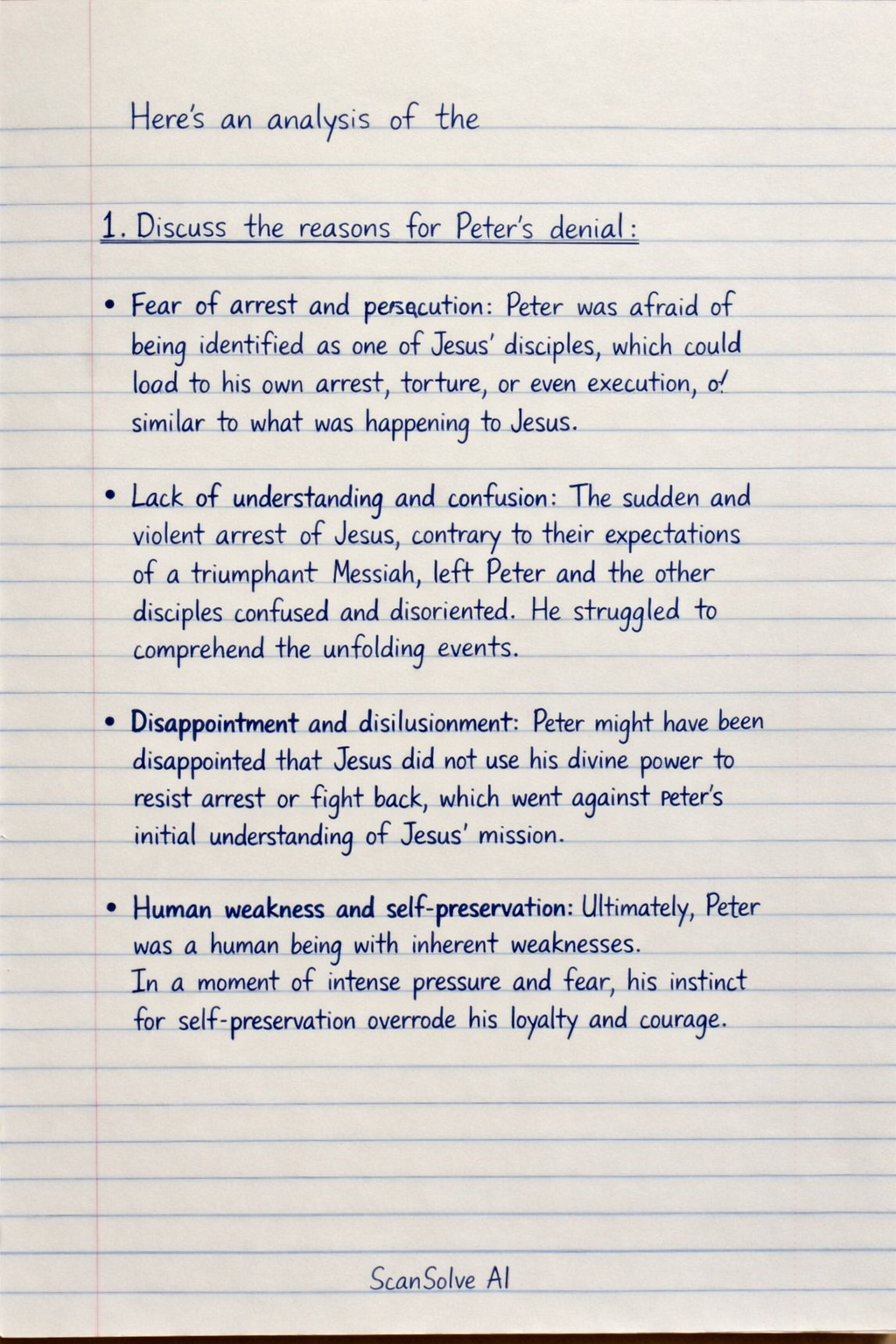
1. Discuss the reasons for Peter's denial.
Peter's denial of Jesus, as recorded in the Gospels, stemmed from a combination of factors:
- Fear of arrest and persecution: Peter was afraid of being identified as one of Jesus' disciples, which could lead to his own arrest, torture, or even execution, similar to what was happening to Jesus.
- Lack of understanding and confusion: The sudden and violent arrest of Jesus, contrary to their expectations of a triumphant Messiah, left Peter and the other disciples confused and disoriented. He struggled to comprehend the unfolding events.
- Disappointment and disillusionment: Peter might have been disappointed that Jesus did not use his divine power to resist arrest or fight back, which went against Peter's initial understanding of Jesus' mission.
- Human weakness and self-preservation: Ultimately, Peter was a human being with inherent weaknesses. In a moment of intense pressure and fear, his instinct for self-preservation overrode his loyalty and courage.
- Fulfillment of prophecy: Jesus had predicted Peter's denial, stating that Peter would deny him three times before the rooster crowed. This event served as a fulfillment of Jesus' prophetic words, highlighting divine foreknowledge.
2. List the accusations made against Jesus by the priests and the teachers of the law when he was taken to Herod.
When Jesus was brought before Herod, the chief priests and teachers of the law made several accusations against him, primarily focusing on political sedition to incite Herod's concern. These accusations included:
- Inciting rebellion: They claimed Jesus was stirring up the people throughout Judea, starting from Galilee, by teaching things contrary to Roman authority.
- Forbidding payment of taxes to Caesar: This was a direct challenge to Roman rule and a serious charge of treason.
- Claiming to be a king: They accused him of claiming to be Christ, a king, which implied a challenge to Caesar's sovereignty.
Was this helpful?
Still stuck on this one?
Ask a follow-up, and the answer starts from this question.
Got a different question?Ask your own question
More History Questions
QDiscuss the reasons for Peter's denial and the accusations against Jesus by the priests and teachers…QExplain the events that took place at mount olive. 3. Discuss the reasons that made Peter to deny…QNarrate the trial of Jesus before the high priest in Matt 26:57-68.QIn what circumstances led to the arrest and imprisonment of Peter by king HerodQWhat are the things about Jesus ministry that distinguished His Ministry as a teacher from the other…
Handwritten Step-by-Step Solution
Get this as a handwritten image on WhatsApp — like a tutor wrote it for you.
Try on WhatsApp