
We read your photo as:
King, let's knock this out.
History
ScanSolve AI Answer
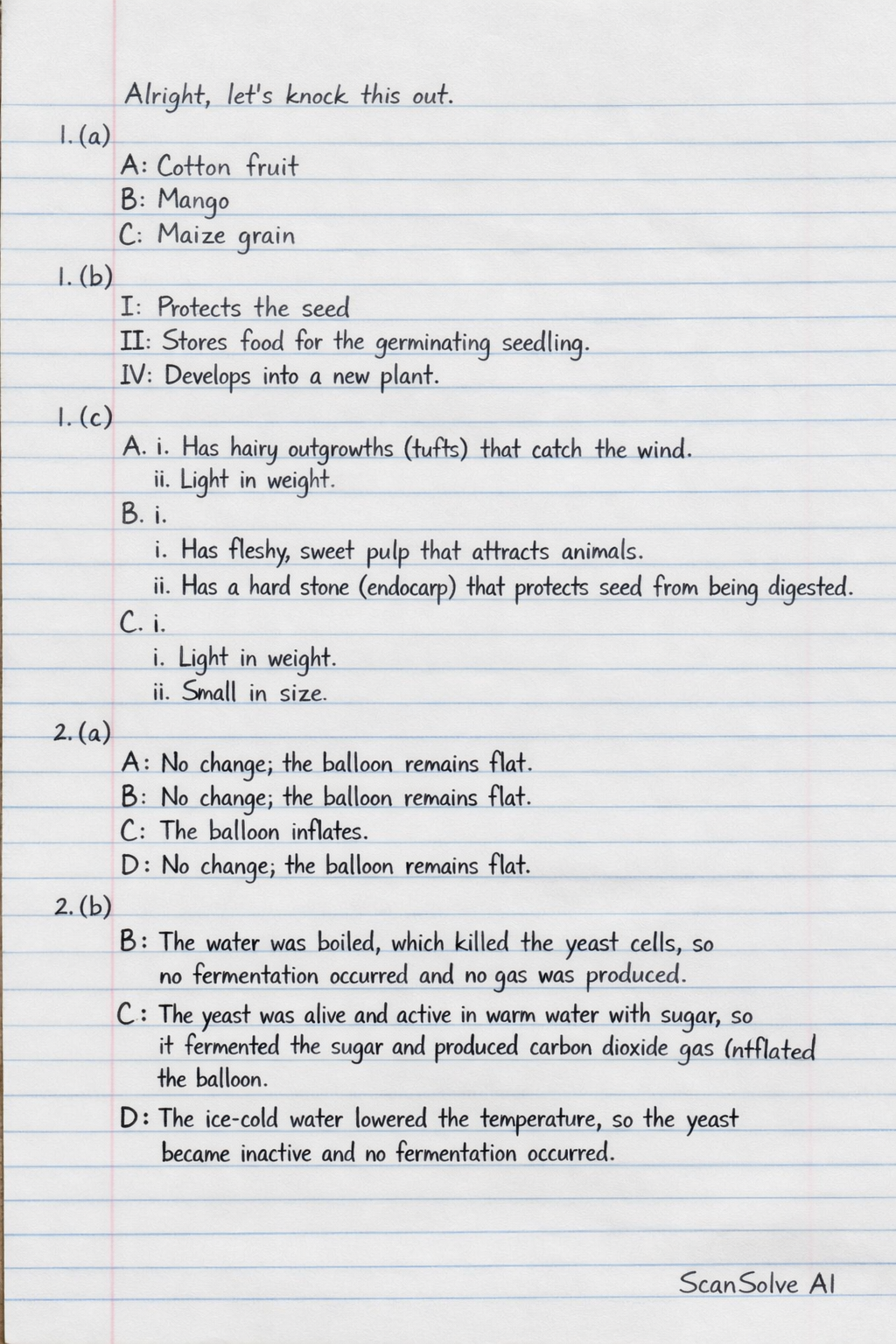
1. (a)
- A: Cotton fruit
- B: Mango
- C: Maize grain
1. (b)
- I: Protects the seed
- II: Stores food for the germinating seedling
- IV: Develops into a new plant
1. (c)
- A. i. Has hairy outgrowths (tufts) that catch the wind. ii. Light in weight.
- B. i. Has fleshy, sweet pulp that attracts animals. ii. Has a hard stone (endocarp) that protects the seed from being digested.
- C. i. Light in weight. ii. Small in size.
2. (a)
- A: No change; the balloon remains flat.
- B: No change; the balloon remains flat.
- C: The balloon inflates.
- D: No change; the balloon remains flat.
2. (b)
- B: The water was boiled, which killed the yeast cells, so no fermentation occurred and no gas was produced.
- C: The yeast was alive and active in warm water with sugar, so it fermented the sugar and produced carbon dioxide gas which inflated the balloon.
- D: The ice-cold water lowered the temperature, so the yeast became inactive and no fermentation occurred.
2. (c)
- Carbon dioxide gas
2. (d)
- Pass the gas into limewater. If it turns milky, it confirms the presence of carbon dioxide.
2. (e)
- Flask A
Was this helpful?
Still stuck on this one?
Ask a follow-up, and the answer starts from this question.
Got a different question?Ask your own question
More History Questions
Handwritten Step-by-Step Solution
Get this as a handwritten image on WhatsApp — like a tutor wrote it for you.
Try on WhatsApp