
We read your photo as:
Explain the reasons for Indian indentured labor in Natal's sugar cane fields and the conditions they faced, referencing the provided sources.
ScanSolve AI Answer
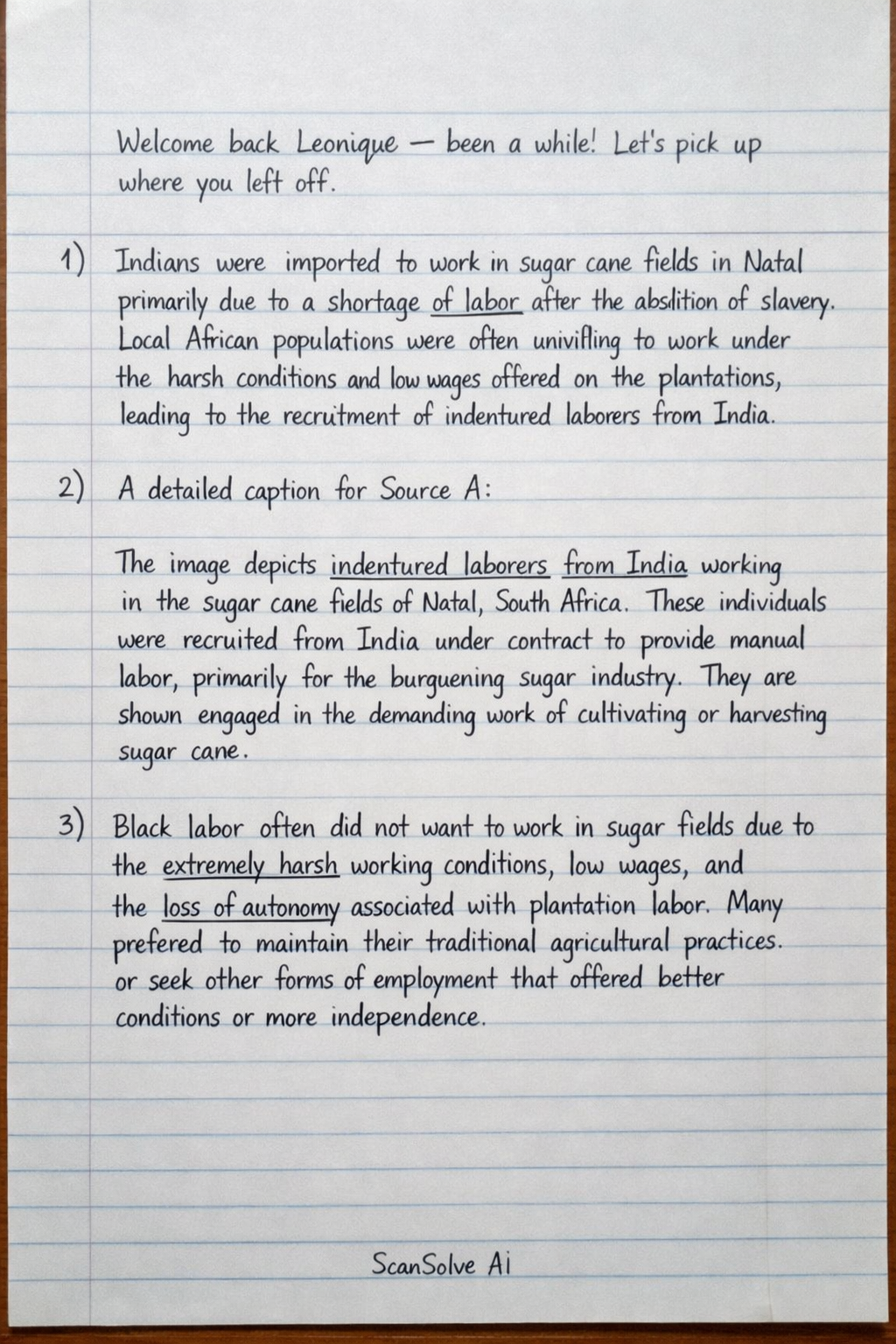
1) Indians were imported to work in sugar cane fields in Natal primarily due to a shortage of labor after the abolition of slavery. Local African populations were often unwilling to work under the harsh conditions and low wages offered on the plantations, leading to the recruitment of indentured laborers from India.
2) A detailed caption for Source A:
The image depicts indentured laborers from India working in the sugar cane fields of Natal, South Africa. These individuals were recruited from India under contract to provide manual labor, primarily for the burgeoning sugar industry. They are shown engaged in the demanding work of cultivating or harvesting sugar cane.
3) Black labor often did not want to work in sugar fields due to the extremely harsh working conditions, low wages, and the loss of autonomy associated with plantation labor. Many preferred to maintain their traditional agricultural practices or seek other forms of employment that offered better conditions or more independence.
4) Based on Source 1B, three crops that Indians grew in their gardens are:
- Vegetables
- Tobacco
- Maize
5) The working conditions of indentured laborers in Natal were generally very harsh and exploitative.
- They endured long working hours, typically 10-12 hours a day, six days a week, performing strenuous manual labor in the sugar cane fields.
- Wages were extremely low, barely enough for subsistence, and often subject to deductions.
- Living conditions were poor, with laborers housed in cramped, unsanitary barracks on the plantations, leading to widespread disease.
- They faced strict discipline from overseers, which often included physical punishment and fines for minor infractions.
- Laborers had limited freedom of movement and were bound by contracts that were difficult to break, effectively tying them to the plantations for the duration of their indenture.
- Many suffered from malnutrition, disease, and exhaustion due to the demanding work and inadequate provisions.
Still stuck on this one?
Ask a follow-up, and the answer starts from this question.
More History Questions
Handwritten Step-by-Step Solution
Get this as a handwritten image on WhatsApp — like a tutor wrote it for you.
Try on WhatsApp