
We read your photo as:
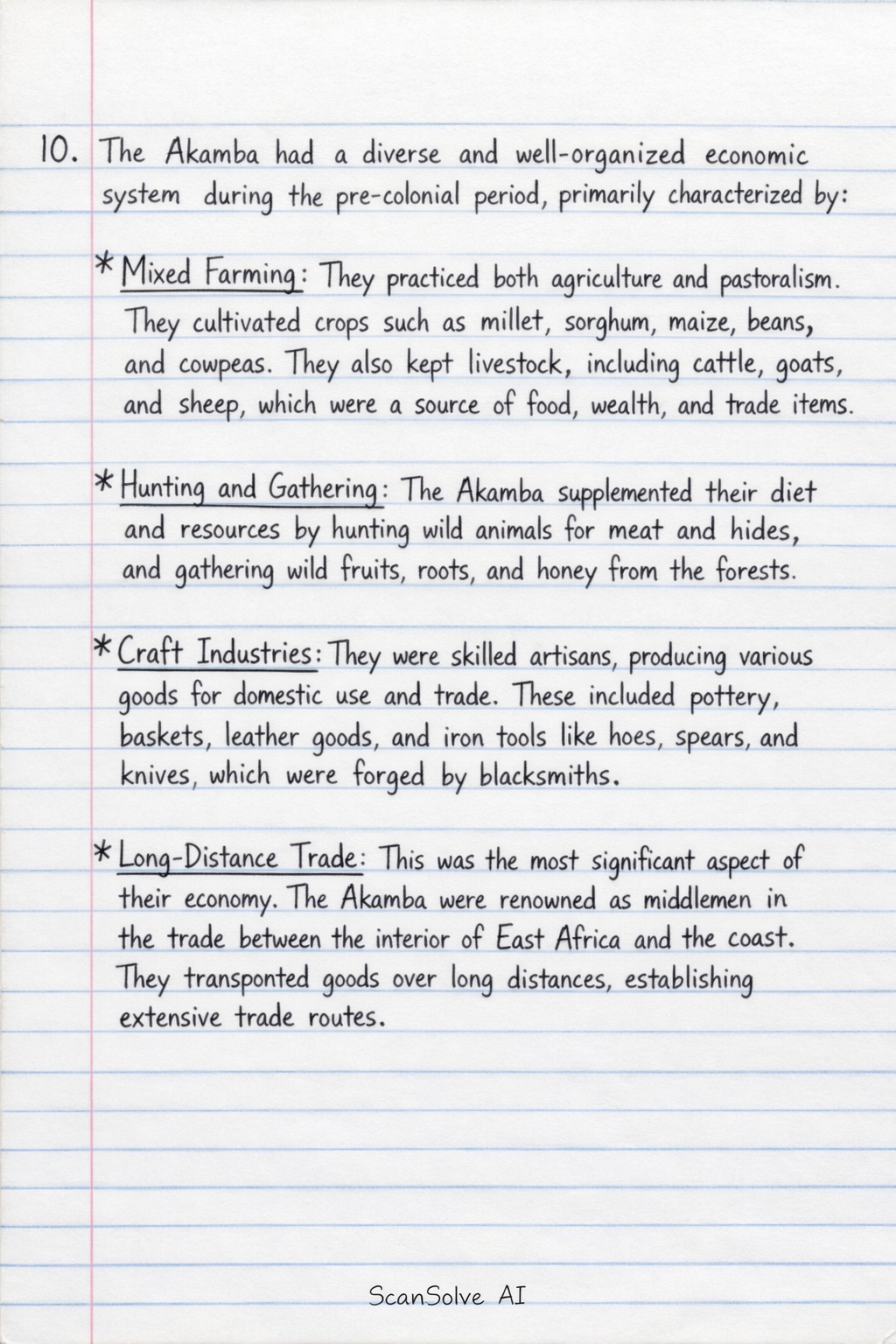
The Akamba had a diverse and well-organized economic system during the pre-colonial period, primarily characterized by:
History
ScanSolve AI Answer
- The Akamba had a diverse and well-organized economic system during the pre-colonial period, primarily characterized by:
- Mixed Farming: They practiced both agriculture and pastoralism. They cultivated crops such as millet, sorghum, maize, beans, and cowpeas. They also kept livestock, including cattle, goats, and sheep, which were a source of food, wealth, and trade items.
- Hunting and Gathering: The Akamba supplemented their diet and resources by hunting wild animals for meat and hides, and gathering wild fruits, roots, and honey from the forests.
- Craft Industries: They were skilled artisans, producing various goods for domestic use and trade. These included pottery, baskets, leather goods, and iron tools like hoes, spears, and knives, which were forged by blacksmiths.
- Long-Distance Trade: This was the most significant aspect of their economy. The Akamba were renowned as middlemen in the trade between the interior of East Africa and the coast. They transported goods over long distances, establishing extensive trade routes.
- Items of Trade: From the interior, they traded items such as ivory, hides, beeswax, honey, and livestock. In return, they acquired coastal goods like cloth (calico), beads, copper wire, and salt from Swahili and Arab traders.
- Barter System: Trade was conducted through a barter system, where goods were exchanged directly for other goods without the use of currency.
- Division of Labor: There was a clear division of labor based on gender and age. Men were typically involved in herding, hunting, clearing land, and long-distance trade. Women were responsible for cultivation, gathering, fetching water and firewood, and domestic chores.
Was this helpful?
Still stuck on this one?
Ask a follow-up, and the answer starts from this question.
Got a different question?Ask your own question
More History Questions
QDiscuss the economic developments in East Africa during the colonial period.QHighlight 5 similarities in social organization of the Agikuyu and luo during precolonial period in…QThe social and economic systems in the pre-institutions in Africa.And sub topics are,Clans…QArgue that precolonial trade brought significant benefits to East Africa.QThe common feature associated with African industries is
Browse by topic:World History
Handwritten Step-by-Step Solution
Get this as a handwritten image on WhatsApp — like a tutor wrote it for you.
Try on WhatsApp