

This history question requires analysis of historical events, causes, and consequences. The detailed answer below provides context, evidence, and a well-structured explanation.
ScanSolve AI Answer
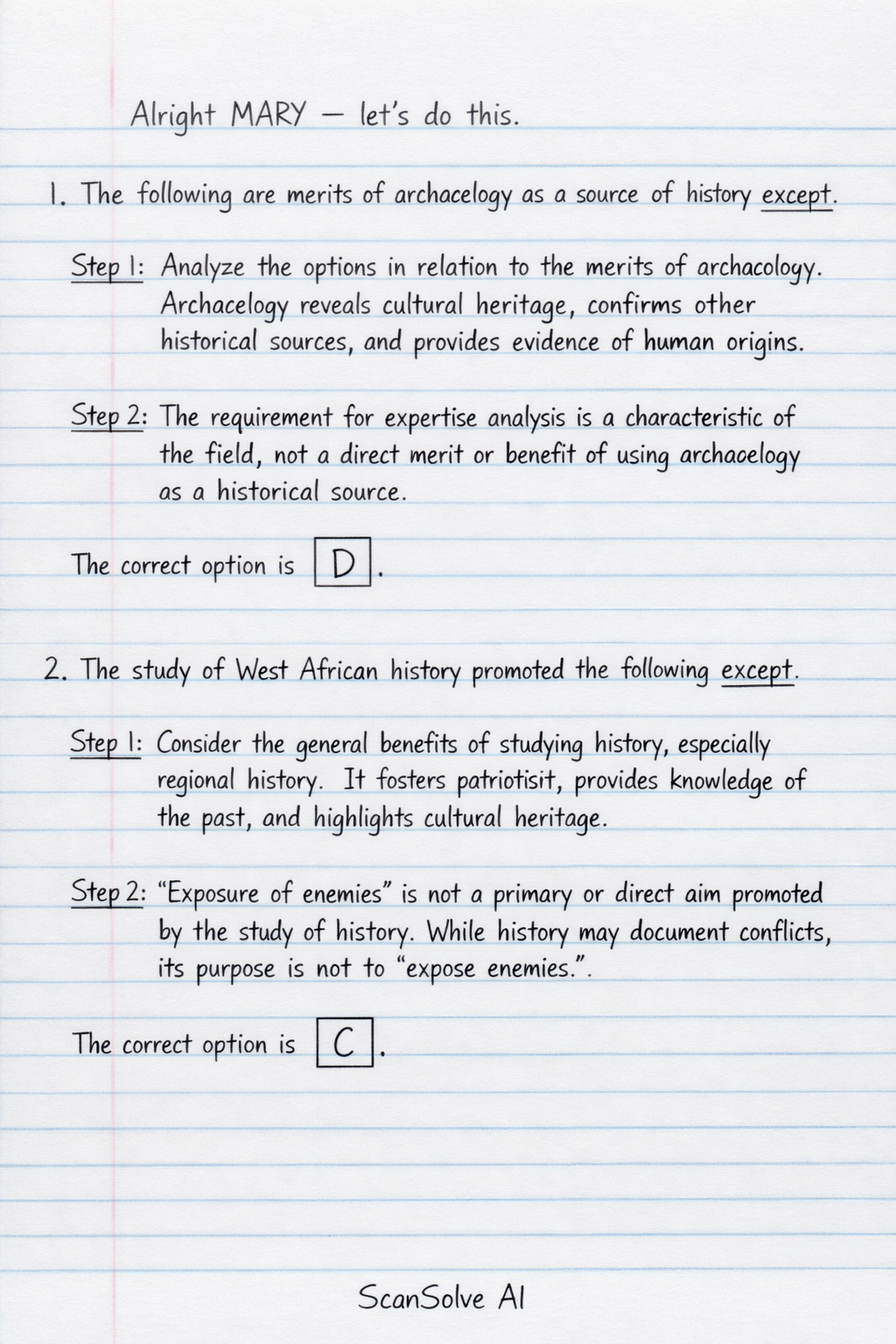
1. The following are merits of archaeology as a source of history except Step 1: Analyze the options in relation to the merits of archaeology. Archaeology reveals cultural heritage, confirms other historical sources, and provides evidence of human origins. Step 2: The requirement for expertise analysis is a characteristic of the field, not a direct merit or benefit of using archaeology as a historical source. The correct option is D. D 2. The study of West African history promoted the following except Step 1: Consider the general benefits of studying history, especially regional history. It fosters patriotism, provides knowledge of the past, and highlights cultural heritage. Step 2: "Exposure of enemies" is not a primary or direct aim promoted by the study of history. While history may document conflicts, its purpose is not to "expose enemies." The correct option is C. C 3. Which of the following methods was used by historians to gather information from other fields to write history? Step 1: Evaluate how historians integrate knowledge from various disciplines. Step 2: An interdisciplinary approach involves drawing on multiple academic fields to gain a comprehensive understanding, which is how historians often incorporate information from fields like archaeology, sociology, or economics. The correct option is B. B 4. An example of a documentary source is Step 1: Define a documentary source as a written or recorded piece of information. Step 2: A court record is a formal written document. Praise songs and funeral dirges are typically oral traditions, and a fossil is a physical remnant. The correct option is A. A 5. Which of the following was not a salt producing area during the trans-Saharan trade? Step 1: Recall the major salt-producing regions during the Trans-Saharan trade. Bilma, Taghaza, and Taodeni were well-known for their salt mines. Step 2: Timbuktu was a major trading city and intellectual center, but it was not a primary salt-producing area itself; it was a hub for trading salt brought from other regions. The correct option is D. D 6. The gold mining area during the trans-Saharan trade was located at Step 1: Identify the primary source of gold for the Trans-Saharan trade. Step 2: Wangara refers to the rich goldfields located in the West African savanna, which were the main source of gold traded across the Sahara. Walata, Timbuktu, and Jenne were important trading cities, not primary mining areas. The correct option is C. C Drop the next question.