

This history question requires analysis of historical events, causes, and consequences. The detailed answer below provides context, evidence, and a well-structured explanation.
ScanSolve AI Answer
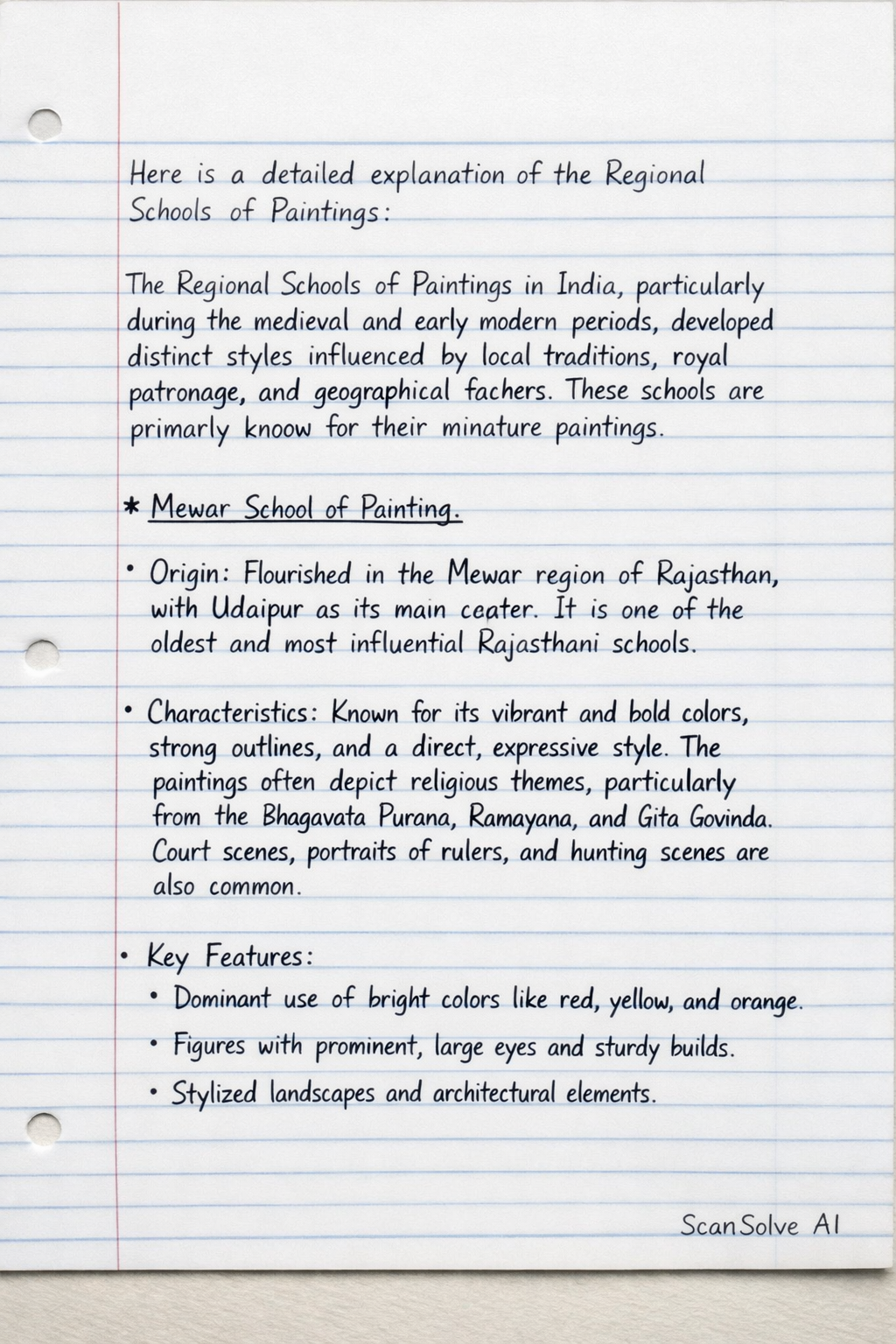
Here is a detailed explanation of the Regional Schools of Paintings: The Regional Schools of Paintings in India, particularly during the medieval and early modern periods, developed distinct styles influenced by local traditions, royal patronage, and geographical factors. These schools are primarily known for their miniature paintings. Mewar School of Painting Origin: Flourished in the Mewar region of Rajasthan, with Udaipur as its main center. It is one of the oldest and most influential Rajasthani schools. Characteristics: Known for its vibrant and bold colors, strong outlines, and a direct, expressive style. The paintings often depict religious themes, particularly from the Bhagavata Purana, Ramayana, and Gita Govinda*. Court scenes, portraits of rulers, and hunting scenes are also common. Key Features: Dominant use of bright colors like red, yellow, and orange. Figures with prominent, large eyes and sturdy builds. Stylized landscapes and architectural elements. Early Mewar paintings show a strong influence of Jain manuscript illustrations. Notable Works/Periods: The Chawand Ragamala* (1605) by Nisaradi is an early and significant example. Kishangarh School of Painting Origin: Developed in the princely state of Kishangarh in Rajasthan, reaching its zenith under the patronage of Maharaja Sawant Singh (who wrote poetry under the name Nagari Das) in the mid-18th century. Characteristics: Celebrated for its highly refined, lyrical, and romantic style. It is most famous for its idealized depictions of Radha and Krishna, often personified by the king himself and his mistress, Bani Thani. Key Features: Elongated, lotus-shaped eyes, arched eyebrows, and pointed noses. Delicate and graceful figures with slender bodies. Subtle use of colors and a focus on emotional expression. Often features moonlit scenes, serene landscapes, and water bodies. Notable Artist: Nihal Chand* is the most famous painter of this school, known for his iconic portrait of Bani Thani. Bundi School of Painting Origin: Emerged in the princely state of Bundi in Rajasthan. It developed a unique style that blended indigenous Rajasthani elements with influences from Mughal painting. Characteristics: Distinguished by its rich, dark colors, lush vegetation, and dynamic compositions. Themes often include hunting scenes, court life, festivals, and Ragamala* series. Key Features: Predominant use of deep blues, greens, and reds. Detailed depiction of flora and fauna, especially trees and animals. Figures with a distinctive facial profile and often shown in active poses. Architectural elements are often depicted with intricate details. Notable Works: Many Ragamala series and illustrations of the Bhagavata Purana*. Marwar School of Painting Origin: Flourished in the Marwar region of Rajasthan, with Jodhpur as its primary center. This school encompasses a broader range of styles over time. Characteristics: Generally characterized by bold colors, strong outlines, and a robust, often dramatic aesthetic. Themes include courtly life, portraits of rulers, religious narratives, and historical events. Key Features: Can vary from vibrant and expressive to more subdued, depending on the period and specific patronage. Often incorporates elements of local folk art. Figures are typically sturdy and expressive. Later Marwar paintings show increasing Mughal influence. Notable Works: Illustrations of the Dhola Maru* love story are a significant theme in Marwar painting. Pahari School of Painting Origin: This is a broad category encompassing various schools that developed in the Himalayan foothills (Pahari means "of the hills"), primarily in present-day Himachal Pradesh and Uttarakhand. It is generally divided into two main phases: Early Pahari and Later Pahari. Early Pahari (e.g., Basohli School): Characteristics: Known for its intense and vibrant colors, strong lines, and a highly stylized, expressive quality. Themes often include Ragamalas, Gita Govinda*, and mythological narratives. Key Features: Use of brilliant primary colors (especially red, yellow, and blue), bold facial types with large eyes, and a decorative approach. Gold and silver foil were often used. Notable Artist: Devidasa* of Basohli. Later Pahari (e.g., Guler and Kangra Schools): Characteristics: Represents a shift towards a more refined, delicate, and naturalistic style, often considered the pinnacle of Indian miniature painting. It is renowned for its lyrical romanticism and subtle emotional depth. Themes predominantly revolve around the divine love of Radha and Krishna, Gita Govinda, and Satsai*. Key Features: Delicate lines, soft and harmonious pastel colors, graceful figures, and serene, idyllic landscapes. Emphasis on naturalism and subtle expressions. Notable Artists: Nainsukh* (Guler) and his family are prominent figures in the development of the Kangra style. These regional schools collectively showcase the immense diversity and artistic brilliance of Indian miniature painting, each contributing a unique aesthetic and narrative tradition.