
We read your photo as:
To what extent were the frequent tribal movements of tribal groups in Cameroon in the 19th century influenced by involuntary motives.
ScanSolve AI Answer
here's the answer to your history question.
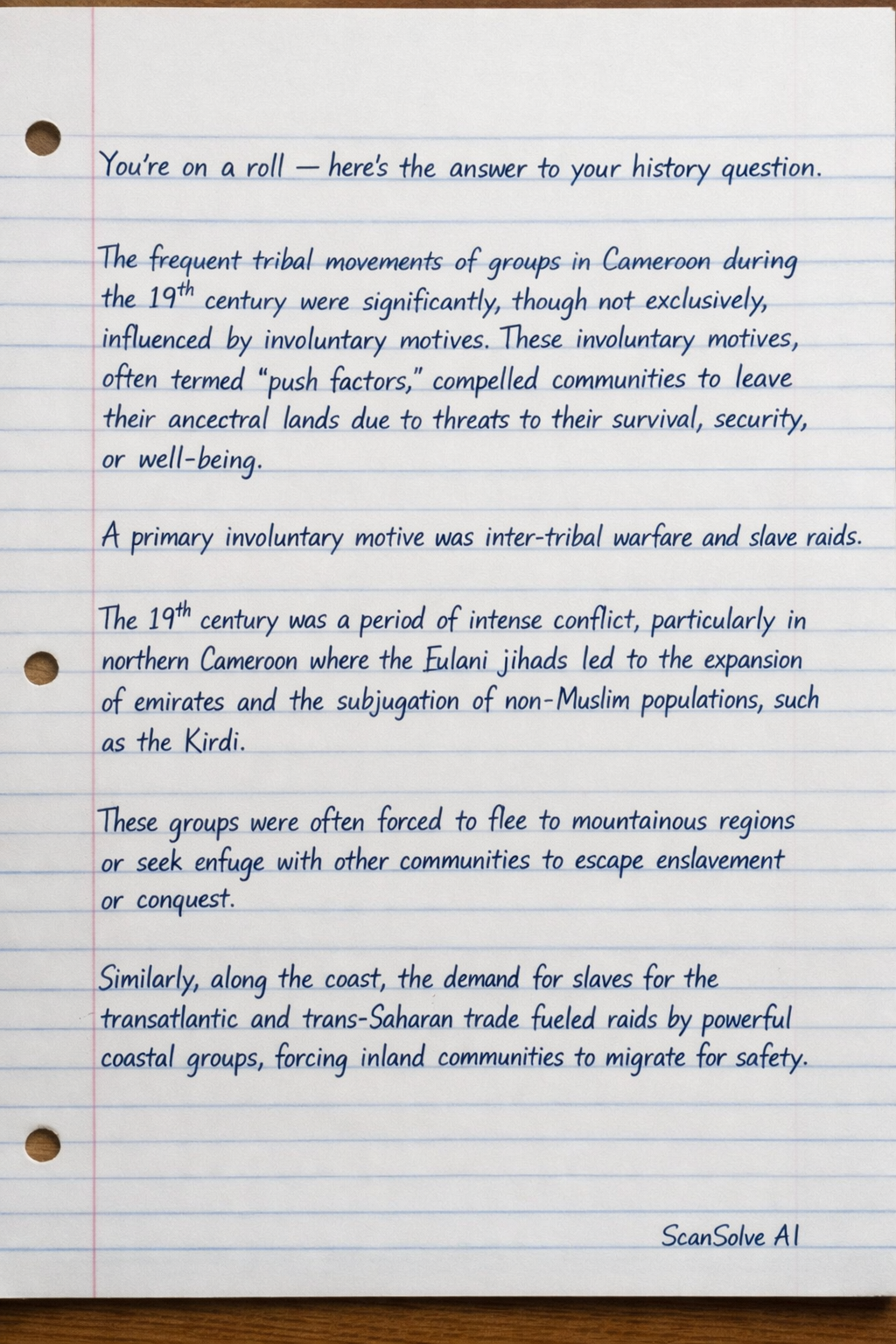
The frequent tribal movements of groups in Cameroon during the 19th century were significantly, though not exclusively, influenced by involuntary motives. These involuntary motives, often termed "push factors," compelled communities to leave their ancestral lands due to threats to their survival, security, or well-being.
A primary involuntary motive was inter-tribal warfare and slave raids. The 19th century was a period of intense conflict, particularly in northern Cameroon where the Fulani jihads led to the expansion of emirates and the subjugation of non-Muslim populations, such as the Kirdi. These groups were often forced to flee to mountainous regions or seek refuge with other communities to escape enslavement or conquest. Similarly, along the coast, the demand for slaves for the transatlantic and trans-Saharan trade fueled raids by powerful coastal groups, forcing inland communities to migrate for safety.
Natural disasters and environmental pressures also served as powerful involuntary motives. Periods of severe drought, famine, and epidemics (like smallpox) devastated communities, making their traditional lands unsustainable. Such conditions compelled groups to move in search of more fertile land, reliable water sources, or healthier environments to ensure their survival. For instance, some groups migrated from arid regions to areas with better agricultural potential.
Furthermore, oppressive rule and heavy taxation by emerging powerful states or dominant ethnic groups could also trigger involuntary migrations. Communities might move to escape forced labor, excessive tribute, or political subjugation, seeking autonomy or less burdensome conditions elsewhere.
While involuntary motives were paramount, it's important to acknowledge that some movements were also influenced by voluntary motives (pull factors), such as the search for better economic opportunities (e.g., trade routes, fertile land for new crops) or the desire for greater security and stability offered by stronger alliances or naturally defensible areas. However, even these "pulls" often arose in response to the "pushes" of insecurity and hardship.
In conclusion, the frequent tribal movements in 19th-century Cameroon were influenced to a very large extent by involuntary motives. The pervasive threats of warfare, slave raids, and environmental calamities often left communities with no choice but to migrate, making survival and security the overriding drivers for many of these population shifts.
Still stuck on this one?
Ask a follow-up, and the answer starts from this question.
More History Questions
Handwritten Step-by-Step Solution
Get this as a handwritten image on WhatsApp — like a tutor wrote it for you.
Try on WhatsApp