
We read your photo as:
What were the core philosophies of Desmond Tutu and Nelson Mandela regarding conflict resolution?
ScanSolve AI Answer
Answer
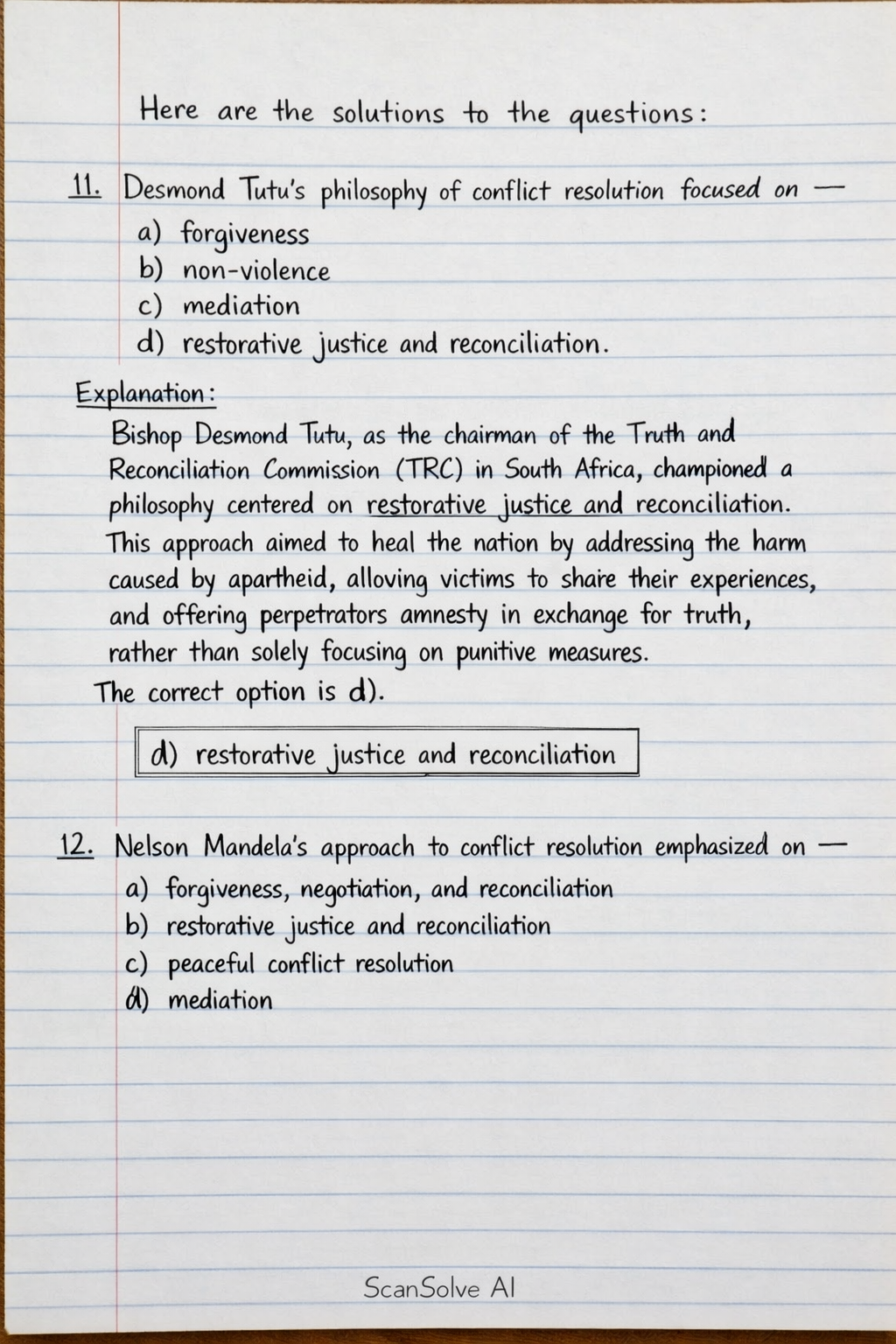
Here are the solutions to the questions:
11. Desmond Tutu's philosophy of conflict resolution focused on ---
a) forgiveness
b) non-violence
c) mediation
d) restorative justice and reconciliation.
Explanation: Bishop Desmond Tutu, as the chairman of the Truth and Reconciliation Commission (TRC) in South Africa, championed a philosophy centered on restorative justice and reconciliation. This approach aimed to heal the nation by addressing the harm caused by apartheid, allowing victims to share their experiences, and offering perpetrators amnesty in exchange for truth, rather than solely focusing on punitive measures.
The correct option is d).
12. Nelson Mandela's approach to conflict resolution emphasized on ---
a) forgiveness, negotiation, and reconciliation
b) restorative justice and reconciliation
c) peaceful conflict resolution
d) mediation
Explanation: Nelson Mandela's approach to ending apartheid and building a new South Africa was characterized by a strong emphasis on negotiation with the existing government, a call for forgiveness from all sides, and a commitment to national reconciliation to overcome the deep divisions of the past.
The correct option is a).
Try one yourself
A new problem that tests the same skill.
Still stuck on this one?
Ask a follow-up, and the answer starts from this question.
More History Questions
Handwritten Step-by-Step Solution
Get this as a handwritten image on WhatsApp — like a tutor wrote it for you.
Try on WhatsApp