
We read your photo as:
Who were the key figures involved in the fight against slavery, and who among them most deserves a public holiday?
ScanSolve AI Answer
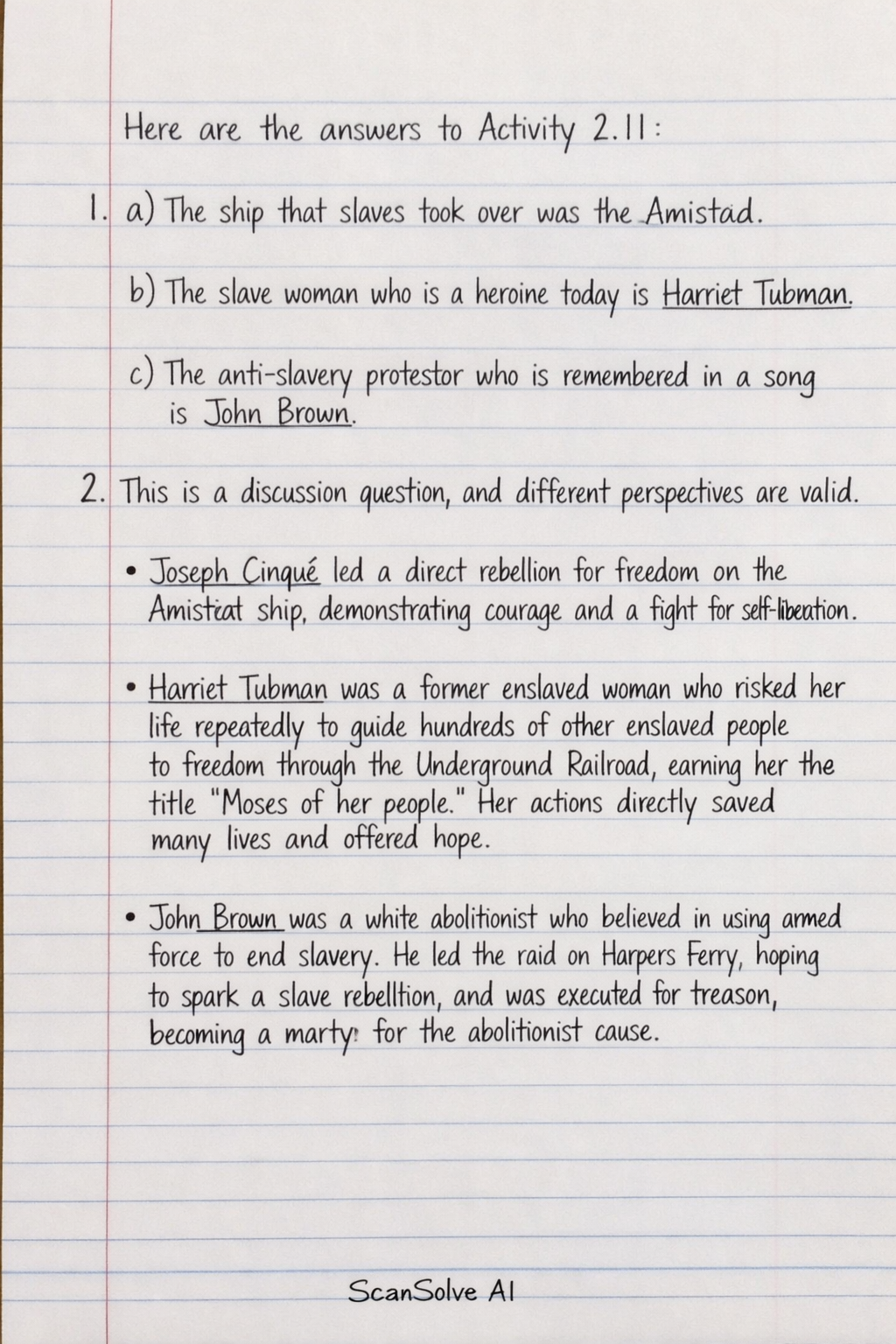
Here are the answers to Activity 2.11:
-
a) The ship that slaves took over was the Amistad. b) The slave woman who is a heroine today is Harriet Tubman. c) The anti-slavery protestor who is remembered in a song is John Brown.
-
This is a discussion question, and different perspectives are valid.
- Joseph Cinqué led a direct rebellion for freedom on the Amistad ship, demonstrating courage and a fight for self-liberation.
- Harriet Tubman was a former enslaved woman who risked her life repeatedly to guide hundreds of other enslaved people to freedom through the Underground Railroad, earning her the title "Moses of her people." Her actions directly saved many lives and offered hope.
- John Brown was a white abolitionist who believed in using armed force to end slavery. He led the raid on Harpers Ferry, hoping to spark a slave rebellion, and was executed for treason, becoming a martyr for the abolitionist cause.
Considering their contributions, Harriet Tubman most deserves a public holiday. Her direct, selfless, and repeated actions to personally lead hundreds of enslaved people to freedom, often at immense personal risk, represent a sustained and profound commitment to human liberty. While Cinqué and Brown also made significant sacrifices, Tubman's consistent role as a liberator makes her an enduring symbol of hope and resistance against oppression.
-
This is a complex ethical question. From a human rights perspective, freedom is a fundamental right. When someone is robbed of their freedom, they are subjected to extreme injustice and often violence. In such a dire situation, where one's basic human dignity and right to self-determination are completely denied, some argue that individuals have a right to resist their oppressors, even with lethal force, as a form of self-defense to reclaim their inherent freedom. This perspective views the act of enslavement itself as an ongoing act of violence, justifying resistance. However, legal systems often have strict rules regarding the use of lethal force, even in self-defense.
Still stuck on this one?
Ask a follow-up, and the answer starts from this question.
More History Questions
Handwritten Step-by-Step Solution
Get this as a handwritten image on WhatsApp — like a tutor wrote it for you.
Try on WhatsApp