Which of the following statements is not correct? A. New Englishes are varieties of English which are not uniform in their characteristics. B. New Englishes are the same thing as Received Pronunciation. C. New Englishes might share some features in common. D. Varieties of the English language are used in places where it is not the first language of the majority of the population.

English
Which of the following statements is not correct? A. New Englishes are varieties of English which are not uniform in their characteristics. B. New Englishes are the same thing as Received Pronunciation. C. New Englishes might share some features in common. D. Varieties of the English language are used in places where it is not the first language of the majority of the population.

ScanSolve AI Answer

9 steps

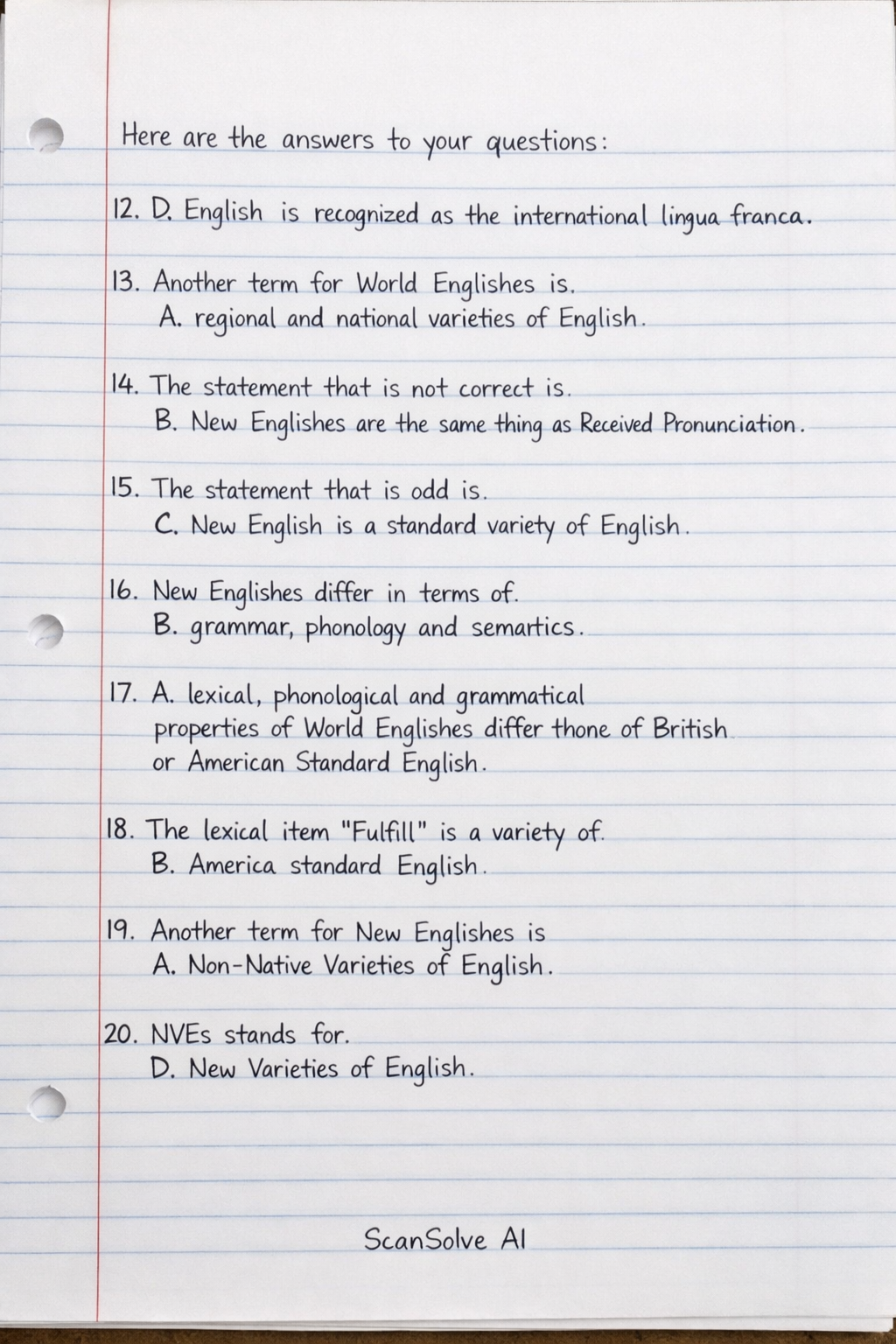
Here are the answers to your questions:

  1. D. English is recognized as the international lingua franca.
  2. Another term for World Englishes is A. regional and national varieties of English.
  3. The statement that is not correct is B. New Englishes are the same thing as Received Pronunciation.
  4. The statement that is odd is C. New English is a standard variety of English.
  5. New Englishes differ in terms of B. grammar, phonology and semantics.
  6. A. lexical, phonological and grammatical properties of World Englishes differ from those of British or American Standard English.
  7. The lexical item "Fulfill" is a variety of B. America standard English.
  8. Another term for New Englishes is A. Non-Native Varieties of English.
  9. NVEs stands for D. New Varieties of English.
Was this helpful?

Need help with your own homework?

Get instant step-by-step solutions to any question. Free to start.

Ask Your Question
Handwritten step-by-step solution preview

Handwritten Step-by-Step Solution

Get this as a handwritten image on WhatsApp — like a tutor wrote it for you.

Try on WhatsApp

Still have questions?

Which of the following statements is not correct? A. New Englishes are varieties of English which are not uniform in their characteristics. B. New Englishes are the same thing as Received Pronunciation. C. New Englishes might share some features in common. D. Varieties of the English language are used in places where it is not the first language of the majority of the population.
English

This English question involves literary analysis, grammar, or writing skills. The detailed response below provides a well-structured answer with supporting evidence and clear explanations.

ScanSolve AI Answer
Here are the answers to your questions: 12. D. English is recognized as the international lingua franca. 13. Another term for World Englishes is A. regional and national varieties of English. 14. The statement that is not correct is B. New Englishes are the same thing as Received Pronunciation. 15. The statement that is odd is C. New English is a standard variety of English. 16. New Englishes differ in terms of B. grammar, phonology and semantics. 17. A. lexical, phonological and grammatical properties of World Englishes differ from those of British or American Standard English. 18. The lexical item "Fulfill" is a variety of B. America standard English. 19. Another term for New Englishes is A. Non-Native Varieties of English. 20. NVEs stands for D. New Varieties of English.