Which of the following statements is correct?

English
Which of the following statements is correct?

ScanSolve AI Answer

8 steps

Here are the answers to the questions:

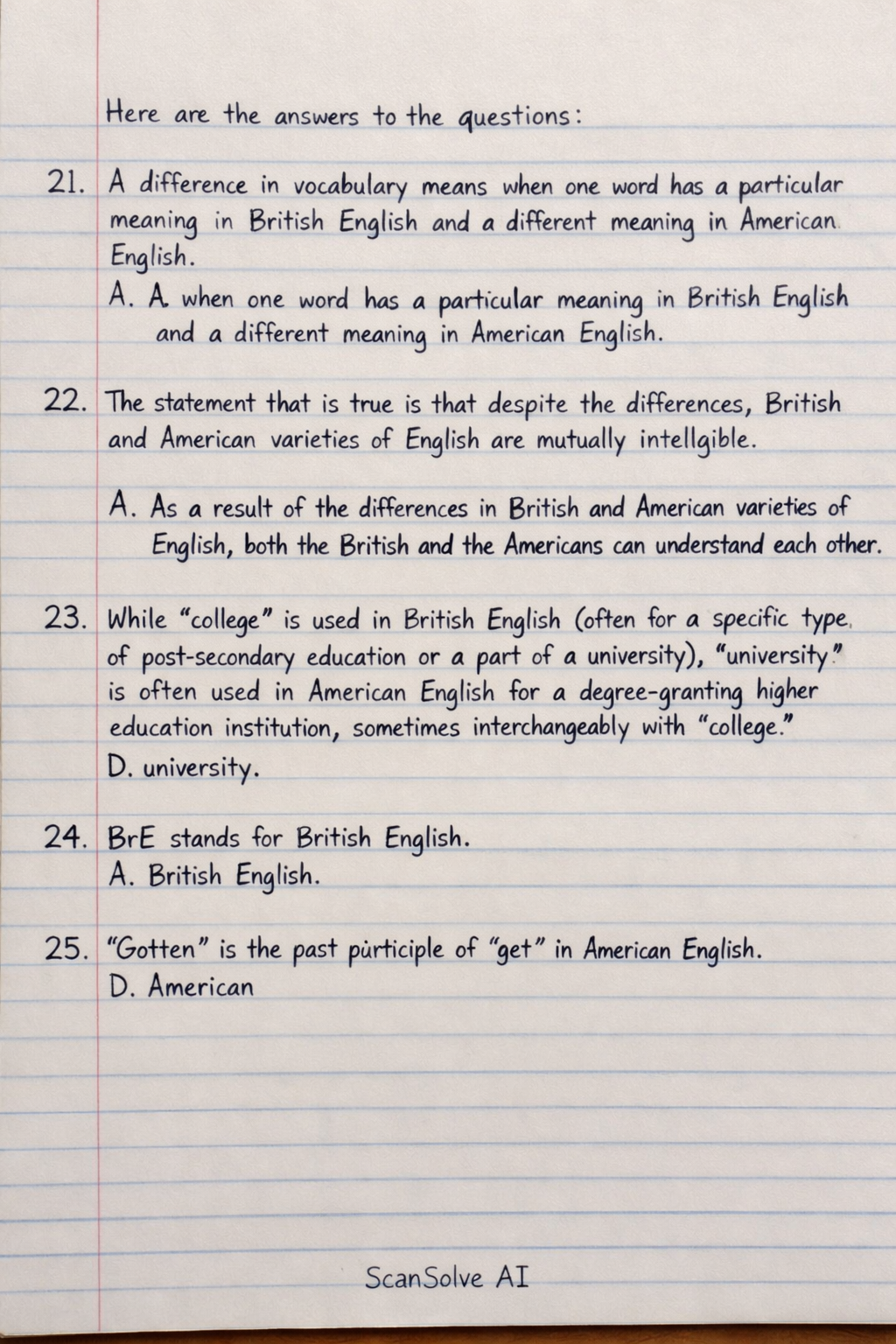
  1. A difference in vocabulary means when one word has a particular meaning in British English and a different meaning in American English.

    • A. when one word has a particular meaning in British English and a different meaning in American English.
  2. The statement that is true is that despite the differences, British and American varieties of English are mutually intelligible.

    • A. As a result of the differences in British and America varieties of English, both the British and the Americans can understand each other.
  3. While "college" is used in British English (often for a specific type of post-secondary education or a part of a university), "university" is often used in American English for a degree-granting higher education institution, sometimes interchangeably with "college."

    • D. university.
  4. BrE stands for British English.

    • A. British English.
  5. "Gotten" is the past participle of "get" in American English.

    • D. American
  6. One of the most common differences between British English (BrE) and American English (AmE) is word form, which includes spelling and morphological variations.

    • D. form.
  7. The correct statement is that some words of French origin that entered British English have changed their stress pattern, often shifting from the final syllable.

    • A. Some words of French origin which have found their way into BrE have changed their stress pattern.
  8. French words typically have stress on the last syllable. In some cases, American English retains this final stress for words of French origin more often than British English.

    • C. last.
Was this helpful?

Need help with your own homework?

Get instant step-by-step solutions to any question. Free to start.

Ask Your Question
Handwritten step-by-step solution preview

Handwritten Step-by-Step Solution

Get this as a handwritten image on WhatsApp — like a tutor wrote it for you.

Try on WhatsApp

Still have questions?

Quick Answer

21. A difference in vocabulary means when one word has a particular meaning in British English and a different meaning in American English.

Which of the following statements is correct?
English

This English question involves literary analysis, grammar, or writing skills. The detailed response below provides a well-structured answer with supporting evidence and clear explanations.

ScanSolve AI Answer
Here are the answers to the questions: 21. A difference in vocabulary means when one word has a particular meaning in British English and a different meaning in American English. A. when one word has a particular meaning in British English and a different meaning in American English. 22. The statement that is true is that despite the differences, British and American varieties of English are mutually intelligible. A. As a result of the differences in British and America varieties of English, both the British and the Americans can understand each other. 23. While "college" is used in British English (often for a specific type of post-secondary education or a part of a university), "university" is often used in American English for a degree-granting higher education institution, sometimes interchangeably with "college." D. university. 24. BrE stands for British English. A. British English. 25. "Gotten" is the past participle of "get" in American English. D. American 26. One of the most common differences between British English (BrE) and American English (AmE) is word form, which includes spelling and morphological variations. D. form. 27. The correct statement is that some words of French origin that entered British English have changed their stress pattern, often shifting from the final syllable. A. Some words of French origin which have found their way into BrE have changed their stress pattern. 28. French words typically have stress on the last syllable. In some cases, American English retains this final stress for words of French origin more often than British English. C. last.