

This languages problem is solved step by step below, with detailed explanations to help you understand the method and arrive at the correct answer.
ScanSolve AI Answer
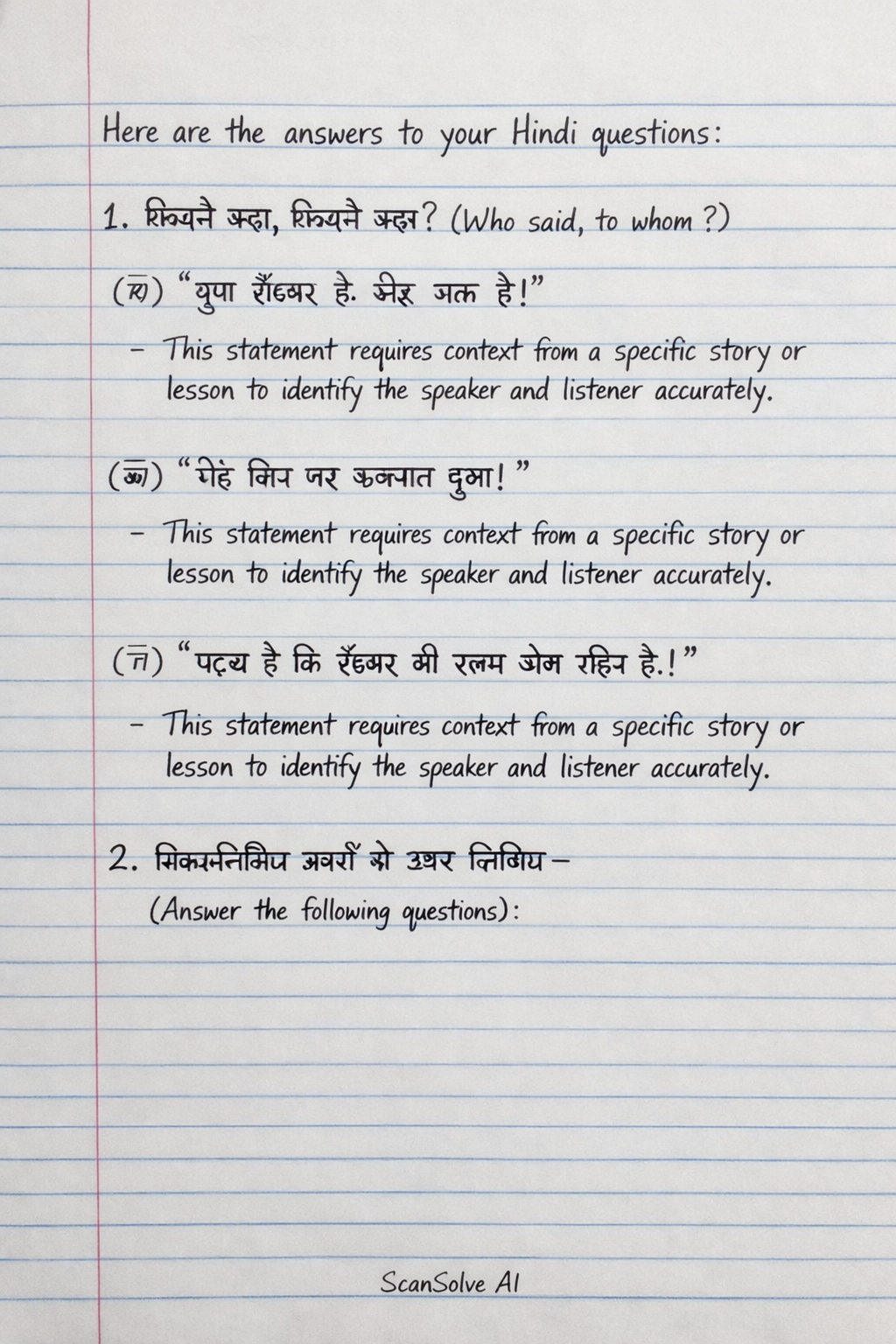
Here are the answers to your Hindi questions: 1. किसने कहा, किससे कहा? (Who said, to whom?) (क) "तुम ईश्वर के श्रेष्ठ भक्त हो!" This statement requires context from a specific story or lesson to identify the speaker and listener accurately. (ख) "मेरे सिर पर वज्रपात हुआ!" This statement requires context from a specific story or lesson to identify the speaker and listener accurately. (ग) "सत्य है कि ईश्वर की रचना दोष रहित है।" This statement requires context from a specific story or lesson to identify the speaker and listener accurately. 2. निम्नलिखित प्रश्नों के उत्तर लिखिए- (Answer the following questions) (क) 'ईश्वर की रचना दोष रहित है' क्या आप इस विचार से सहमत हैं? ('God's creation is flawless' - do you agree with this idea?) हाँ, मैं इस विचार से सहमत हूँ कि ईश्वर की रचना दोष रहित है। प्रकृति में हर चीज़ का अपना महत्व और संतुलन है, जो उसकी पूर्णता को दर्शाता है। Yes, I agree with the idea that God's creation is flawless. Everything in nature has its own importance and balance, which shows its perfection.* (ख) आपको ईश्वर की कौन-कौन सी रचना श्रेष्ठ लगती है? (Which of God's creations do you find superior/best?) मुझे ईश्वर की रचनाओं में मनुष्य, प्रकृति (पहाड़, नदियाँ, जंगल) और जीव-जंतु* सबसे श्रेष्ठ लगते हैं, क्योंकि इनमें अद्भुत विविधता और जीवन का संचार है। I find humans, nature (mountains, rivers, forests), and living beings to be the best of God's creations, as they possess amazing diversity and the essence of life.* (ग) संसार को मनुष्य ने बनाया है या ईश्वर ने, तर्क सहित उत्तर लिखिए। (Was the world created by humans or by God? Answer with reasoning.) संसार को ईश्वर ने बनाया है*। मनुष्य ने संसार में बहुत सी चीज़ें बनाई हैं, लेकिन प्रकृति, जीवन और ब्रह्मांड की मूलभूत संरचना ईश्वर द्वारा ही निर्मित मानी जाती है। मनुष्य केवल ईश्वर की बनाई हुई चीज़ों का उपयोग और उनमें बदलाव कर सकता है। The world was created by God. Humans have created many things in the world, but the fundamental structure of nature, life, and the universe is believed to be created by God. Humans can only use and modify the things created by God.* 3. निम्नलिखित प्रश्नों के उत्तर विस्तारपूर्वक लिखिए- (Answer the following questions in detail) (क) ईश्वर की माया, कहीं धूप कहीं छाया। इस लोकोक्ति का अर्थ सरल भाषा में लिखिए। (God's illusion, sometimes sun, sometimes shade. Explain the meaning of this proverb in simple language.) इस लोकोक्ति का अर्थ है कि संसार में सुख और दुख, अच्छे और बुरे दिन आते-जाते रहते हैं*। जीवन में परिस्थितियाँ हमेशा एक जैसी नहीं रहतीं; कभी खुशी होती है तो कभी गम। यह ईश्वर की बनाई हुई दुनिया का नियम है, जहाँ हर चीज़ परिवर्तनशील है। This proverb means that in the world, there are always ups and downs, good days and bad days. Circumstances in life are never constant; sometimes there is happiness, and sometimes there is sorrow. This is a rule of God's creation, where everything is subject to change.* (ख) निखिल को ईश्वर की रचना दोष हीन कब और क्यों लगी? (When and why did Nikhil find God's creation flawless?) इस प्रश्न का उत्तर देने के लिए उस विशिष्ट कहानी या पाठ का संदर्भ आवश्यक है* जिसमें 'निखिल' नामक पात्र का उल्लेख है। बिना कहानी के, यह बताना संभव नहीं है कि निखिल को ईश्वर की रचना दोषहीन कब और क्यों लगी। To answer this question, the context of the specific story or lesson in which the character 'Nikhil' is mentioned is required. Without the story, it is not possible to say when and why Nikhil found God's creation flawless.* 4. भाषा ज्ञान (Language knowledge) निम्नलिखित शब्दों के पर्यायवाची लिखिए- (Write synonyms for the following words) मित्र: दोस्त, सखा, सहचर, मीत* त्रुटि: गलती, भूल, अशुद्धि, कमी* That's 2 down. 3 left today — send the next one.