

This languages problem is solved step by step below, with detailed explanations to help you understand the method and arrive at the correct answer.
ScanSolve AI Answer
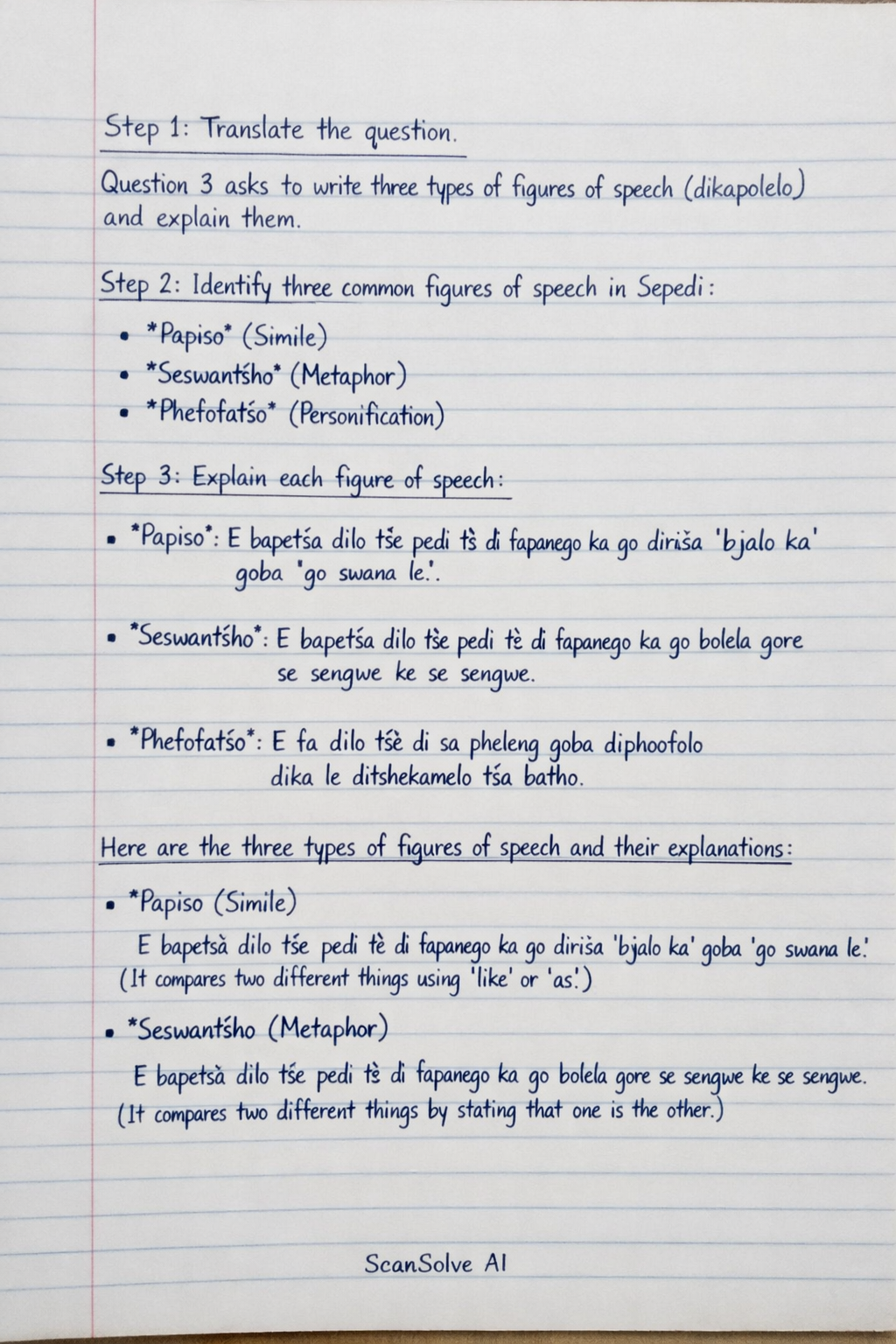
Step 1: Translate the question. Question 3 asks to write three types of figures of speech (dikapolelo) and explain them. Step 2: Identify three common figures of speech in Sepedi. • Papiso (Simile) • Seswantšho (Metaphor) • Phefofatšo (Personification) Step 3: Explain each figure of speech. • Papiso: E bapetša dilo tše pedi tše di fapanego ka go diriša 'bjalo ka' goba 'go swana le'. • Seswantšho: E bapetša dilo tše pedi tše di fapanego ka go bolela gore se sengwe ke se sengwe. • Phefofatšo: E fa dilo tše di sa pheleng goba diphoofolo dika le ditshekamelo tša batho. Here are the three types of figures of speech and their explanations: Papiso (Simile) E bapetša dilo tše pedi tše di fapanego ka go diriša 'bjalo ka' goba 'go swana le'. (It compares two different things using 'like' or 'as'.) Seswantšho (Metaphor) E bapetša dilo tše pedi tše di fapanego ka go bolela gore se sengwe ke se sengwe. (It compares two different things by stating that one is the other.) Phefofatšo (Personification) E fa dilo tše di sa pheleng goba diphoofolo dika le ditshekamelo tša batho. (It gives human characteristics and tendencies to inanimate objects or animals.) Send me the next one 📸