

This languages problem is solved step by step below, with detailed explanations to help you understand the method and arrive at the correct answer.
ScanSolve AI Answer
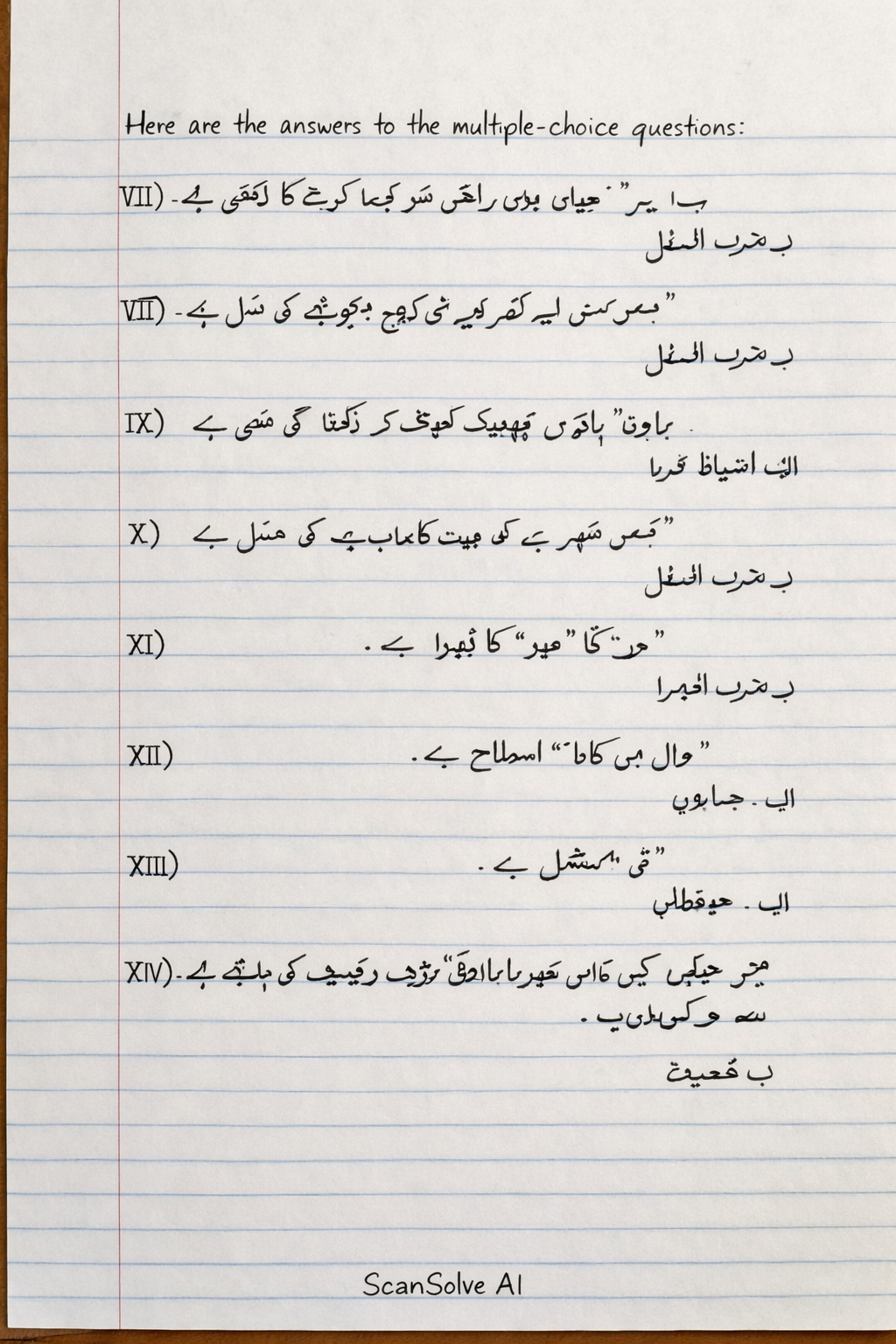
Here are the answers to the multiple-choice questions: VII) "میاں بیوی راضی تو کیا کرے گا قاضی" کی مثل ہے۔ This is a well-known proverb in Urdu. ب) ضرب المثل VIII) "جس سے اس نے اپنے گھر کی گونج بچی، اسے ہی مرغے کی مثل ہے۔" This is also a proverb. ب) ضرب المثل IX) "پاؤں پھونک پھونک کر رکھنا" کی معنی ہے۔ This idiom means to be very careful. الف) احتیاط کرنا X) "کسی شہر کی آمد ہے کہ بہت کامیاب ہے" کی مثل ہے۔ This is a proverb or saying. ب) ضرب المثل XI) "نور کا متضاد" ہے۔ The antonym of "نور" (light) is "اندھیرا" (darkness). ب) اندھیرا XII) "دال میں کالا" کی اصطلاح ہے۔ This is a common idiom in Urdu, meaning something is suspicious. الف) محاورہ XIII) "مچھلی" کی جمع ہے۔ The plural form of "مچھلی" (fish) is "مچھلیاں". الف) مچھلیاں XIV) جس نظم میں کسی خاص شہر یا علاقے کی تعریف و توصیف کی جائے، وہ کہلاتی ہے۔ A poem that praises a specific city or region is typically a Qasida. ب) قصیدہ XV) "سنگدل" کی متضاد ہے۔ The antonym of "سنگدل" (stone-hearted, cruel) is "نرم دل" (soft-hearted). الف) نرم دل XVI) "سوداگری" سے مراد ہے۔ "سوداگری" refers to trade or commerce. الف) تجارت XVII) "کسی کو دیکھ کر منہ میں پانی بھر آنا" کی مثل ہے۔ This is an idiom meaning to feel tempted or to crave something upon seeing it. الف) محاورہ XVIII) "روٹی کی کمائی" کی اصطلاح ہے۔ This is an idiom referring to earning a livelihood. الف) محاورہ XIX) غزل کے ہر شعر کے آخری حروف کو کہتے ہیں۔ The rhyming words or sounds at the end of each couplet in a ghazal are called Qafiya. الف) قافیہ XX) جس نظم میں دو مصرعوں کا وزن برابر ہو، وہ کہلاتی ہے۔ In traditional Urdu poetry, a poem where the two lines (misra) of a couplet have equal meter is a fundamental characteristic of a Nazm (poem) in general, as well as specific forms like ghazal and masnavi. ب) نظم 3 done, 2 left today. You're making progress.