
We read your photo as:
Questions about Akan customary practices, greetings, and marriage. Which greeting is appropriate when meeting someone eating, and what is the term for someone who doesn't greet others?
ScanSolve AI Answer
Answer
Here are the answers to the questions:
-
Se obi kɔtɔ ne yɔnko na ɔredidi a, ɔkyea no. (If someone meets their friend eating, they greet them.) The appropriate greeting when someone is eating is to wish them well with their meal.
- A. kita mu. (hold hands)
- B. nya nkwa. (get well/have life)
- C. ayikoo. (well done/sorry for your trouble)
- D. adidibrada. (blessing for eating/enjoy your meal) The correct option is D.
-
Akanfoɔ bu obi a ɔhu nnipa a ɔnkyea no deɛn? (What do Akans consider someone who sees people but doesn't greet them?) In Akan culture, not greeting people is considered rude.
- A. nyansafɔɔ. (wise person)
- B. onihasɔɔ. (respectful person)
- C. nimdefɔɔ. (knowledgeable person)
- D. atetekwaa. (rude/ill-mannered person) The correct option is D.
-
Akanfoɔ tete awareɛ no mu baako ne? (One of the traditional Akan marriages is?) "Ayefare" is the general term for the traditional marriage ceremony.
- A. dɔmufa. (a type of marriage where the man serves the woman's family)
- B. ayefare. (traditional marriage ceremony/wedding)
- C. asiwa. (betrothal/engagement)
- D. dwetire. (bride price/head money) The correct option is B.
-
Sika bɛn na ɔbarima tua ma ne yere nua mmarimanom berɛ a wɔreware? (What money does a man pay to his wife's male relatives when they are marrying?) "Akontansekan" is a specific payment made to the wife's male relatives.
- A. ti adeɛ. (head money/bride price)
- B. ti nsa. (head drink)
- C. danta. (a type of cloth or traditional attire)
- D. akontansekan. (money for the wife's brothers/uncles) The correct option is D.
-
Deɛn sunsum na agya de bɔ ne mma ho ban? (What spirit does a father use to protect his children?) In Akan belief, the Ntɔn (paternal clan spirit) is associated with a father's protection of his children.
- A. bosom. (deity/god)
- B. nyankopasakyi. (a specific type of spirit or deity)
- C. ntɔn. (paternal clan spirit)
- D. bosomakɔmfoɔ. (priest of a deity) The correct option is C.
Try one yourself
A new problem that tests the same skill.
Still stuck on this one?
Ask a follow-up, and the answer starts from this question.
More Languages Questions
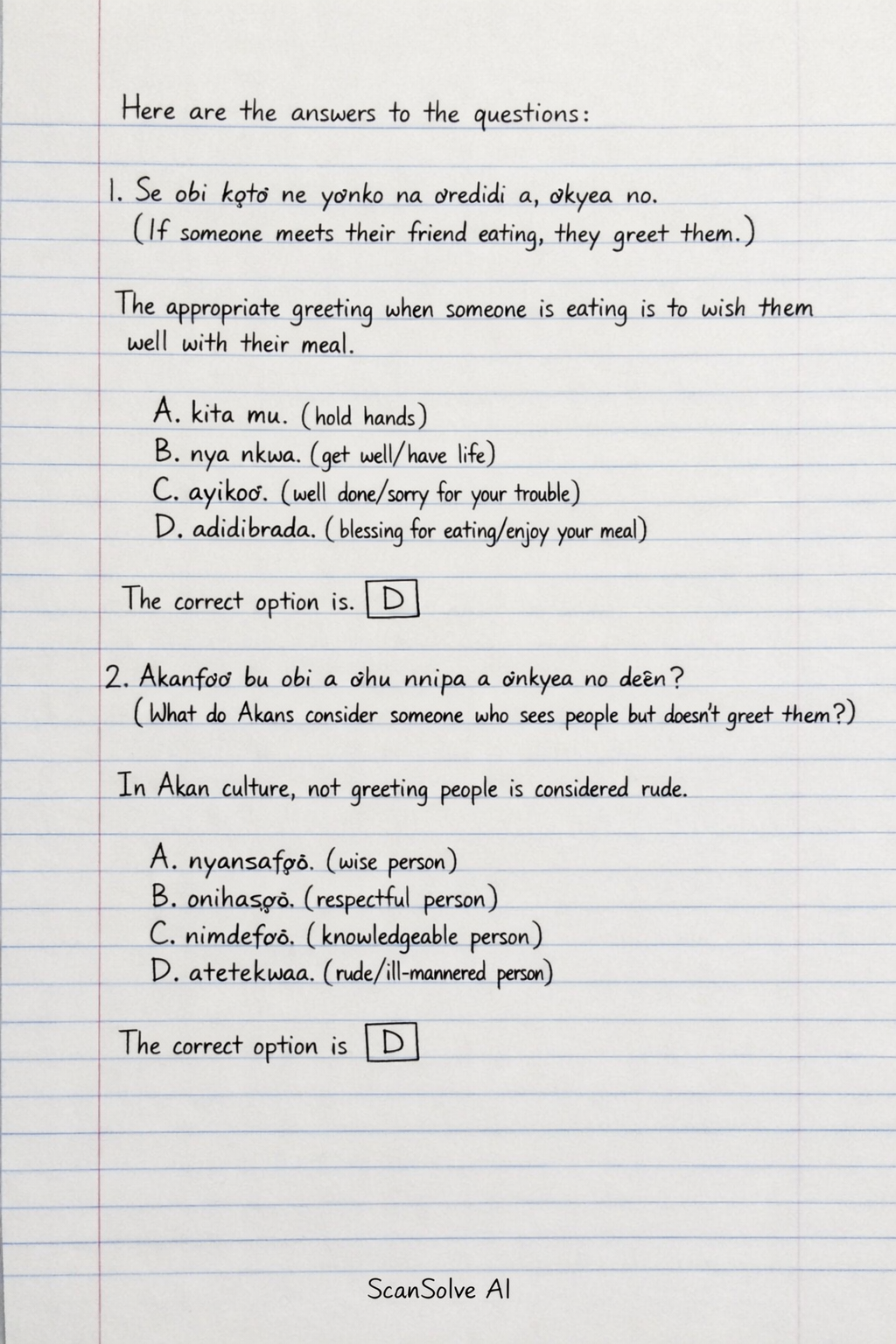
Handwritten Step-by-Step Solution
Get this as a handwritten image on WhatsApp — like a tutor wrote it for you.
Try on WhatsApp