What is the difference between weather and climate?

Law
What is the difference between weather and climate?

ScanSolve AI Answer

22 steps

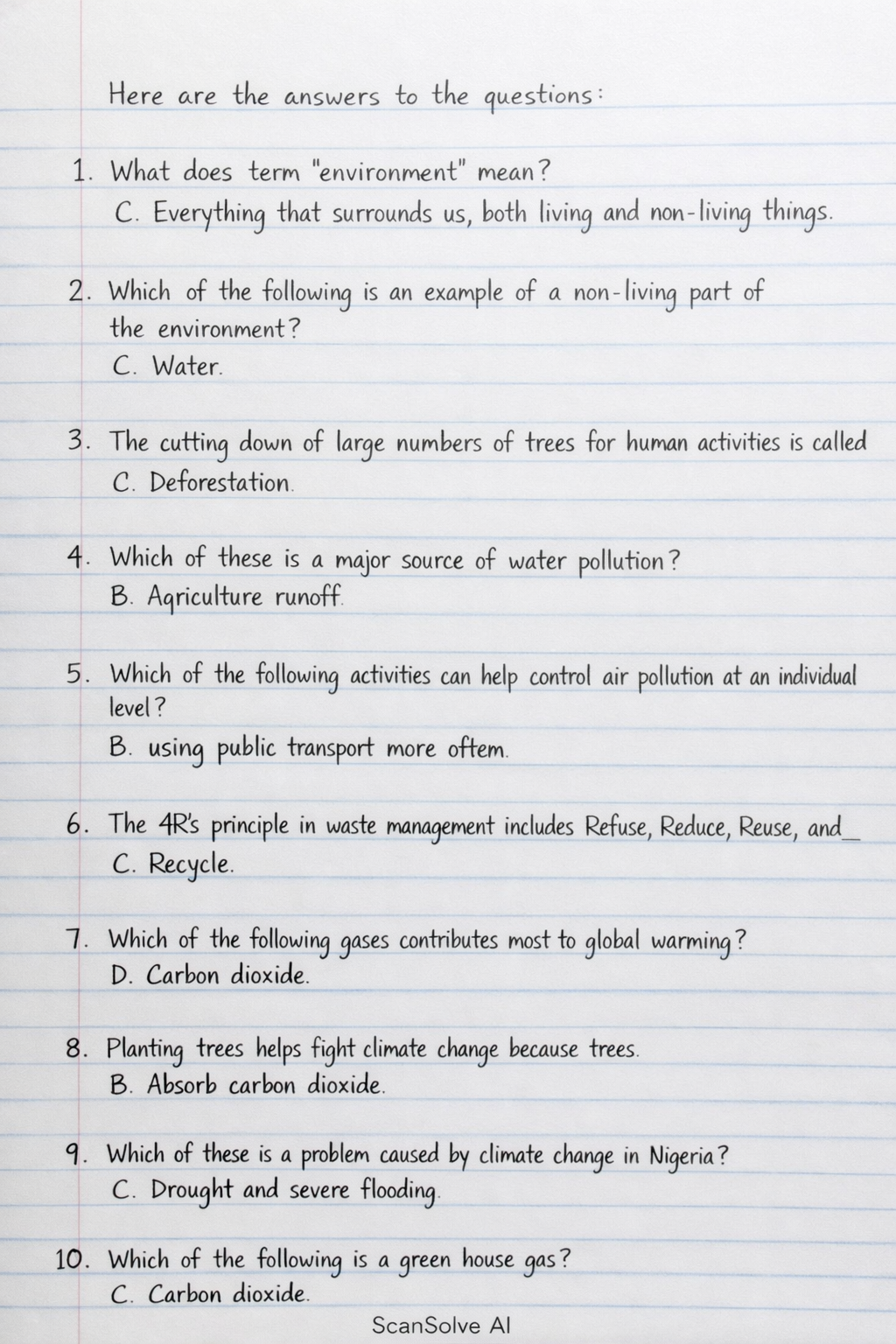
Here are the answers to the questions:

  1. What does term 'environment' mean?

    • C. Everything that surrounds us, both living and non-living things
  2. Which of the following is an example of a non-living part of the environment?

    • C. Water
  3. The cutting down of large numbers of trees for human activities is called

    • C. Deforestation
  4. Which of these is a major source of water pollution?

    • B. Agriculture runoff
  5. Which of the following activities can help control air pollution at an individual level?

    • B. using public transport more often
  6. The 4R's principle in waste management includes Refuse, Reduce, Reuse, and _____.

    • C. Recycle
  7. Which of the following gases contributes most to global warming?

    • D. Carbon dioxide
  8. Planting trees helps fight climate change because trees _____.

    • B. Absorb carbon dioxide
  9. Which of these is a problem caused by climate change in Nigeria?

    • C. Brought and severe flooding
  10. Which of the following is a green house gas?

    • C. Carbon dioxide
  11. What is the difference between weather and climate?

    • C. Weather is short term, and climate is long term
  12. Disaster risk reduction means _____.

    • A. Increasing awareness and preparedness
  13. The major cause of flood is _____.

    • B. Heavy rainfall and poor drainage
  14. The most important component of disaster management cycle is _____.

    • D. All of the above
  15. Which of the following is a sign of an approaching rainstorm?

    • C. Darkening skies and strong winds
  16. What is the purpose of an early warning system?

    • B. To monitor hazards and provide timely information for action
  17. Which Nigeria agency is responsible for managing emergencies and disasters?

    • A. NEMA
  18. When many people in a town get sick with the same disease at once, it's called an _____.

    • B. Epidemic
  19. Which of these is a way diseases spread?

    • B. Insect bites

THEORY QUESTIONS

  1. What are harmful traditional practices?

    • Harmful traditional practices are customs or behaviors deeply rooted in a community's culture that negatively impact the health, well-being, or human rights of individuals, especially women and children. Examples include female genital mutilation (FGM) and child marriage.
  2. What does Community Safety mean?

    • Community safety refers to a state where a community is free from crime, violence, and other threats, allowing residents to live and work without fear. It involves collective efforts by community members, law enforcement, and local authorities to prevent crime and promote a secure environment.
  3. Who can help the community?

    • Various individuals and groups can help the community, including community leaders, law enforcement agencies, local government officials, Non-Governmental Organizations (NGOs), and community members themselves through volunteering and participation in community initiatives.
Was this helpful?

Need help with your own homework?

Get instant step-by-step solutions to any question. Free to start.

Ask Your Question
Handwritten step-by-step solution preview

Handwritten Step-by-Step Solution

Get this as a handwritten image on WhatsApp — like a tutor wrote it for you.

Try on WhatsApp

Still have questions?

Quick Answer

1. What does term 'environment' mean? C.

What is the difference between weather and climate?
Law

This law problem is solved step by step below, with detailed explanations to help you understand the method and arrive at the correct answer.

ScanSolve AI Answer
Here are the answers to the questions: 1. What does term 'environment' mean? C. Everything that surrounds us, both living and non-living things* 2. Which of the following is an example of a non-living part of the environment? C. Water* 3. The cutting down of large numbers of trees for human activities is called C. Deforestation* 4. Which of these is a major source of water pollution? B. Agriculture runoff* 5. Which of the following activities can help control air pollution at an individual level? B. using public transport more often* 6. The 4R's principle in waste management includes Refuse, Reduce, Reuse, and _____. C. Recycle* 7. Which of the following gases contributes most to global warming? D. Carbon dioxide* 8. Planting trees helps fight climate change because trees _____. B. Absorb carbon dioxide* 9. Which of these is a problem caused by climate change in Nigeria? C. Brought and severe flooding* 10. Which of the following is a green house gas? C. Carbon dioxide* 11. What is the difference between weather and climate? C. Weather is short term, and climate is long term* 12. Disaster risk reduction means _____. A. Increasing awareness and preparedness* 13. The major cause of flood is _____. B. Heavy rainfall and poor drainage* 14. The most important component of disaster management cycle is _____. D. All of the above* 15. Which of the following is a sign of an approaching rainstorm? C. Darkening skies and strong winds* 16. What is the purpose of an early warning system? B. To monitor hazards and provide timely information for action* 17. Which Nigeria agency is responsible for managing emergencies and disasters? A. NEMA* 18. When many people in a town get sick with the same disease at once, it's called an _____. B. Epidemic* 19. Which of these is a way diseases spread? B. Insect bites* THEORY QUESTIONS 1. What are harmful traditional practices? Harmful traditional practices* are customs or behaviors deeply rooted in a community's culture that negatively impact the health, well-being, or human rights of individuals, especially women and children. Examples include female genital mutilation (FGM) and child marriage. 2. What does Community Safety mean? Community safety* refers to a state where a community is free from crime, violence, and other threats, allowing residents to live and work without fear. It involves collective efforts by community members, law enforcement, and local authorities to prevent crime and promote a secure environment. 3. Who can help the community? Various individuals and groups can help the community, including community leaders, law enforcement agencies, local government officials, Non-Governmental Organizations (NGOs), and community members themselves* through volunteering and participation in community initiatives.