

This law problem is solved step by step below, with detailed explanations to help you understand the method and arrive at the correct answer.
ScanSolve AI Answer
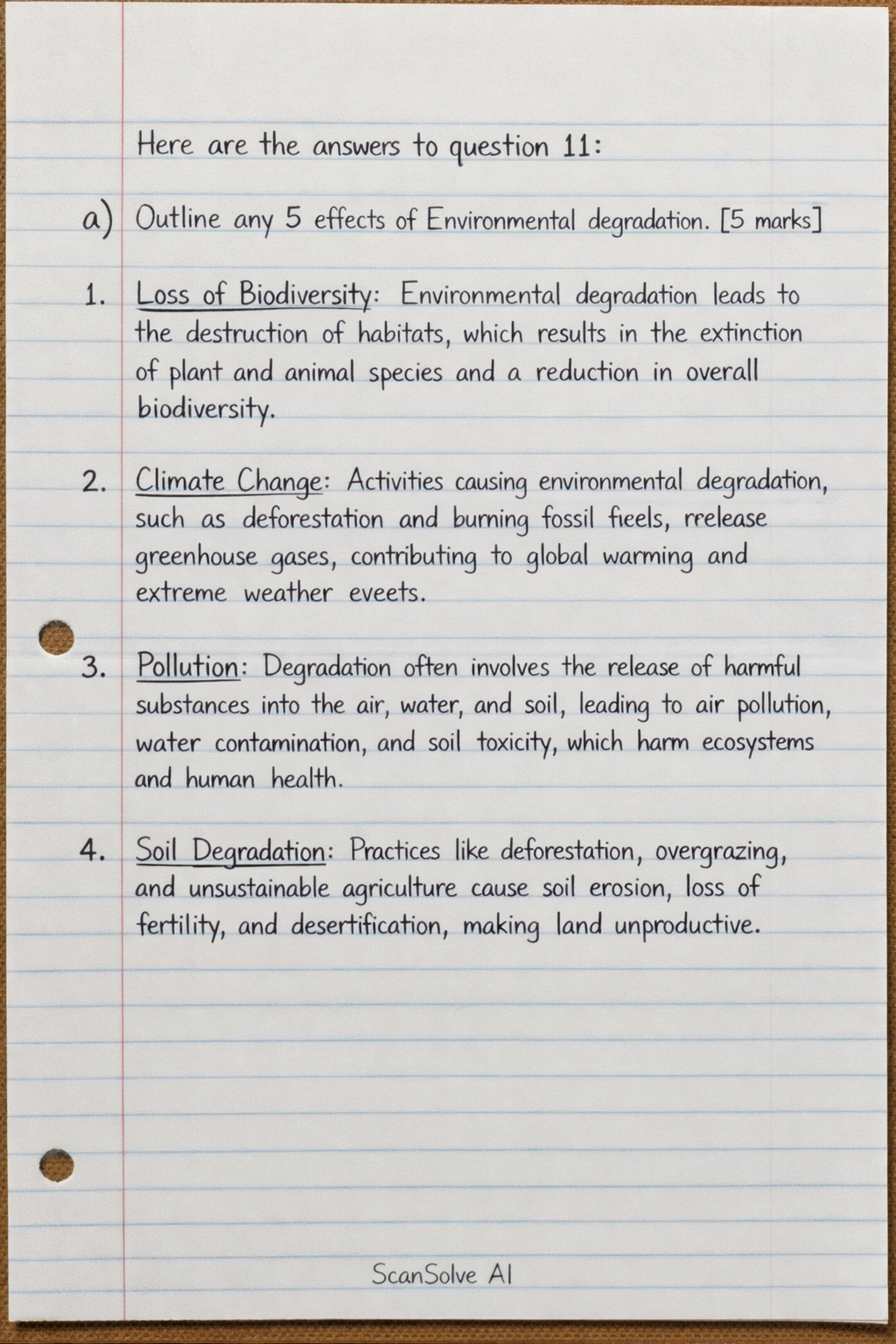
Here are the answers to question 11: a) Outline any 5 effects of Environmental degradation. [5 marks] 1. Loss of Biodiversity: Environmental degradation leads to the destruction of habitats, which results in the extinction of plant and animal species and a reduction in overall biodiversity. 2. Climate Change: Activities causing environmental degradation, such as deforestation and burning fossil fuels, release greenhouse gases, contributing to global warming and extreme weather events. 3. Pollution: Degradation often involves the release of harmful substances into the air, water, and soil, leading to air pollution, water contamination, and soil toxicity, which harm ecosystems and human health. 4. Soil Degradation: Practices like deforestation, overgrazing, and unsustainable agriculture cause soil erosion, loss of fertility, and desertification, making land unproductive. 5. Resource Depletion: Over-extraction and unsustainable consumption of natural resources, such as freshwater, minerals, and forests, lead to their depletion, threatening future availability. b) Evaluate the possible measures to mitigate problems that caused by Environmental degradation. [10 marks] 1. Sustainable Resource Management: Implementing sustainable practices in forestry, agriculture, and water use is crucial. This includes reforestation, crop rotation, efficient irrigation, and responsible fishing to ensure resources are available for future generations and to prevent soil erosion and habitat loss. 2. Pollution Control and Waste Management: Strict regulations and technologies to reduce industrial emissions, treat wastewater, and manage solid waste are essential. Promoting the "reduce, reuse, recycle" principle minimizes waste generation and pollution, protecting air, water, and soil quality. 3. Transition to Renewable Energy: Shifting from fossil fuels to clean, renewable energy sources like solar, wind, and hydropower significantly reduces greenhouse gas emissions, thereby mitigating climate change and air pollution. 4. Conservation and Restoration of Ecosystems: Establishing protected areas, restoring degraded habitats (e.g., wetlands, forests), and implementing species conservation programs help preserve biodiversity and maintain ecological balance. These efforts enhance natural resilience against environmental changes. 5. Environmental Education and Awareness: Educating the public about environmental issues, the importance of conservation, and sustainable lifestyles can foster responsible behavior and support for environmental policies. Increased awareness drives collective action towards mitigation. 6. Policy and Legislation: Governments must enact and enforce strong environmental laws, regulations, and international agreements. These policies can control pollution, promote sustainable development, protect natural resources, and hold polluters accountable, providing a legal framework for environmental protection.