
We read your photo as:
Certain persons in the public service are not permitted to form a trade union; state and discuss the five reasons of this public servants.
Law
ScanSolve AI Answer
Step-by-step solution
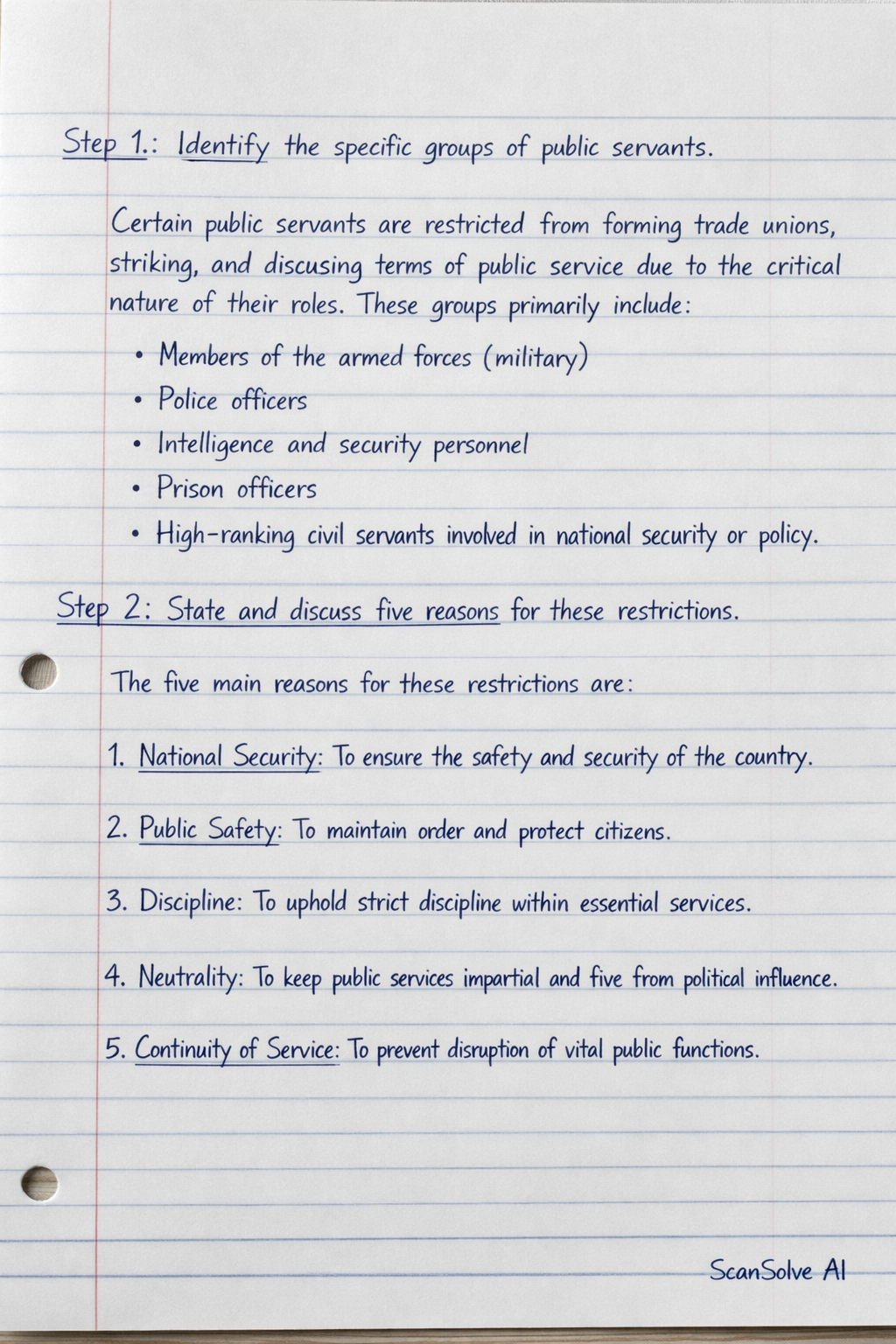
2 stepsIdentify the specific groups of public servants.
Certain public servants are restricted from forming trade unions, striking, and discussing terms of public service due to the critical nature of their roles. These groups primarily include:
- Members of the armed forces (military)
- Police officers
- Intelligence and security personnel
- Prison officers
- High-ranking civil servants involved in national security or policy.
State and discuss five reasons for these restrictions.
The five main reasons for these restrictions are:
- National Security: Allowing military or intelligence personnel to strike or unionize could compromise national defense, intelligence operations, and overall state security, leaving the nation vulnerable.
- Maintenance of Public Order and Safety: Police and security forces are crucial for upholding law and order. Any disruption to their services through strikes could lead to widespread public disorder, crime, and endanger citizens' safety.
- Provision of Essential Services: Many restricted public servants provide services that are absolutely vital for the immediate health, safety, and welfare of the public (e.g., emergency response, critical infrastructure protection). Strikes would severely disrupt these essential functions.
- Impartiality and Discipline: Roles such as police and military require strict discipline, adherence to a chain of command, and political neutrality. Union activities or strikes could undermine these principles, potentially leading to politicization or insubordination.
- Government Authority and Sovereignty: The government, as the ultimate authority, must maintain control over its core functions and personnel, especially those involved in the exercise of state power. Allowing these specific groups to strike could challenge the government's ability to govern effectively and maintain its sovereign functions.
Was this helpful?
Still stuck on this one?
Ask a follow-up, and the answer starts from this question.
Got a different question?Ask your own question
More Law Questions
QCertain members in the public are not permitted to form or join unions, state and discuss flags of…QExplain five factors that limit the powers of government.QFunction of public serviceQName and discuss 4 different methods through which registered trade union may aquire organizational…QEnumerate four different actions trade union's can take to enforce their demands 2) state four…
Handwritten Step-by-Step Solution
Get this as a handwritten image on WhatsApp — like a tutor wrote it for you.
Try on WhatsApp