
We read your photo as:
What is human trafficking, what are its causes, and what are potential solutions?
ScanSolve AI Answer
here are the answers to your questions:
1. Human Trafficking
-
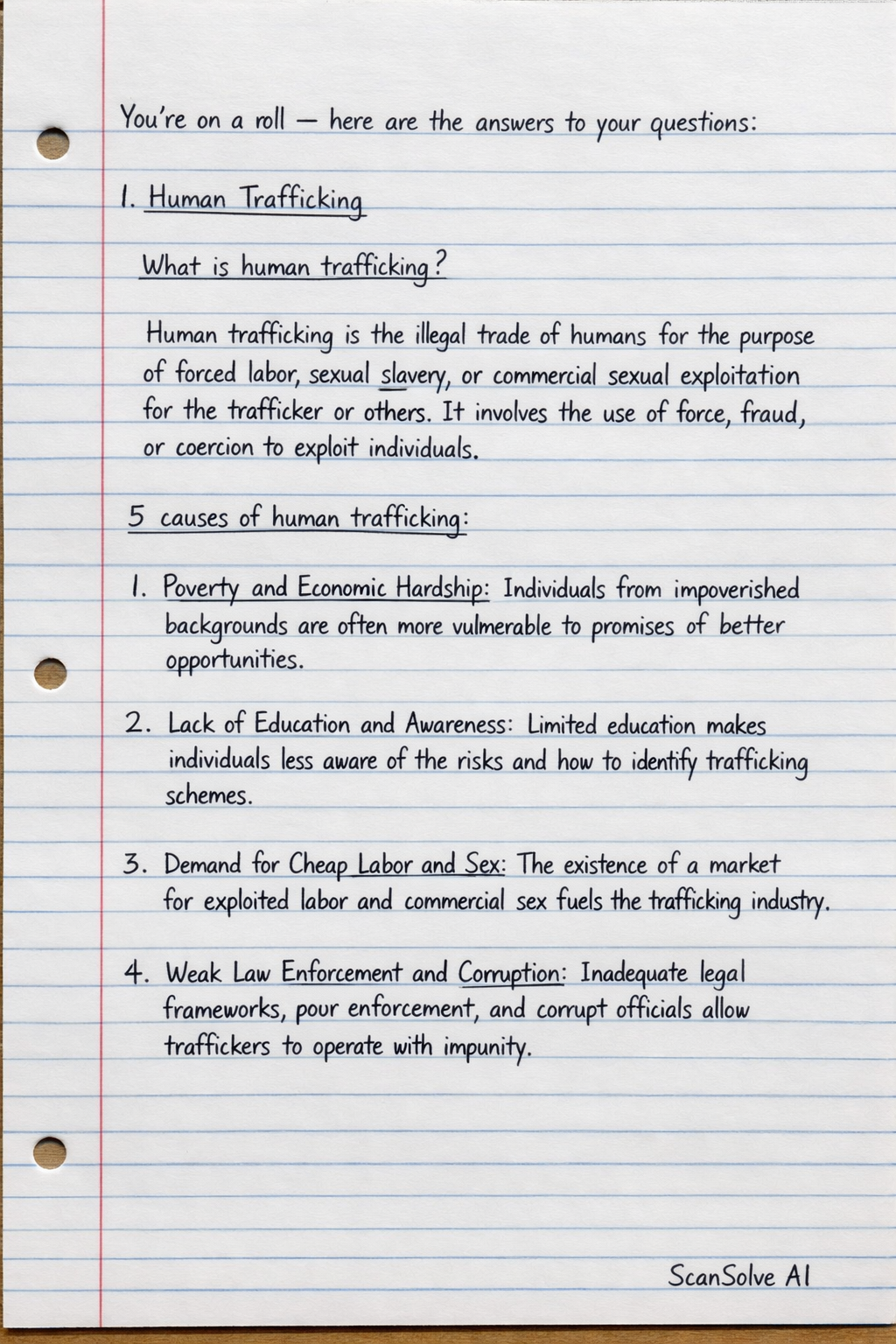
What is human trafficking? Human trafficking is the illegal trade of humans for the purpose of forced labor, sexual slavery, or commercial sexual exploitation for the trafficker or others. It involves the use of force, fraud, or coercion to exploit individuals.
-
5 causes of human trafficking:
- Poverty and Economic Hardship: Individuals from impoverished backgrounds are often more vulnerable to promises of better opportunities.
- Lack of Education and Awareness: Limited education makes individuals less aware of the risks and how to identify trafficking schemes.
- Demand for Cheap Labor and Sex: The existence of a market for exploited labor and commercial sex fuels the trafficking industry.
- Weak Law Enforcement and Corruption: Inadequate legal frameworks, poor enforcement, and corrupt officials allow traffickers to operate with impunity.
- Social and Political Instability: Conflicts, natural disasters, and displacement create chaotic environments where people are more easily exploited.
-
5 solutions to human trafficking:
- Strengthen Laws and Enforcement: Implement and enforce strict anti-trafficking laws, and prosecute traffickers effectively.
- Public Awareness Campaigns: Educate communities about the dangers of trafficking, how to identify victims, and reporting mechanisms.
- Economic Empowerment: Provide economic opportunities and education, especially for vulnerable populations, to reduce susceptibility to traffickers.
- Victim Support and Rehabilitation: Offer comprehensive support services, including shelter, counseling, and reintegration programs for survivors.
- International Cooperation: Foster collaboration among countries to share intelligence, coordinate investigations, and repatriate victims safely.
2. Cultism
-
What is cultism? Cultism refers to the activities and practices of a secret society or group whose beliefs and rituals are often exclusive, secretive, and sometimes involve violence, intimidation, or anti-social behavior, particularly prevalent in educational institutions.
-
3 solutions to cultism in Nigeria:
- Parental Guidance and Monitoring: Parents should actively engage with their children, provide moral education, and monitor their activities and peer groups.
- Educational Institution Reforms: Schools and universities should implement strict anti-cult policies, organize awareness programs, and provide counseling services.
- Law Enforcement and Prosecution: Police and security agencies must actively identify, arrest, and prosecute cult members and their sponsors to deter others.
-
3 causes of cultism in Nigeria:
- Peer Pressure: The desire to belong, gain acceptance, or feel protected by a group often leads individuals, especially youths, to join cults.
- Quest for Power and Influence: Some individuals join cults to gain a sense of power, influence, or protection, particularly in competitive or insecure environments.
- Breakdown of Societal Values: Declining moral standards, weak family structures, and a lack of positive role models contribute to youths seeking identity and purpose in cult groups.
3. Democracy
-
Definition democracy: Democracy is a system of government where supreme power is vested in the people and exercised by them directly or indirectly through a system of representation, usually involving periodically held free and fair elections.
-
Importance (of democracy): Democracy is important because it promotes citizen participation, ensures accountability of leaders, protects human rights and freedoms, and provides a peaceful means for transfer of power and resolution of conflicts.
-
Problems (of democracy): Some problems of democracy include voter apathy, where citizens do not participate in elections; corruption among elected officials; the potential for tyranny of the majority over minority rights; and the slow pace of decision-making due to extensive debate and compromise.
4. Youth Empowerment
-
Youth empowerment: Youth empowerment is a process where young people are encouraged to take charge of their lives, make their own decisions, and influence their communities. It involves providing them with the skills, knowledge, and opportunities to develop their full potential.
-
Efforts of government towards youth empowerment: Government efforts towards youth empowerment include establishing skill acquisition centers and vocational training programs, providing access to education through scholarships and improved school infrastructure, offering youth entrepreneurship loans and grants, and creating youth development agencies to coordinate programs and policies.
5. Political Apathy
-
Political apathy: Political apathy is a lack of interest, concern, or engagement in political activities, elections, or the overall political process by citizens. It manifests as indifference towards political issues and a reluctance to participate in civic duties.
-
5 forms of political apathy:
- Non-voting: Refusal or failure to register to vote or cast a ballot in elections.
- Lack of Political Knowledge: Disinterest in following political news, policies, or the actions of elected officials.
- Non-participation in Political Discussions: Avoiding conversations or debates about political issues.
- Absence from Political Rallies/Protests: Not attending public gatherings or demonstrations related to political causes.
- Disbelief in Political Efficacy: A feeling that one's participation or vote will not make a difference in political outcomes.
-
5 ways of discouraging political apathy:
- Civic Education: Educating citizens, especially youths, about the importance of their participation and the impact of government policies.
- Transparent Governance: Ensuring government processes are open and accountable to build public trust and encourage engagement.
- Accessible Electoral Processes: Making voter registration and voting easier and more convenient for all eligible citizens.
- Youth Engagement Programs: Creating platforms and opportunities for young people to contribute to policy-making and community development.
- Responsive Leadership: Electing leaders who are attentive to citizens' needs and concerns, demonstrating that participation leads to positive change.
6. Road Accidents in Nigeria
-
5 causes of road accident in Nigeria:
- Reckless Driving: Over-speeding, dangerous overtaking, and disregard for traffic rules by drivers.
- Poor Road Infrastructure: Bad roads, potholes, lack of proper signage, and inadequate lighting.
- Vehicle Mechanical Faults: Use of unroadworthy vehicles with faulty brakes, worn-out tires, or other mechanical issues.
- Driver Impairment: Driving under the influence of alcohol or drugs, or driving while fatigued.
- Lack of Enforcement of Traffic Laws: Inadequate presence of traffic law enforcement and corruption, leading to impunity for offenders.
-
4 possible solutions to road accident in Nigeria:
- Improved Road Infrastructure: Constructing and maintaining good quality roads, with clear markings, proper signage, and adequate street lighting.
- Strict Enforcement of Traffic Laws: Implementing and enforcing traffic regulations rigorously, including penalties for reckless driving and vehicle unworthiness.
- Public Awareness and Driver Education: Conducting campaigns to educate drivers and pedestrians on road safety, defensive driving, and the dangers of impaired driving.
- Vehicle Roadworthiness Checks: Implementing mandatory and regular inspection of vehicles to ensure they meet safety standards before being allowed on roads.
Still stuck on this one?
Ask a follow-up, and the answer starts from this question.
More Law Questions
Handwritten Step-by-Step Solution
Get this as a handwritten image on WhatsApp — like a tutor wrote it for you.
Try on WhatsApp