
We read your photo as:
Describe law of insolvency in details and then explain the sequestration process and the parties involved thereof [25]
ScanSolve AI Answer
Here's the solution to Question 1.1:
1.1 Describe law of insolvency in details and then explain the sequestration process and the parties involved thereof [25]
The law of insolvency deals with the legal status of a debtor who is unable to pay their debts. It provides a structured process for the fair distribution of the debtor's assets among their creditors. The primary goal is to ensure an orderly and equitable settlement of debts when a debtor's liabilities exceed their assets.
The sequestration process is the legal procedure by which a debtor's estate is declared insolvent and placed under the control of a trustee for the benefit of creditors. It can be initiated in two main ways:
- Voluntary Surrender: The debtor applies to the court to declare their own estate insolvent. This usually happens when the debtor realizes they cannot meet their financial obligations and wants to avoid further complications.
- Compulsory Sequestration: A creditor applies to the court to have the debtor's estate declared insolvent. This typically occurs when a debtor has committed an "act of insolvency" (e.g., failing to pay a judgment debt, absconding to avoid creditors) or is factually insolvent, and the creditor believes sequestration will be to the advantage of all creditors.
The parties involved in the sequestration process include:
- The Debtor: The individual or entity whose estate is being sequestrated due to their inability to pay debts.
- Creditors: Individuals or entities to whom the debtor owes money. They are the beneficiaries of the sequestration process, aiming to recover as much of their debt as possible.
- The Master of the High Court: A judicial officer who oversees the administration of insolvent estates, ensuring that the process is conducted lawfully and fairly. The Master appoints the trustee and supervises their actions.
- The Trustee (or Provisional Trustee): An independent person, usually an attorney or accountant, appointed by the Master to take control of the debtor's assets, liquidate them, and distribute the proceeds among the creditors according to legal priorities. The trustee acts in the best interests of all creditors.
- The Court: The judicial body that hears applications for sequestration, makes orders, and resolves disputes arising during the insolvency process.
Still stuck on this one?
Ask a follow-up, and the answer starts from this question.
More Law Questions
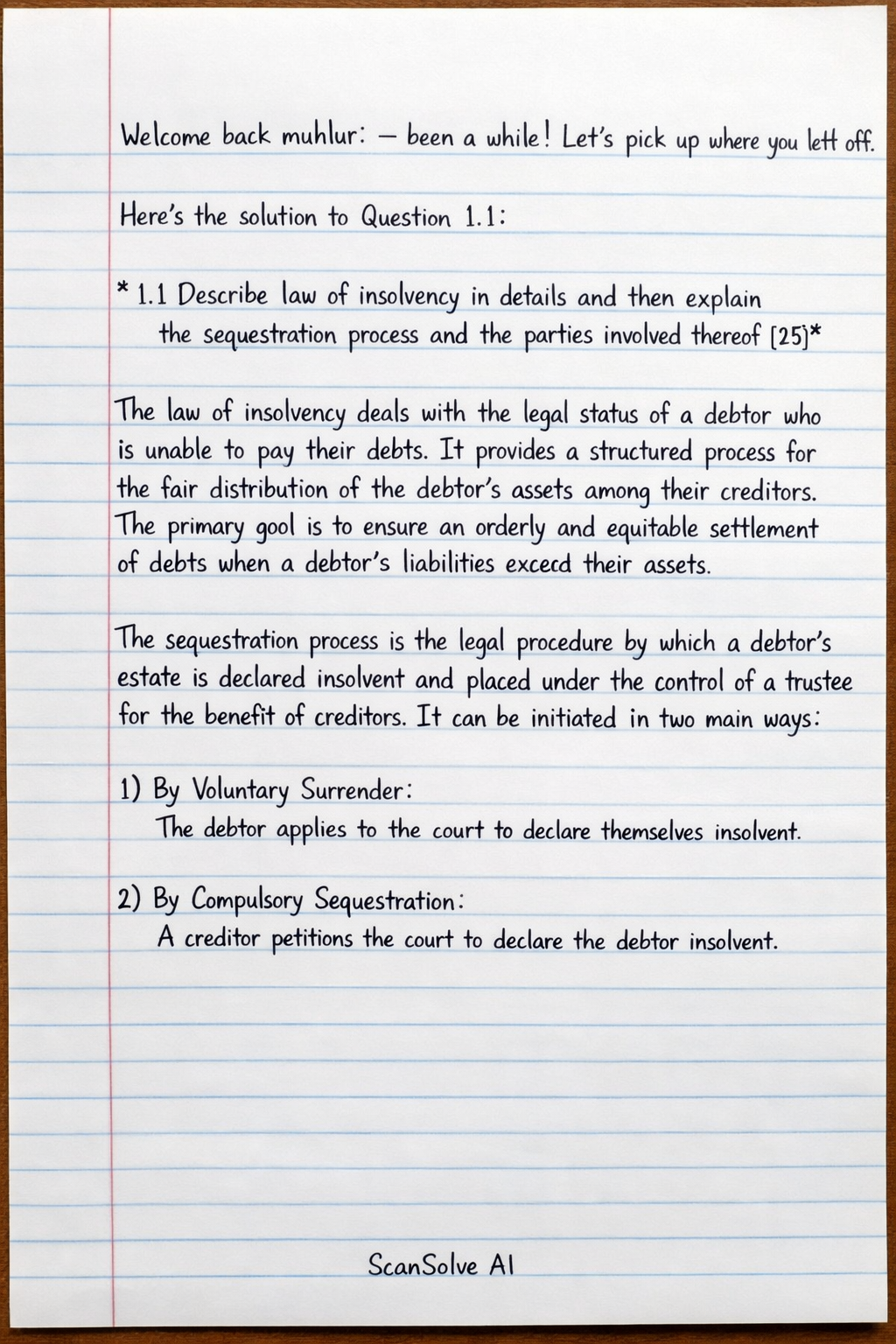
Handwritten Step-by-Step Solution
Get this as a handwritten image on WhatsApp — like a tutor wrote it for you.
Try on WhatsApp