

This law problem is solved step by step below, with detailed explanations to help you understand the method and arrive at the correct answer.
ScanSolve AI Answer
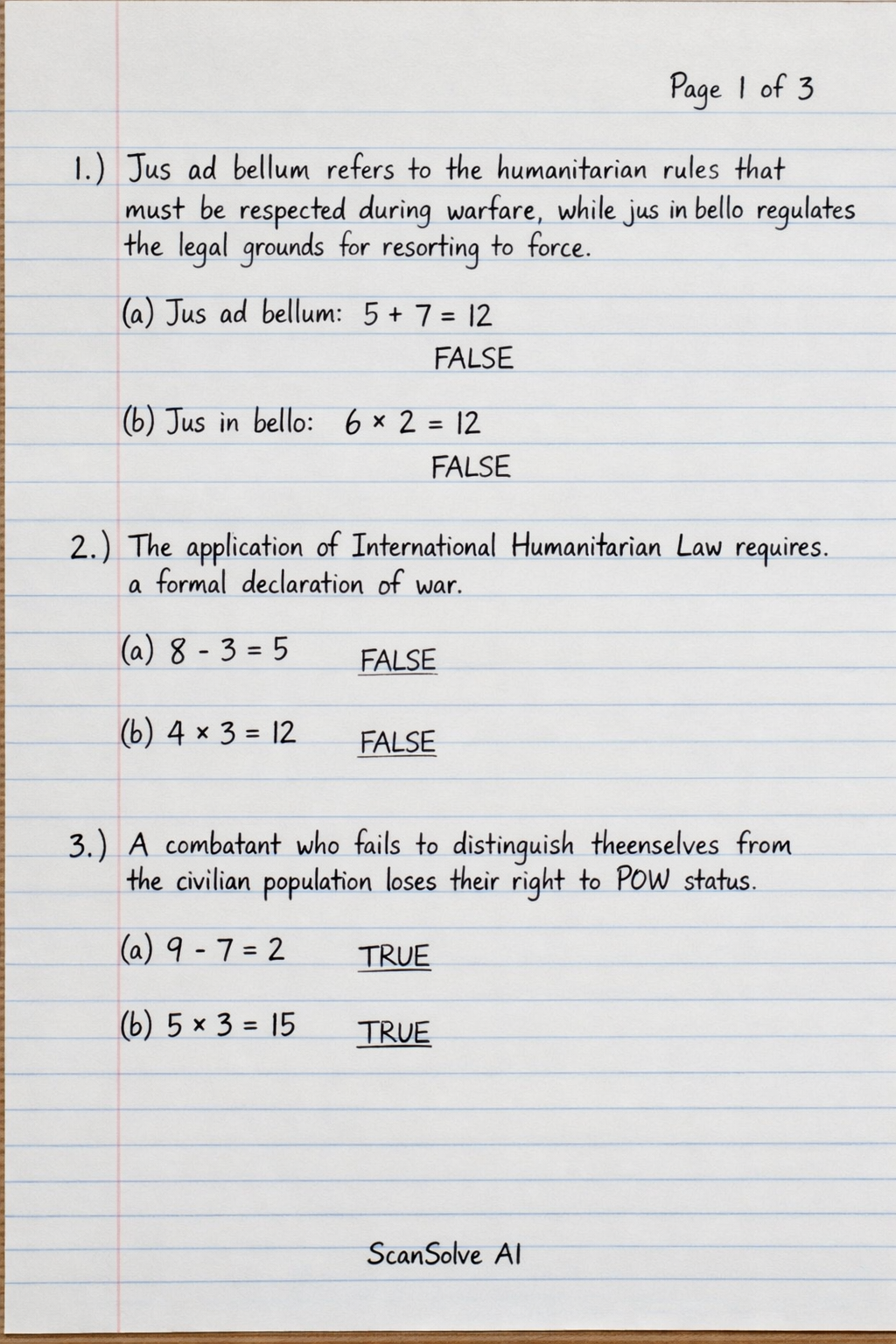
እነዚህን ጥያቄዎች ለመፍታት፣ ዓለም አቀፍ የሰብአዊነት ሕግ (IHL) መርሆዎችን እንመለከታለን። 1. Jus ad bellum refers to the humanitarian rules that must be respected during warfare, while jus in bello regulates the legal grounds for resorting to force. Jus ad bellum ጦርነት ለመጀመር የሚያስችሉ ህጋዊ ምክንያቶችን የሚመለከት ሲሆን፣ jus in bello* ደግሞ በጦርነት ጊዜ መከበር ያለባቸውን የሰብአዊነት ህጎች ይመለከታል። ይህ አባባል የሁለቱን ፅንሰ-ሀሳቦች ትርጉም ስለቀየረ፣ ስህተት ነው። FALSE 2. The application of International Humanitarian Law requires a formal declaration of war by at least one party to the conflict. ዓለም አቀፍ የሰብአዊነት ሕግ የሚተገበረው መደበኛ የጦርነት አዋጅ ቢታወጅም ባይታወጅም፣ ትክክለኛ የታጠቀ ግጭት ሲኖር ነው። FALSE 3. A combatant who fails to distinguish themselves from the civilian population during an attack loses their right to prisoner-of-war status. አንድ ተዋጊ በውጊያ ወቅት ከሲቪል ህዝብ ራሱን መለየት ካልቻለ፣ ከተያዘ በኋላ የጦር እስረኛነት መብቱን ሊያጣ ይችላል። TRUE 4. Additional Protocol II of 1977 explicitly applies to international armed conflicts. ተጨማሪ ፕሮቶኮል II (Additional Protocol II) የሚተገበረው ለዓለም አቀፍ ያልሆኑ የታጠቁ ግጭቶች (የውስጥ ግጭቶች) ነው። ለዓለም አቀፍ የታጠቁ ግጭቶች የሚተገበረው ተጨማሪ ፕሮቶኮል I (Additional Protocol I) ነው። FALSE 5. Prisoners of war are required upon capture to disclose their name, rank, date of birth, serial number, and political affiliation. የጦር እስረኞች ሲያዙ ስማቸውን፣ ማዕረጋቸውን፣ የትውልድ ቀናቸውን እና መለያ ቁጥራቸውን ብቻ እንዲገልጹ ይጠበቅባቸዋል። የፖለቲካ ዝምድናቸውን እንዲገልጹ አይገደዱም። FALSE 6. Under International Humanitarian Law, medical and religious personnel are excluded from combatant status. በዓለም አቀፍ የሰብአዊነት ሕግ መሠረት፣ የህክምና እና የሃይማኖት ሰራተኞች ተዋጊዎች አይደሉም እና ጥቃት ሊሰነዘርባቸው አይገባም። TRUE 7. Prisoners of war may be subjected to dangerous employment only if they volunteer to perform such work. የጦር እስረኞች ጤናማ ባልሆነ ወይም አደገኛ በሆነ ሥራ ላይ ሊሰማሩ የሚችሉት በፈቃደኝነት ከተስማሙ ብቻ ነው። TRUE 8. International Human Rights Law applies only during times of armed conflict, whereas International Humanitarian Law applies in all circumstances at all times. ዓለም አቀፍ የሰብአዊ መብቶች ሕግ ሁልጊዜ (በሰላምም ሆነ በጦርነት ጊዜ) የሚተገበር ሲሆን፣ ዓለም አቀፍ የሰብአዊነት ሕግ የሚተገበረው የታጠቀ ግጭት በሚኖርበት ጊዜ ብቻ ነው። ይህ አባባል የሁለቱን ህጎች አተገባበር ስለቀየረ፣ ስህተት ነው። FALSE 9. A levee en masse refers to members of a population who spontaneously take up arms to resist approaching enemy forces and are entitled to POW status. "Levée en masse" ማለት ጠላት ሲቃረብ በድንገት መሳሪያ አንስተው የሚከላከሉ የህዝብ አባላት ሲሆኑ፣ የጦርነት ህጎችን እና ልማዶችን እስካከበሩ ድረስ የጦር እስረኛነት መብት አላቸው። TRUE 10. Measures of reprisal against prisoners of war are strictly prohibited without exception under the Third Geneva Convention. በሶስተኛው የጄኔቫ ስምምነት መሠረት፣ በጦር እስረኞች ላይ የሚወሰዱ የበቀል እርምጃዎች ያለ ምንም ልዩነት በጥብቅ የተከለከሉ ናቸው። TRUE