
We read your photo as:
Should people living with HIV/AIDS be legally required to disclose their status to employers and partners? Discuss.
ScanSolve AI Answer
The statement that "People living with HIV/AIDS should be legally required to disclose their status to employers and partners" is highly contentious. Arguments for mandatory disclosure often center on public health and safety, suggesting employers need to know for workplace risk management, and partners require full information for informed consent regarding sexual health. This view emphasizes individual responsibility to prevent transmission and protect others from potential harm, particularly in intimate relationships where trust and transparency are paramount for shared well-being. However, legally compelling disclosure presents profound human rights challenges. It directly violates the fundamental right to privacy and medical confidentiality, which are essential for personal autonomy and dignity. Such a mandate would inevitably fuel discrimination and stigma in employment, housing, and social spheres, despite existing protective legislation. For most jobs, HIV status is irrelevant to performance or workplace safety, making disclosure unnecessary. Crucially, fear of forced disclosure could deter individuals from seeking HIV testing, treatment, and care, thereby hindering public health initiatives. The scientific consensus that "Undetectable = Untransmittable" (U=U) for those on effective treatment further diminishes the public health rationale for mandatory disclosure to partners. My personal stance is unequivocally against legally mandating HIV status disclosure to employers or partners. While voluntary, informed disclosure to sexual partners is ethically sound and promotes trust, it must be a personal choice, supported by education and empathy, not legal compulsion. Forcing disclosure erodes individual rights, intensifies stigma, and creates significant barriers to effective HIV prevention and treatment. Instead, societal efforts should prioritize comprehensive education, foster supportive environments for voluntary disclosure, and rigorously enforce anti-discrimination laws to uphold the rights and dignity of people living with HIV/AIDS.
Still stuck on this one?
Ask a follow-up, and the answer starts from this question.
More Law Questions
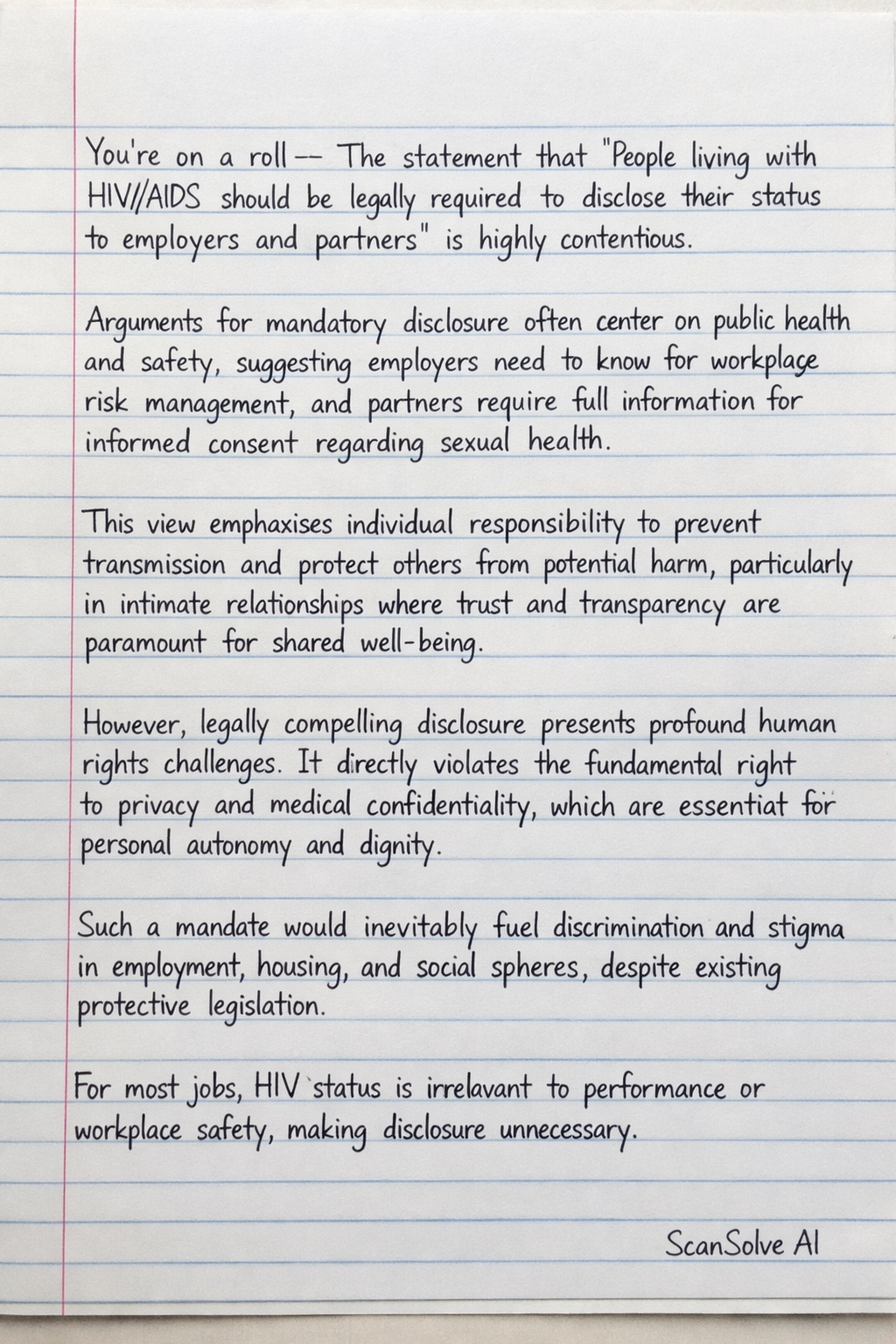
Handwritten Step-by-Step Solution
Get this as a handwritten image on WhatsApp — like a tutor wrote it for you.
Try on WhatsApp